
Hinduja Foundation Plants 2,400 Trees, Revives Ecosystem at Pune SRPF Campus
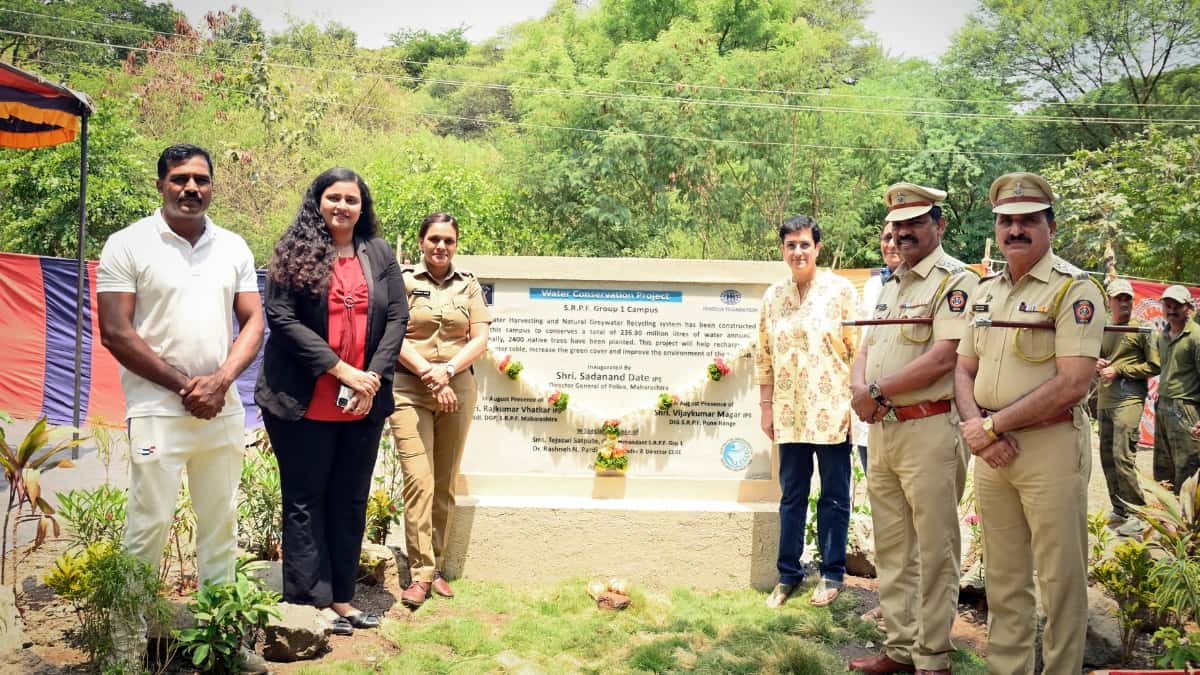
Pune, June 5, 2026: Hinduja Foundation, the philanthropic arm of the Hinduja Group, on the occasion of World Environment Day, announced the successful implementation of an integrated Rainwater Harvesting, Wastewater Recycling and Urban Afforestation initiative at the State Reserve Police Force (SRPF) Group 1 Campus in Ramtekdi, Pune, in partnership with Centre for Environmental Research and Education (CERE).
The initiative has been undertaken under Hinduja Foundation’s flagship Jal Jeevan programme supported by Hinduja Renewables Energy Private Limited and Gulf Oil Lubricants India Limited to strengthen water security, groundwater recharge, wastewater management, and biodiversity restoration within the campus ecosystem. The project directly benefits over 4,000 SRPF personnel and residents while contributing to long-term ecological resilience in the surrounding region.
Commenting on the initiative, Raman Kalyanakrishnan, CEO, Hinduja Foundation, said:
“At Hinduja Foundation, we believe environmental sustainability must be built through integrated, community-driven solutions that create long-term impact. This initiative at the SRPF Group 1 Campus demonstrates how water conservation, wastewater recycling, and biodiversity restoration can come together to create climate-resilient ecosystems within urban environments. By strengthening groundwater recharge, improving green cover, and promoting ecological restoration, we are not only enhancing environmental resilience but also contributing towards healthier and more sustainable communities for future generations.”
The project focused on three key areas - rainwater harvesting and groundwater recharge, wastewater recycling and pond rejuvenation, and urban afforestation with biodiversity restoration.
Key project interventions and impact include:
-
2,400 saplings planted across the campus covering 55 plant species, including 44 native species to strengthen long-term ecological resilience
-
Natural wastewater recycling system developed for 330 households within staff quarters
-
55 stormwater drain puncturing interventions and 13 deep recharge pits constructed to improve groundwater recharge
-
250 running metres of nala restored along with development of 400 sq. m. water absorption trenches
-
100 sq. m. floating reed bed system installed for pond rejuvenation and natural wastewater treatment
-
Installation of floating aerators, vortex micro-aeration systems, and treated water recirculation infrastructure 100% plantation survival rate achieved, with 1,266 saplings geotagged for scientific monitoring and carbon assessment
The intervention has also contributed significantly to biodiversity enhancement across the campus. The restored ecosystem now supports 31 bird species, 15 insect species, nine butterfly species, along with multiple mammal and reptile species. Ecologically significant species observed at the site include the Indian Grey Hornbill and Indian Peafowl, alongside keystone Ficus species that support local ecological balance.
Dr. Rashneh N. Pardiwala, Founder & Director of the Centre for Environmental Research and Education (CERE) said “This project demonstrates how simple nature-based solutions can effectively address urban environmental challenges. Through scientific planning and on-ground implementation, CERE has worked to restore water systems, improve biodiversity, recycle wastewater so as to reduce soil pollution, and enhance green cover across the SRPF campus. This initiative while creating a healthier and more sustainable environment for the people training and working within the campus has also helped farmers surrounding the SRPF campus whose crop productivity suffered due to wastewater seepage into the ground.”
Ms. Tejaswi Satpute, the Commandant of State Reserve Police Force Group 1 Campus added:
“The project has brought significant improvement to the SRPF Group 1 Campus by solving water management and wastewater treatment issues. The pond rejuvenation and plantation activities have greatly improved the campus ecosystem and created a greener and healthier environment for our police personnel and residents.”