
Jindal Stainless-Hisar Limited Financial Results for the Quarter ended March 31, 2021
The audited financial results of Jindal Stainless (Hisar) Limited (JSHL) for Q4 FY21 were taken on record by its Board of Directors on Tuesday
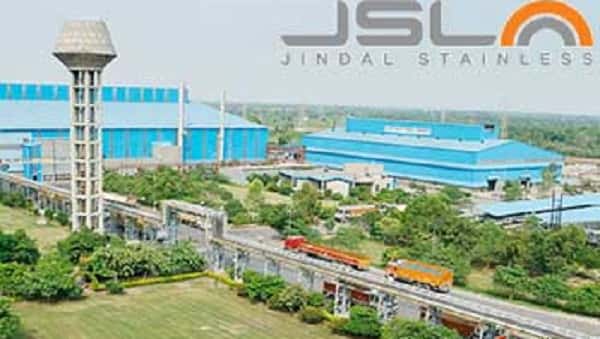
New Delhi: The audited financial results of Jindal Stainless (Hisar) Limited (JSHL) for Q4 FY21 were taken on record by its Board of Directors on Tuesday. According to the JSHL, the company registered higher sales volume owing to a revival in domestic demand for stainless steel. JSHL’s sales volume stood at 182,474 tonnes, up by 23% over the corresponding period last year (CPLY). EBITDA and Profit after tax (PAT) of the company stood at Rs 364 crore and Rs 226 crore, respectively. The consistent deleveraging helped in the reduction of long-term debt by Rs 387 crore during Q4 FY21, which stood at Rs 1,250 crore. Interest cost fell by 39 percent over CPLY to Rs 42 crore.
Improved business sentiments, along with sustained growth in the domestic economic activity, triggered stainless steel demand from segments like Auto, Railways, and Wagon, along with Metro Rail. Sales of JSHL’s Specialty Products Division (SPD), a key differentiator and focus area for the company, grew by 8 percent in Q4 of FY21 over CPLY. The company is in process of commissioning new facilities to further enhance SPD production that is expected to further consolidate its position in the high-end special products market.
Globally, the pandemic left imprints on the stainless steel melt shop production in every country other than China. The global stainless steel production stood at 50.90 million tonnes in CY 2020, down by 2.5 percent over CPLY. Indian stainless steel production decelerated by 19 percent over CPLY and stood at 3.17 million tonnes in CY2020.
Pent Up in demand aided by economic stimulus along with ample liquidity globally pushed the stainless steel raw material prices further. As a result, the prices of Scrap, Nickel, Copper, and Ferro Chrome surged significantly over the Q3 of FY21 prices. Logistical challenges, generated by international transport bottlenecks, also contributed to increasing input prices. The strong momentum in the raw material prices impacted prices of finished goods globally.
Follow PSU Connect:WhatsApp