
Tata Steel Faces Summons from Dutch Authorities Over Alleged Pollution at IJmuiden Plant
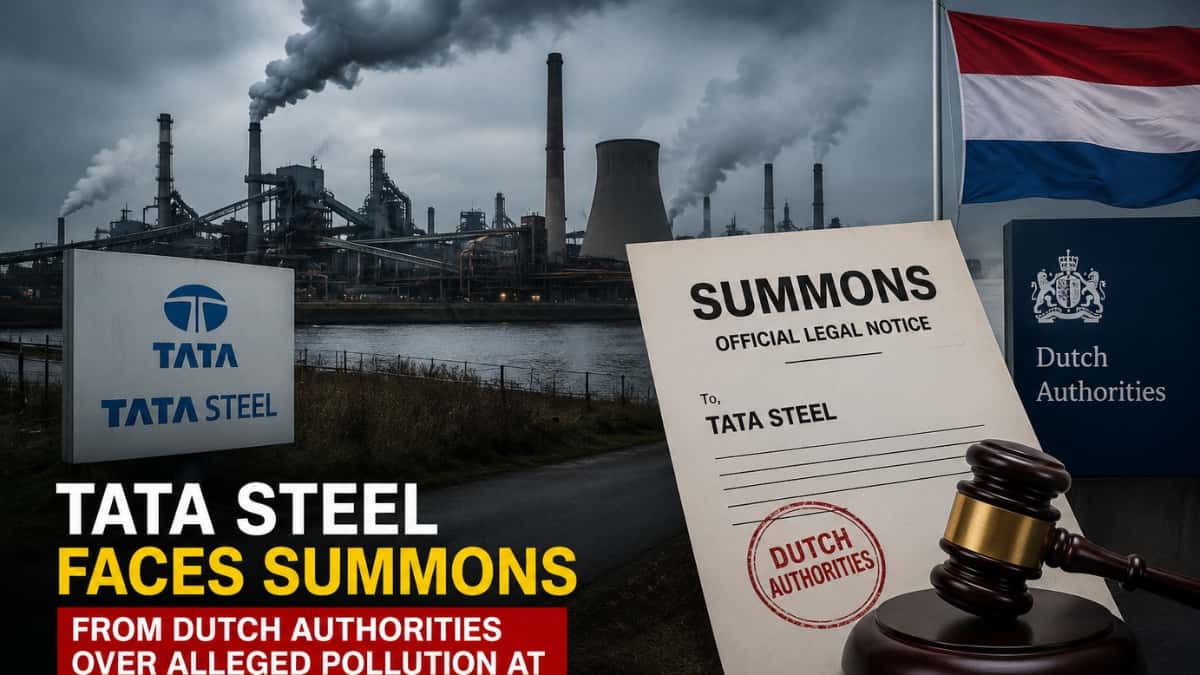
Mumbai, July 10, 2026: Tata Steel Limited has informed the stock exchanges that its material wholly-owned subsidiary, Tata Steel IJmuiden B.V. (TSIJ) in the Netherlands, has been summoned by the Dutch Public Prosecution Office (PPO) for suspected criminal offences related to alleged pollution at its coke and gas plants (KGF 1 and 2).
The development was disclosed under Regulations 30 and 51 of the SEBI (Listing Obligations and Disclosure Requirements) Regulations, 2015.
What is the Issue?
The summons relates to occasional instances of “undercooked coke” produced at the coke plants in IJmuiden. Coke is a critical material used in blast furnaces to reduce iron ore and generate high temperatures for steel production. According to TSIJ, occasional undercooked batches can lead to short-term emission peaks, though the company states this is technically unavoidable in large-scale industrial operations.
Tata Steel IJmuiden’s Response:
-
The company has been in technical discussions with the North Sea Canal Area Environmental Service for a long time.
-
Since 2020, TSIJ claims to have reduced instances of undercooked coke by 98%.
-
Between January 2020 and May 2026, such incidents averaged less than 0.011%, which is below the industry average.
-
In 2024 and 2025, there were zero such incidents.
-
The company considers the allegations “fundamentally unjustified” and plans to present a strong defence in court.
Company’s Commitment
TSIJ emphasized that being a responsible neighbour is a priority. The company is actively working on continuous improvement and has already taken substantial measures to minimise environmental impact.
Notably, the coke plants (KGF 1 and 2) are scheduled to be fully closed in the coming years as part of Tata Steel’s Green Steel Project, which aims to transition to more sustainable steel production methods. Tata Steel Nederland’s CO₂ intensity currently stands at approximately 1.66 tonnes of CO₂ per tonne of crude steel, among the best in the global integrated steel industry.
Key Analysis: This case highlights the increasing regulatory scrutiny on environmental compliance faced by global steel majors. While the matter pertains to past operations at an overseas subsidiary, it serves as a reminder of the challenges traditional steel plants face in balancing production with stricter environmental norms. Tata Steel’s ongoing Green Steel initiatives are expected to significantly reduce its carbon footprint in the coming years. Investors will be watching how the legal proceedings unfold and their potential financial or reputational impact.