
Why Investors Are Rethinking Esports
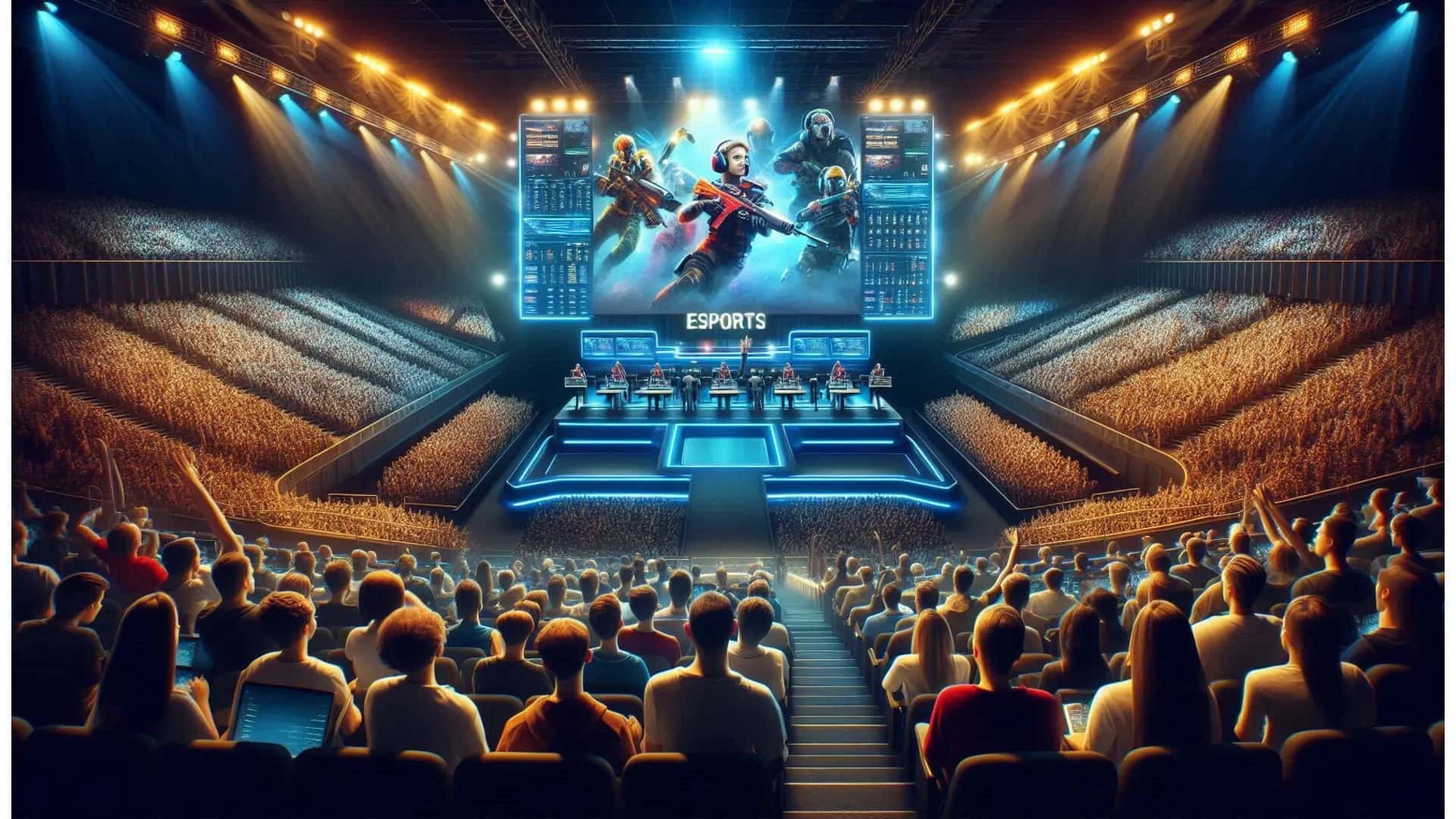
For years, esports was presented as the next great sports investment story. Young audiences, global reach, digital distribution, and rapid growth created a narrative that seemed almost impossible to resist.
Venture capital firms, celebrities, traditional sports owners, and major brands rushed into the sector expecting esports to become the digital equivalent of football or basketball. Somewhere between billion-dollar valuations and packed arenas, however, reality arrived.
Even companies connected to gaming-friendly audiences, including top Arabic casinos closely follow esports trends, now operate in a market where investors ask tougher questions. The conversation has shifted from growth at all costs to something less glamorous but far more important: sustainable profitability.
The End of the Easy-Money Era
One way to understand today's esports investment climate is to imagine a football club whose stadium, rules, league structure, and television rights are controlled by a private company that can change everything overnight.
That is essentially how esports operates. Investors who once focused almost entirely on audience growth are now examining structural risks that were often ignored during the industry's boom years.
The turning point came after the pandemic. During lockdowns, gaming and streaming audiences surged, creating expectations that growth would continue indefinitely. Instead, many organizations discovered that viewership growth alone does not automatically produce profits.
Team valuations fell, sponsorship markets tightened, and layoffs appeared across the industry. Several esports companies reduced staff, while organizations that once raised money aggressively suddenly focused on cost cutting and survival.
A useful example is the public-market story of FaZe Clan. The company became one of the most recognizable esports brands in the world and eventually went public.
Yet the excitement surrounding its valuation proved difficult to justify through financial performance, becoming a cautionary tale frequently cited by investors examining esports economics.
Why Investors Became More Careful:
-
Revenue growth often failed to translate into meaningful profitability for teams despite increasing audiences.
-
Sponsorship income remained the dominant revenue source, making organizations vulnerable when marketing budgets declined.
-
Team valuations rose much faster than underlying cash flows during the investment boom.
-
Many organizations prioritized expansion and brand awareness rather than sustainable business models.
-
Economic uncertainty reduced venture capital activity across technology and entertainment sectors.
-
Public-market performance exposed the gap between hype and operational results.
-
Rising interest rates made speculative investments less attractive.
-
Investors increasingly demanded evidence of return on investment rather than audience projections.
-
Cost structures remained high while many revenue streams stayed relatively immature.
The result is not that investors suddenly dislike esports. Rather, they have stopped treating it as a guaranteed growth story and started evaluating it like any other business. That may sound less exciting, but mature industries are usually built on exactly this kind of scrutiny.
The Publisher Problem Nobody Can Ignore
Traditional sports belong to nobody and everybody at the same time. Football exists regardless of which company manufactures the ball.
Esports operates very differently. Every major esports title remains under the control of a game publisher, and that reality has become one of the most important considerations for investors.
Research published in 2025 identified publisher control as a central factor shaping the industry's economic structure.
Investors are now asking questions that were often overlooked a few years ago. What happens if a publisher changes tournament rules? What if prize structures change? What if a game loses popularity? What if a publisher decides esports is no longer a strategic priority?
A good example is Riot Games. The company has built some of the world's most successful esports ecosystems through titles such as League of Legends and VALORANT.
Yet the same centralized control that helps create consistency also means outside investors ultimately depend on decisions made by the publisher.
|
Structural Factor |
Why Investors Care |
|
Publisher ownership of game IP |
Unlike traditional sports, the game itself belongs to a private company. Teams and investors cannot control long-term decisions about the competitive ecosystem, creating dependency on the publisher's strategy. |
|
Rule changes through patches |
Balance updates can dramatically alter gameplay, team performance, and competitive rankings within weeks, making long-term forecasting more difficult than in most traditional sports. |
|
Tournament format adjustments |
Changes to league structures, qualification systems, or event schedules can directly affect sponsorship value, audience numbers, and projected revenues. |
|
Game popularity cycles |
Even successful titles can lose players and viewers over time as consumer preferences shift toward newer games, creating uncertainty around audience retention. |
|
Entry requirements for leagues |
Participation in top competitions often depends on publisher approval, franchise fees, or qualification systems that organizations do not fully control. |
|
Media rights control |
Publishers typically own broadcast rights, limiting the ability of teams and investors to negotiate independently or capture a larger share of media revenue. |
|
Revenue-sharing policies |
Financial distributions from leagues and tournaments can change as publishers adjust their business models, affecting profitability projections for participating organizations. |
|
Franchise decisions |
Team valuations often depend on league expansion plans, franchise structures, and publisher commitments, factors that can change with broader strategic priorities. |
|
New game launches |
Emerging titles constantly compete for players, viewers, sponsors, and media attention, potentially reducing the relevance of established esports ecosystems. |
These risks do not automatically make esports unattractive. They simply make it different from traditional sports investments. Understanding those differences has become a prerequisite rather than an optional extra.
Questions Modern Investors Ask Before Funding an Esports Project:
-
Does the organization own intellectual property beyond its competitive teams?
-
Can revenue survive a sponsorship downturn?
-
Is the audience loyal to the team or only to a specific game?
-
Does management have experience outside gaming culture?
-
Are there diversified revenue streams?
-
What happens if the publisher changes strategic direction?
-
Is content creation stronger than tournament performance?
-
How dependent is the company on venture capital funding?
-
Can the business remain viable during periods of slower growth?
The industry's strongest organizations increasingly answer these questions with diversified business models rather than promises of future scale. That shift alone explains much of the changing investor mindset.
From Esports Teams to Gaming Ecosystems
Interestingly, many investors have not abandoned gaming at all. Instead, they are moving their attention toward broader gaming ecosystems where revenue models often appear more predictable. In some cases, the investment thesis has evolved from buy esports to buy the infrastructure surrounding gaming.
This distinction matters. Gaming remains one of the world's largest entertainment sectors, and esports audiences continue to grow globally.
Some estimates place the esports audience above 570 million people, with projections exceeding 640 million. The audience is not disappearing. Investors are simply becoming more selective about how they gain exposure to it.
Rather than investing directly into a single team, businesses often benefit from esports growth through broader ecosystems that include media, content, streaming, data, and wagering products.
|
Investment Area |
Current Investor View |
|
Esports teams |
Higher risk, greater scrutiny |
|
Streaming platforms |
Attractive due to recurring engagement |
|
Gaming data providers |
Increasing strategic importance |
|
Tournament technology |
Growing infrastructure opportunity |
|
Creator economies |
Often more scalable than teams |
|
Betting and prediction products |
Benefit from audience engagement |
|
Gaming hardware |
Supported by wider gaming demand |
|
Training and analytics tools |
Professionalization trend |
|
Community platforms |
Strong network effects potential |
The industry's evolution has created a new hierarchy of investor interest.
Areas Receiving Growing Attention:
-
Creator-led media businesses with loyal communities — Audiences often stay loyal to creators across different games, making engagement more stable than team-based fandom.
-
Analytics platforms serving teams and bettors — Demand for performance data and predictive insights continues to grow across competitive gaming.
-
Tournament management software — These platforms support event operations and can serve multiple games and competition formats.
-
Gaming education and coaching services — Competitive players increasingly invest in training, coaching, and skill development.
-
Streaming technologies and engagement tools — Interactive features help platforms improve viewer retention and monetization.
-
Mobile esports ecosystems in emerging markets — Mobile gaming continues expanding rapidly in regions with growing digital audiences.
-
Community-driven content networks — Fan communities can remain active even when interest in specific games changes.
-
Data collection and performance analysis companies — Match data providers supply valuable insights to teams, media companies, and bettors.
-
Cross-platform entertainment businesses connecting gaming and sports — Combining gaming, sports, media, and betting helps diversify audiences and revenue streams.
A decade ago, investors often wanted the next championship-winning esports team. Today, many would rather own the digital roads, bridges, and toll booths surrounding the entire gaming economy. It is a less glamorous strategy, but history suggests infrastructure businesses often outlast the stars using them.
Conclusion
Esports is not experiencing a collapse. It is experiencing adulthood. The industry still attracts massive audiences and remains culturally relevant, but investors now evaluate it with greater discipline.
The focus has shifted from explosive growth narratives to durable revenue, publisher relationships, diversified business models, and realistic valuations.
That transition may disappoint those who believed esports would rewrite every rule of sports business, but it may ultimately create a healthier industry with stronger foundations.