
100-Year Solar Data Study from India Reveals Hidden Patterns in Sun’s 11-Year Cycle
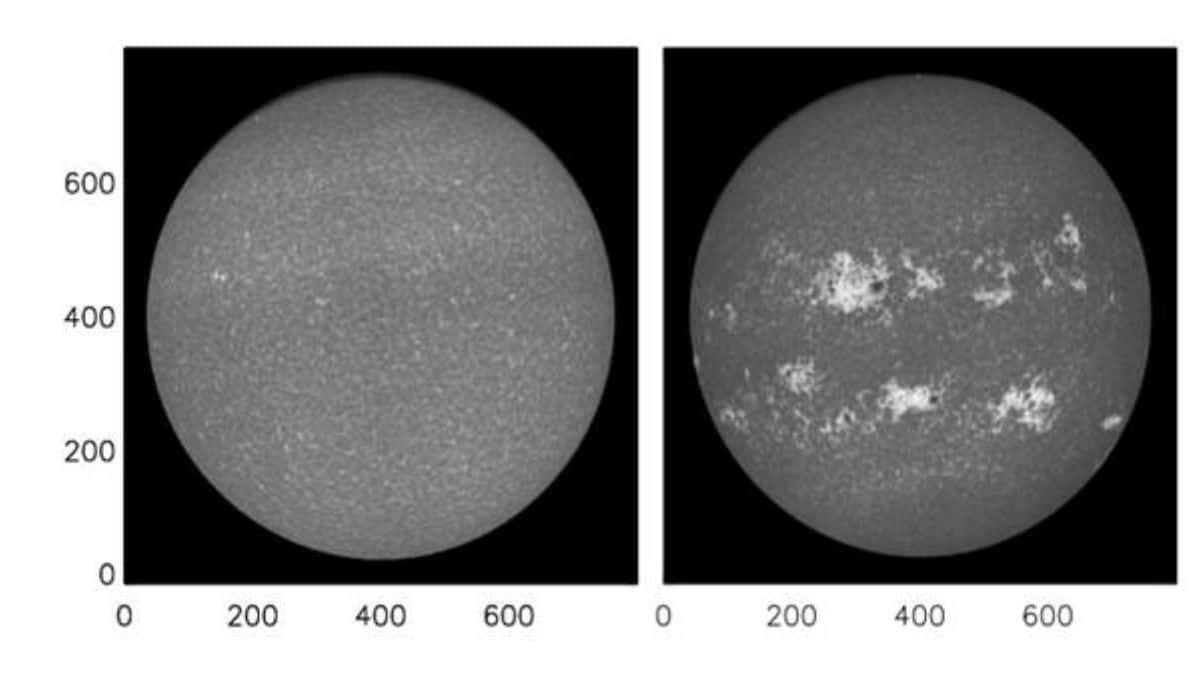
New Delhi, June 2026: A groundbreaking study based on more than a century of solar observations from India has uncovered new insights into how the Sun’s surface activity follows its 11-year solar cycle.
The research was highlighted by the Ministry of Science & Technology and conducted using long-term data from the historic Kodaikanal Solar Observatory, one of the world’s oldest continuous solar observation archives.
The study was carried out by scientists from the Indian Institute of Astrophysics under the Department of Science and Technology (DST), and provides fresh clues about how magnetic activity and convection patterns evolve across the solar surface.
100+ Years of Solar Data Unlock New Patterns
Researchers analyzed over 34,000 Ca II K spectroheliograms collected over more than 100 years to study how solar surface structures respond to the solar cycle.
The Sun’s outer layers behave like a boiling fluid, forming large convection cells known as supergranulations. These patterns create a network-like structure that changes with solar activity.
The study found that these structures are closely linked to sunspot cycles, but not in a uniform way across the Sun’s surface.
Key Breakthrough Findings
The research revealed several important patterns:
-
Solar surface activity does not follow the same pattern at all latitudes
-
Strongest correlations appear near ±18°–20° latitude
-
Different solar properties respond at different times
-
Some signals peak during solar maximum, while others lag by up to 2.5 years
-
Lane width and intensity show different timing responses to solar activity
These findings suggest that the Sun’s 11-year cycle is more complex than previously understood, involving delayed and latitude-dependent responses.
Why This Study Matters
Understanding solar activity is crucial for predicting space weather, which can affect satellites, communication systems, and power grids on Earth.
By identifying time delays and regional variations in solar behavior, the study may help improve long-term forecasting of solar cycles and their impact on Earth’s environment.
Researchers also highlighted that such long-term datasets are extremely rare, making India’s Kodaikanal Solar Observatory a globally valuable scientific resource.
Future Research Direction
Scientists believe further studies using high-resolution solar observatories will help decode the physical mechanisms behind these patterns and improve predictive models of solar activity.
The findings strengthen India’s position in global solar physics research and highlight the importance of archival scientific data in modern discoveries.