
India Enters Advanced Nuclear Era with Prototype Fast Breeder Reactor Milestone
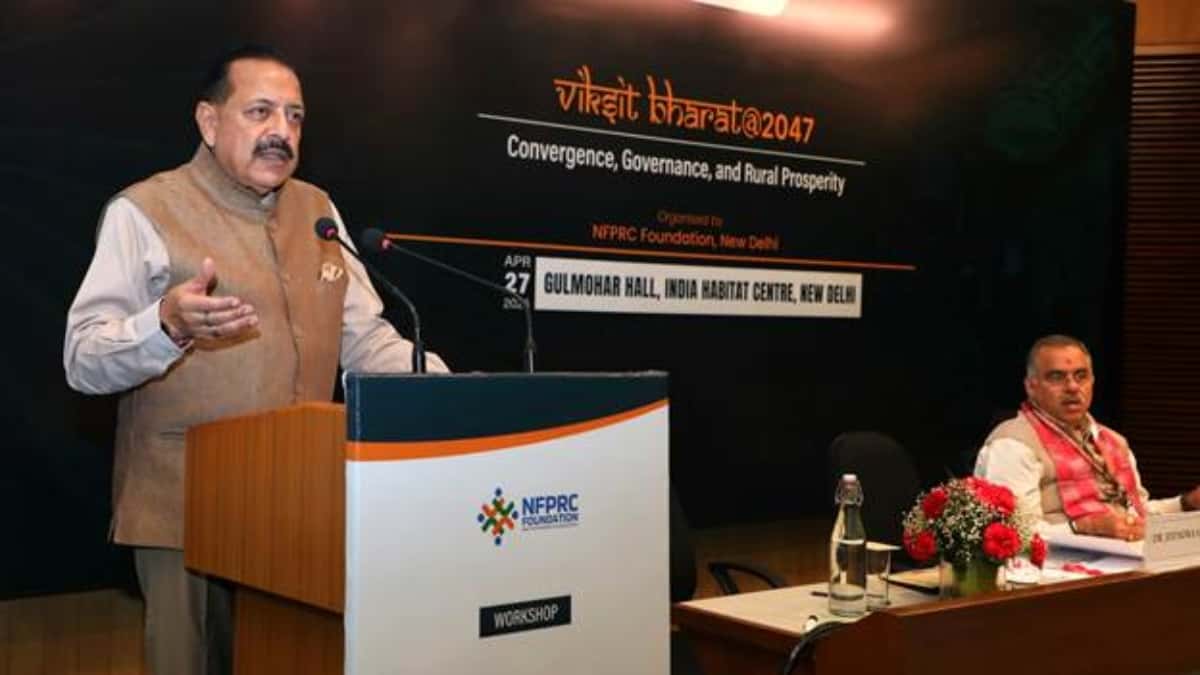
New Delhi: India has achieved a major breakthrough in its nuclear energy programme with the successful development and first criticality of an indigenously designed 500 MWe Prototype Fast Breeder Reactor (PFBR) at Kalpakkam, Tamil Nadu. The announcement was made by Union Minister Dr Jitendra Singh during a workshop on Small Modular Reactors (SMRs) in New Delhi.
The development positions India to become the second country in the world, after Russia, to operate a commercial-level fast breeder reactor, marking a significant step forward in its long-term nuclear energy roadmap.
Major Step in India’s Three-Stage Nuclear Programme
The PFBR has been developed by the Indira Gandhi Centre for Atomic Research (IGCAR) and constructed by BHAVINI.
It uses uranium–plutonium mixed oxide fuel and represents the second stage of India’s three-stage nuclear programme, designed to produce more fissile material than it consumes. This advancement is expected to pave the way for the eventual utilisation of India’s vast thorium reserves in the third stage of nuclear development.
Global Positioning in Nuclear Technology
Dr Jitendra Singh noted that only a few countries have developed fast breeder reactor capabilities, placing India in an elite group of advanced nuclear technology nations. While Russia currently operates commercial fast breeder reactors, India is now close to operational deployment of its own system.
Historically, countries such as the United States, United Kingdom, France, Japan, Germany, and China have worked on experimental fast reactor programmes, but most have been discontinued or are not commercially active.
Nuclear Mission and Small Modular Reactors
The Minister also highlighted India’s newly launched “Nuclear Mission”, under which ₹20,000 crore has been allocated for expanding nuclear energy capacity.
Key initiatives include:
- Development of 5 Small Modular Reactors (SMRs) by 2033
- Promotion of captive nuclear power for industries and remote regions
- Repurposing of thermal plant sites for nuclear deployment
SMRs are expected to support:
- Industrial power requirements
- AI and data infrastructure growth
- Remote and off-grid electrification
- Clean energy transition in dense urban regions
Private Sector Participation and Policy Reform
The proposed SHANTI Act aims to enable private sector participation in India’s nuclear energy expansion, supporting faster scaling of capacity and technological innovation.
These reforms align with the government’s broader goal of increasing nuclear capacity to 100 GW by 2047, as part of India’s long-term clean energy transition strategy.
Role in India’s Clean Energy Future
Dr Jitendra Singh emphasized that nuclear energy will play a crucial role in India’s future energy mix, especially as sectors like artificial intelligence, advanced manufacturing, and digital infrastructure demand uninterrupted and clean power supply.
He reiterated that India’s strategy will be based on a balanced combination of nuclear, renewable, and other clean energy sources to achieve net-zero emissions by 2070.