
Is E20 20% Ethanol Petrol Beneficial for Cars & Bikes? Pros and Cons
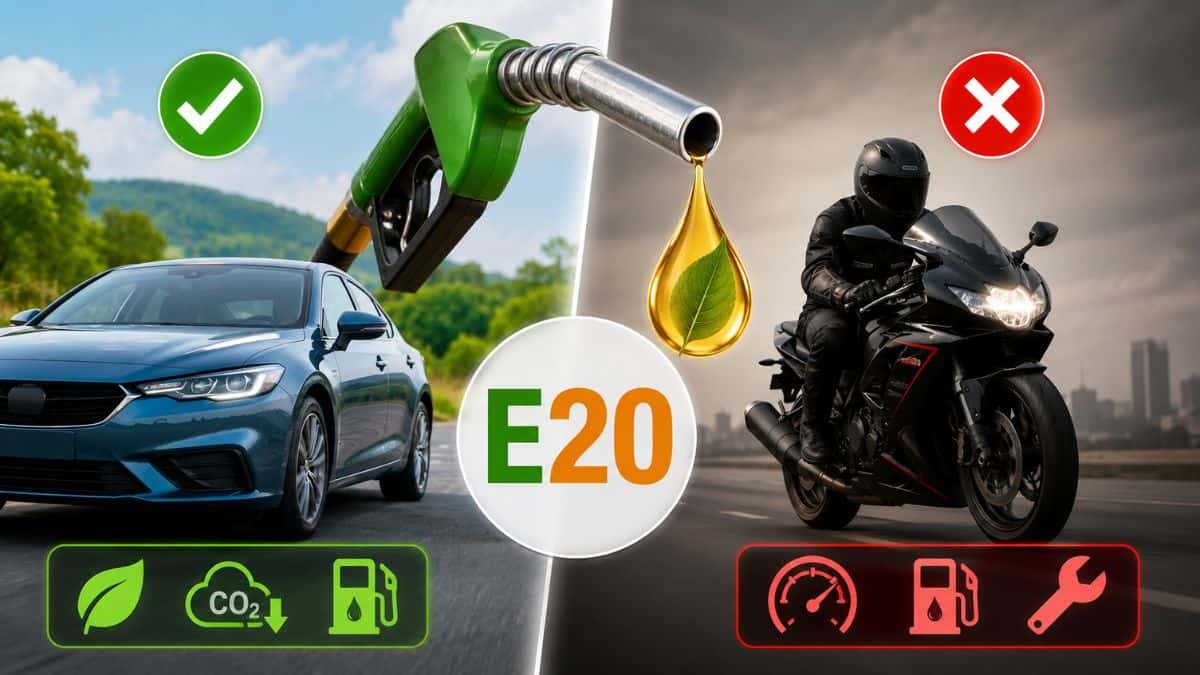
New Delhi, June 6, 2026: With India rapidly expanding the use of E20 (petrol blended with 20% ethanol), many vehicle owners are asking: Is E20 petrol actually beneficial?
Here’s a clear, balanced, and fact-based analysis of the pros and cons of E20 fuel for cars and motorcycles.
Pros of E20 20% Ethanol Petrol
1. Cleaner Emissions & Greener Environment E20 has higher oxygen content, leading to more complete combustion. It can reduce carbon monoxide emissions by up to 30% and also lowers hydrocarbons and particulate matter. This makes it significantly better for air quality in cities.
2. Higher Octane Rating = Smoother & Better Performance Ethanol’s high octane rating (108+) helps reduce engine knocking. Many users with compatible vehicles report smoother acceleration, better throttle response, and improved ride quality.
3. Cleaner Engine Internals In modern E20-compatible vehicles (mostly post-2023 BS6 Phase-II models), ethanol helps dissolve carbon deposits, keeping fuel injectors and combustion chambers cleaner for better long-term engine health.
4. Supports Farmers & Energy Security E20 boosts demand for domestically produced ethanol from sugarcane and other crops. This strengthens the rural economy, creates jobs, and reduces India’s dependence on imported crude oil.
5. Government-Backed & Officially Tested Extensive testing by ARAI confirms E20 is safe and beneficial for compatible vehicles with no major safety concerns.
Cons of E20 20% Ethanol Petrol
1. Noticeable Drop in Mileage Due to ethanol’s lower energy density, most users experience:
-
1–4% drop in modern compatible vehicles
-
3–8% drop in older or non-optimized vehicles This means you may need to refuel more frequently.
2. Compatibility Issues in Older Vehicles Pre-2023 cars and bikes (especially BS4 and older) can face problems such as:
-
Corrosion or degradation of rubber seals, hoses, and gaskets
-
Clogged fuel filters
-
Rough idling or starting issues
-
Increased maintenance costs over time
3. Slight Performance Dip in Some Cases While newer vehicles perform well, some older engines may show minor hesitation, reduced power at low speeds, or cold-start difficulties.
4. Higher Maintenance for Non-Compatible Vehicles Owners of older models may need to replace fuel system components more often, adding to long-term ownership costs.
Who Benefits Most from E20?
-
Best Choice: Owners of post-2023 BS6 Phase-II cars and bikes — full compatibility and maximum benefits.
-
Proceed with Caution: Owners of older vehicles — check your manufacturer’s E20 compatibility recommendation before regular use.
-
Real-World Tip: The mileage drop is often partially offset by smoother combustion in tuned modern engines.
Final Verdict: Yes, E20 petrol is beneficial for the environment, modern vehicles, and India’s energy goals. However, the mileage reduction and potential issues in older vehicles are important drawbacks. For newer cars and bikes, the pros clearly outweigh the cons.