
ISRO successfully accomplishes major qualification tests crew module system of Gaganyaan Mission
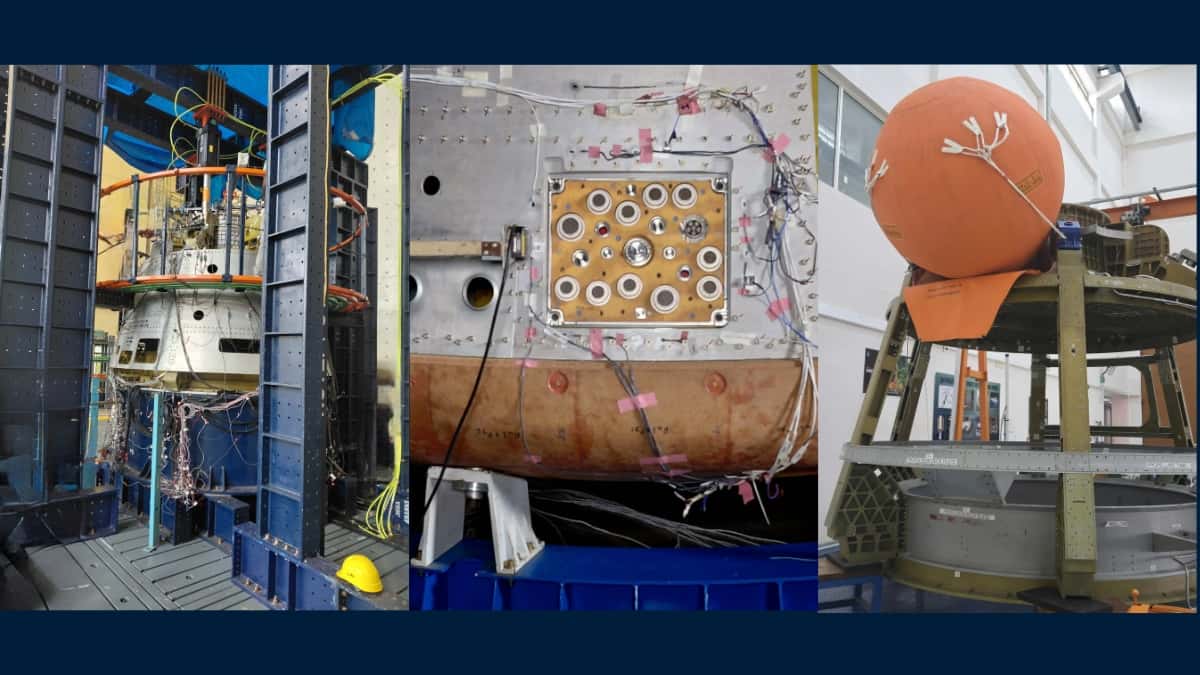
The Indian Space Research Organization (ISRO) has announced that it has successfully accomplished the three major qualification tests for the crew module systems of the Gaganyaan Mission through float inflation testing for the Crew Module Up-righting System (CMUS), umbilical separation testing of the crew module service module connect and disconnect system (CSCDS), and the crew module structure qualification test for apex cover separation loads.
The first test has validated the crew module uprighting system that ensures the crew module returns to an upright position post splashdown in the sea, which is one of the important crew safety requirements. The system is based on stored cold-gas technology, critical for astronauts.
The second test involves the separation of the umbilical mechanism that connects the crew module where the astronauts are accommodated with the service module, providing power and propulsion. The mechanism consists of two units, CSU-1 on the crew module side and CSU-2 on the service module side. The crew module’s re-entry into the Earth’s atmosphere makes the service module separate from the crew module after CSU-1 disconnects.
Now CSU-2 also separates right before re-entry. ISRO carried out a separation test of CSU-2 from a simulated crew module. The test confirmed the clean separation of CSU-2 and the structural stability of the crew module panel and its interfaces.
The third test measured the structural integrity of the crew module during the separation of the apex cover. The apex cover protects the parachutes and associated systems during the mission and is jettisoned prior to parachute deployment to allow safe descent of the crew module.