
Oil at $108, US Bond Yield 5.04%: What It Means for India
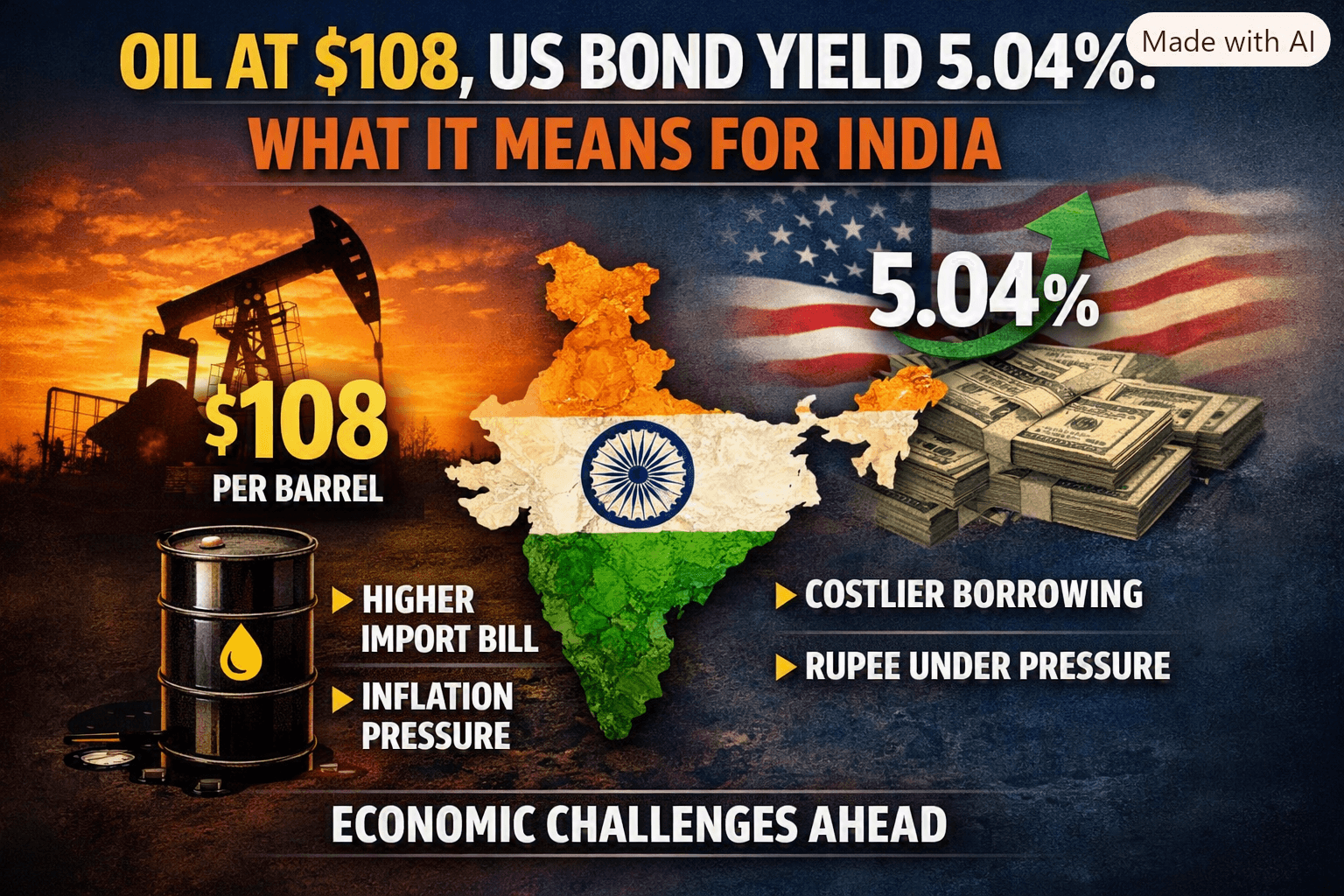
New Delhi — Oil prices touched $108 per barrel in global trade on Tuesday. US bond yields also hit 5.04%. That is the highest level since 2007.
Both events point to one big fear. Investors expect the US Federal Reserve to raise interest rates again.
Why Are Oil Prices and US Bond Yields Rising?
Oil prices are climbing on tight global supply. Major producers have cut output. Geopolitical tensions in key oil regions are adding to the worry.
US bond yields are rising for a different reason. The US economy remains strong. Jobs data and consumer spending stay firm. This gives the Federal Reserve room to keep rates high.
Notably, the 10-year US Treasury yield crossed 5%. That is a level not seen in nearly two decades.
What Do Rising US Bond Yields Mean?
US bond yields are the return investors earn on US government bonds. When yields rise, bonds become more attractive. Money moves out of stocks and into bonds.
Higher yields also make borrowing costlier worldwide. Companies pay more to raise funds. Home loans and business loans get expensive too.
As a result, global stock markets come under pressure. Foreign investors sell shares in emerging markets like India. The rupee also weakens against the dollar.
How Will This Affect the Indian Stock Market?
Higher US bond yields usually pull Indian markets down. Foreign investors sell shares and shift funds to US bonds.
Meanwhile, costly oil is a bigger problem for India. The country imports over 80% of its crude oil needs.
Every $10 rise in oil prices adds about $13-14 billion to India's import bill. That widens the trade deficit and weakens the rupee.
Which Sectors Will Feel the Pain?
Some sectors feel the heat first.
-
Aviation: Fuel is a large part of airline costs.
-
Paints and logistics: Higher fuel raises transport costs.
-
Oil marketing companies: Margins shrink when crude spikes.
For the common person, the impact shows up at the petrol pump. Petrol, diesel and LPG rates could rise. Transport costs may push up food prices too.
Who Benefits From This Situation?
Not everyone loses. IT and pharma exporters gain from a weak rupee. Their earnings rise when the dollar strengthens.
Investors holding US bonds or dollar assets also benefit. They earn higher returns at lower risk.
What Should Investors Do Now?
Market experts advise caution in the near term. They suggest watching US inflation data and Federal Reserve comments closely.
Any sign of easing rate pressure could calm markets. A drop in oil prices would also bring relief.
As a result, investors should avoid panic selling. Focus on company fundamentals and long-term goals instead.
Key Numbers at a Glance
-
Oil price: $108 per barrel
-
US 10-year bond yield: 5.04%
-
Highest yield since: 2007
-
India's oil import dependence: Over 80%
-
Import bill impact: $13-14 billion for every $10 oil rise
(Source: Official market data and PIB releases.)