
Private Space Sector Gains Momentum as Investment Crosses $618 Million, Jitendra Singh Tells Rajya Sabha
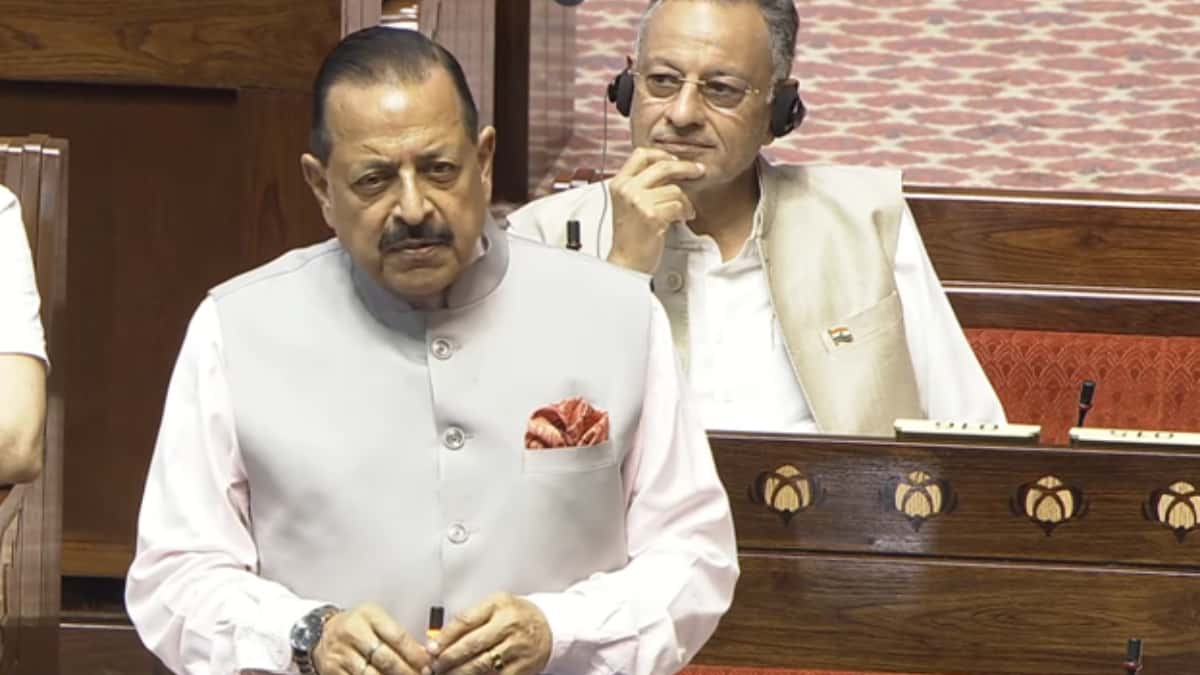
New Delhi: India's private space sector is gaining significant momentum, with private investment crossing USD 618.5 million and 105 authorisations issued to non-government entities as the country expands private participation in space activities.
Union Minister of State (Independent Charge) for Science & Technology, Earth Sciences, and Minister of State in the Prime Minister's Office, Dr Jitendra Singh, shared the figures in the Rajya Sabha on July 23, 2026.
According to the Minister, private investment in India's space sector reached USD 618.5 million as of March 31, 2026, up from USD 100.5 million in 2021-22 and USD 348.5 million in 2023-24. A further USD 187 million in private investment was reported during 2026.
The government has also granted 105 authorisations to non-government entities (NGEs) as of July 14, 2026, reflecting the growing participation of private companies in India's space economy.
At the same time, the government is strengthening regulatory and security safeguards as commercial activity expands. Dr Jitendra Singh said applications for private space activities are assessed by IN-SPACe under its Norms, Guidelines and Procedures, taking into account strategic, security and national interest considerations.
IN-SPACe is also developing dedicated Safety and Security Guidelines for space activities in India in consultation with stakeholders. The guidelines are intended to further strengthen the regulatory framework as the private space industry expands.
The government has introduced several measures to support the sector, including the India Space Policy 2023, a liberalised FDI policy, simplified authorisation procedures, access to ISRO facilities, a ₹1,000 crore Venture Capital Fund, a ₹500 crore Technology Adoption Fund, the IN-SPACe Seed Fund Scheme, technology transfer, incubation support and skill development initiatives.
The growth of India's space startup ecosystem has been equally notable. Dr Jitendra Singh said 17 space startups have so far received authorisation from IN-SPACe to undertake space activities.
An impact assessment of the 2020 space sector reforms also points to a sharp expansion in the industry. The number of active space startups has grown from just one in 2014 to more than 400, while private investment has crossed USD 600 million.
Indian private companies have also demonstrated launch and orbital capabilities, placed more than 30 satellites into orbit, and flown nearly 45 payloads through platforms including the PSLV Orbital Experimental Module (POEM).
India's private space companies are increasingly attracting international investment, expanding overseas operations and partnering with global players. IN-SPACe has established working relationships with more than 45 countries and signed cooperation agreements with foreign space agencies.
The domestic ecosystem is also seeing large-scale private investment. Under the Earth Observation Public-Private Partnership (EO-PPP) initiative, leading Indian companies are working on the country's first privately owned Earth observation satellite constellation, backed by an estimated private investment commitment of around ₹1,200 crore.
The latest figures indicate that India's space reforms are moving the sector beyond government-led activity towards a broader ecosystem driven by private investment, startups and commercial innovation, while the government continues to strengthen safety and national security oversight.