
Rakhigarhi Skeletons Sent for DNA Analysis, Scientists Hope to Unlock Harappan Secrets
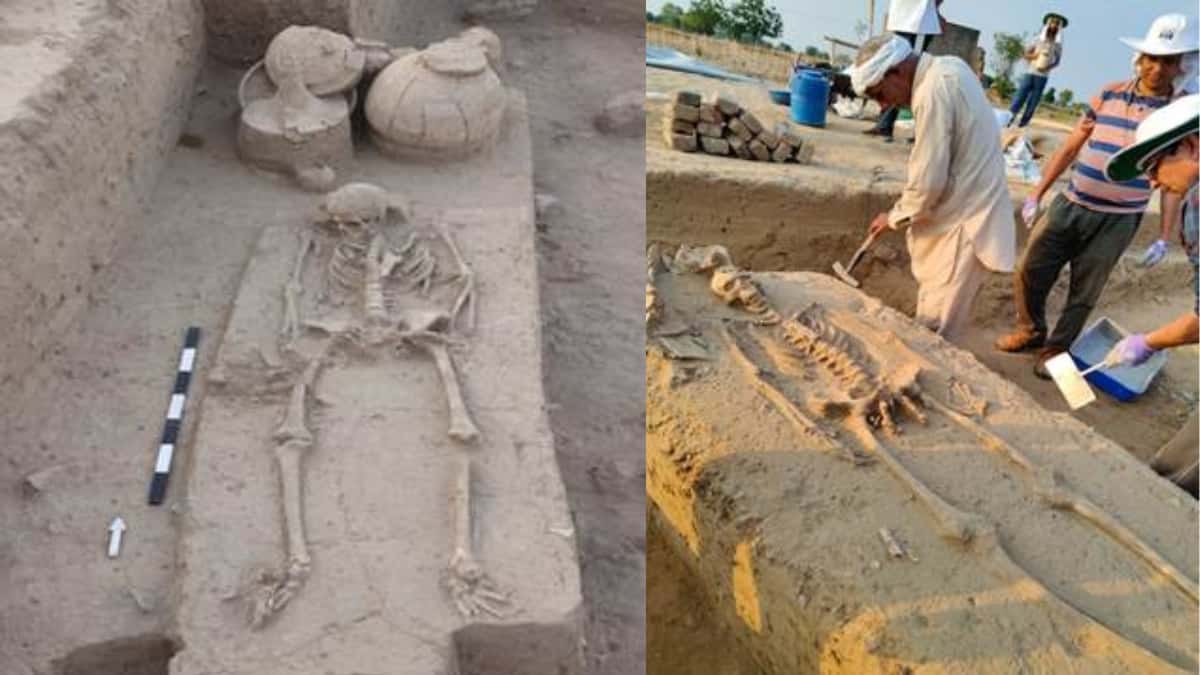
New Delhi, 22 June 2026: In a major step towards unraveling the mysteries of the ancient Indus-Saraswati Civilization, human skeletal remains excavated from Haryana's Rakhigarhi archaeological site have been formally transferred by the Archaeological Survey of India (ASI) to the Anthropological Survey of India (AnSI) for advanced scientific investigation.
The transfer follows a recently signed Memorandum of Understanding (MoU) between the two institutions and is expected to strengthen multidisciplinary research into one of the world's earliest urban civilizations.
Eight Burials Discovered During Latest Excavation
During the 2025-26 excavation season, archaeologists from ASI's Excavation Branch-II uncovered eight burials at Mound No. 7, an area identified as an ancient cemetery. Three complete human skeletons and skeletal fragments recovered from other burials have now been moved to AnSI's ancient skeletal repository and laboratory in Kolkata for detailed analysis.
Spread over nearly 550 hectares in Haryana, Rakhigarhi is regarded as the largest known settlement of the Indus-Saraswati Civilization and contains evidence of planned urban settlements, drainage systems, trade networks, craft production centres, and burial sites.
Ancient DNA Studies to Reveal Origins and Migration Patterns
Scientists believe the remains offer a unique opportunity to apply cutting-edge techniques such as ancient DNA (aDNA) analysis, stable isotope studies, osteological assessments, palaeopathology, and environmental reconstruction.
These investigations are expected to provide crucial insights into ancestry, migration patterns, diet, disease prevalence, adaptation strategies, and interactions between humans and their environment during the Harappan era.
The research will be undertaken in collaboration with leading institutions, including the Birbal Sahni Institute of Palaeosciences (BSIP), University College London (UCL), and researchers from Banaras Hindu University (BHU) specializing in ancient DNA studies.
Experts Welcome the Initiative
Leading scholars and scientists have hailed the transfer as a significant development for Indian palaeoanthropological research.
Padma Shri awardee and CCMB senior scientist Dr. Kumaraswamy Thangaraj said ancient DNA technology could reveal valuable information about the genetic history of the Harappan people and help scientists understand how human genomes evolved since around 3000 BCE.
Similarly, Professor Gyaneshwer Chaubey of BHU described the collaboration as a major milestone in reconstructing the genomic history of the Harappan Civilization.
Experts believe integrating genetic, osteological, and isotopic studies will shed light on the ancestry, health, mobility, and lifestyles of the Indus Valley population while helping train a new generation of Indian scientists in palaeogenomics.
Revival of Palaeoanthropological Research
Officials noted that the Anthropological Survey of India has a long history of studying skeletal remains from Indus-Saraswati sites, though such work had declined over the years.
Recent efforts to revive palaeoanthropological research through specialized teams and training programmes have led to new scientific studies and publications. The Rakhigarhi project is expected to further enhance India's capabilities in ancient DNA research and promote collaborations with institutions working in geology, zoology, botany, and palaeoclimate sciences.
Source:
Press Information Bureau (PIB)