
Stronger Law Against Paper Leaks: Key Changes in the 2026 Amendment Bill
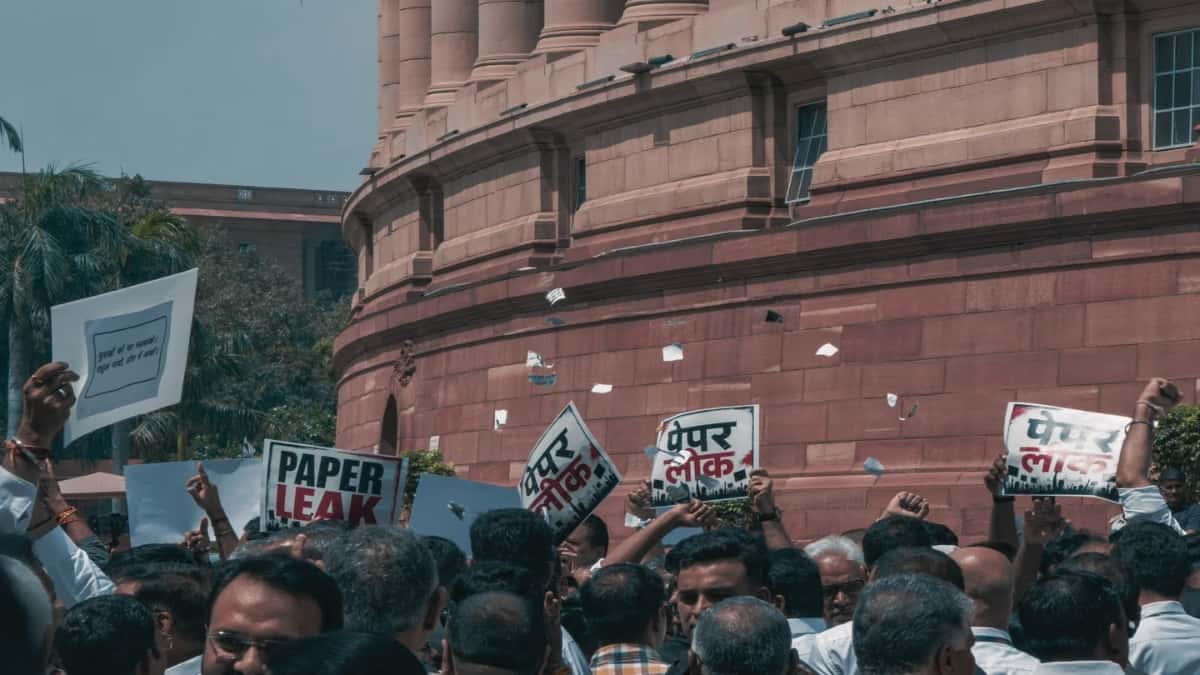
New Delhi, 31 July 2026: The Government has introduced the Public Examinations (Prevention of Unfair Means) Amendment Bill, 2026 in the Lok Sabha.
The Bill amends the 2024 Act to make punishments stricter and ensure faster investigation and trial of exam fraud cases.
Why the amendment was needed
Recent cases of question paper leaks and malpractice have continued to hurt the fairness of public examinations.
The new Bill aims to strengthen deterrence and deliver quicker justice to students.
Tougher punishments
|
Offence |
Earlier (2024 Act) |
Now (2026 Bill) |
|---|---|---|
|
Individual offenders |
3–5 years jail + fine up to ₹10 lakh |
5–10 years jail + fine up to ₹50 lakh |
|
Service providers |
Fine up to ₹1 crore + 4-year ban |
Fine up to ₹5 crore + 8-year ban |
|
Directors / senior management |
3–10 years jail + ₹1 crore fine |
5–10 years jail + ₹5 crore fine |
|
Organised crime |
5–10 years jail + fine of at least ₹1 crore |
7–10 years jail + fine of at least ₹10 crore |
Faster investigation
-
Investigation must be completed within two months.
-
The Central Government can now form a dedicated Special Task Force for any case.
-
Once a Special Task Force is notified, only it will investigate that case.
Special Fast Track Courts
Every State and Union Territory must designate a Court of Session as a Special Fast Track Court (in consultation with the High Court Chief Justice).
Key features:
-
Day-to-day hearings.
-
Trial to be completed within three months of the chargesheet.
-
Pending cases will be transferred to these courts and finished within three months of transfer.
-
Special Public Prosecutors will be appointed for these cases.
-
Connected offences under other laws can be tried together in the same court.
Clear appeal process
-
Appeals against judgments or orders go directly to the High Court.
-
Heard by a bench of two judges.
-
Ideally disposed of within three months of admission.
-
Appeal must normally be filed within 30 days (maximum 90 days).
-
Bail orders can also be challenged in the High Court.
What it means for students
Exam fraud will now carry much higher risks for offenders.
Cases will move faster from investigation to trial, giving honest candidates greater confidence that paper leaks and cheating rackets will be punished quickly and severely.
The Bill seeks to make India’s public examination system more transparent, secure and trustworthy.