
Cabinet Clears ₹20,667 Crore Ahmedabad–Dholera Semi High-Speed Rail Project
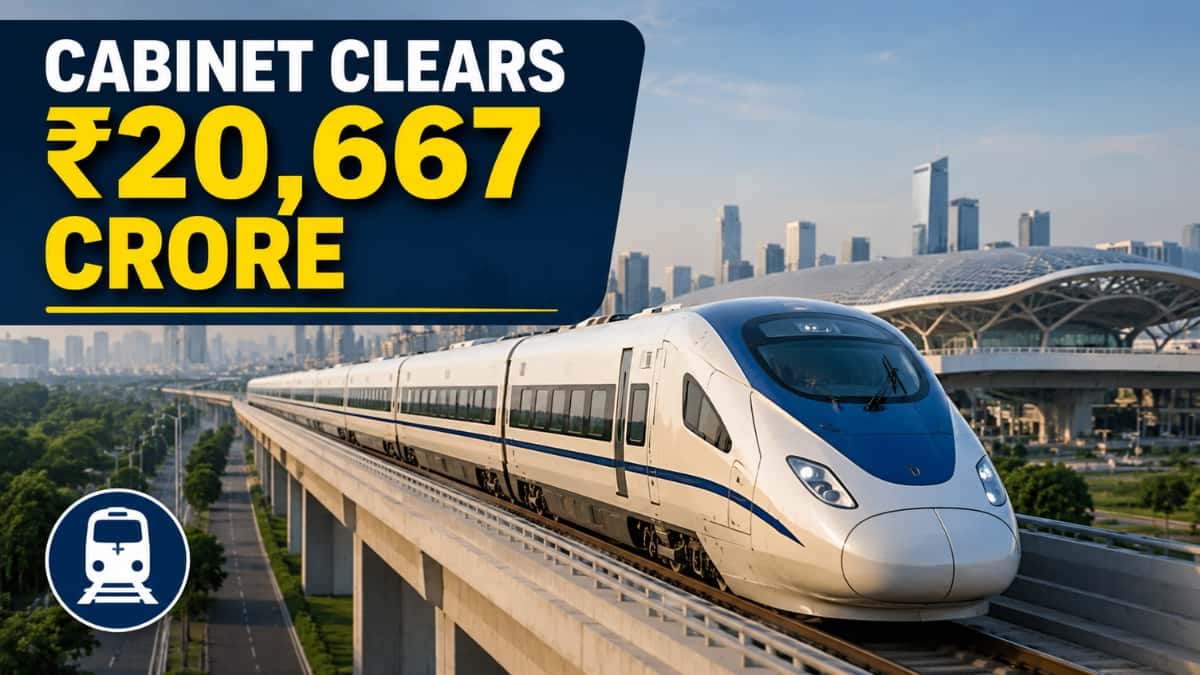
New Delhi: The Cabinet Committee on Economic Affairs, chaired by Prime Minister Narendra Modi, has approved the Ahmedabad (Sarkhej)–Dholera Semi High-Speed Double Line project of the Ministry of Railways. The project is estimated at approximately ₹20,667 crore and is targeted for completion by 2030–31.
This initiative will be India’s first semi high-speed rail project developed using indigenous technology and will increase the existing railway network by about 134 km in Gujarat.
Key Highlights of the Project
-
Total project cost: ₹20,667 crore (approx.)
-
Completion timeline: By 2030–31
-
Network expansion: Around 134 km
-
Coverage: Ahmedabad district in Gujarat
-
Beneficiaries: Connectivity to around 284 villages with a population of about 5 lakh people
Boost to Connectivity and Mobility
The project will significantly improve connectivity between Ahmedabad, Dholera Special Investment Region (SIR), the upcoming Dholera Airport, and Lothal National Maritime Heritage Complex.
Faster travel will enable comfortable daily commuting and same-day return trips. The rail line is expected to reduce travel time and enhance passenger convenience while strengthening regional connectivity.
A Model for Future Semi High-Speed Rail
As India’s first semi high-speed rail project, this initiative will act as a reference model for phased expansion of semi high-speed rail across the country. It will improve service reliability and efficiency within the Indian Railways network.
Alignment with PM Gati Shakti
The project is aligned with the PM Gati Shakti National Master Plan to enhance multimodal connectivity and logistics efficiency through integrated planning and stakeholder coordination. The rail corridor will enable seamless movement of passengers, goods, and services.
Economic and Employment Benefits
The project is expected to contribute to regional development by improving employment and self-employment opportunities in the region. Enhanced connectivity will support economic growth and infrastructure development.
Environmental Impact
Railways are among the most energy-efficient transport modes. The project will help reduce oil imports by approximately 0.48 crore litres and cut CO₂ emissions by about 2 crore kilograms, equivalent to planting nearly 10 lakh trees.