
Mumbai–Ahmedabad Bullet Train to Get High-Speed Turnouts with Movable Crossings
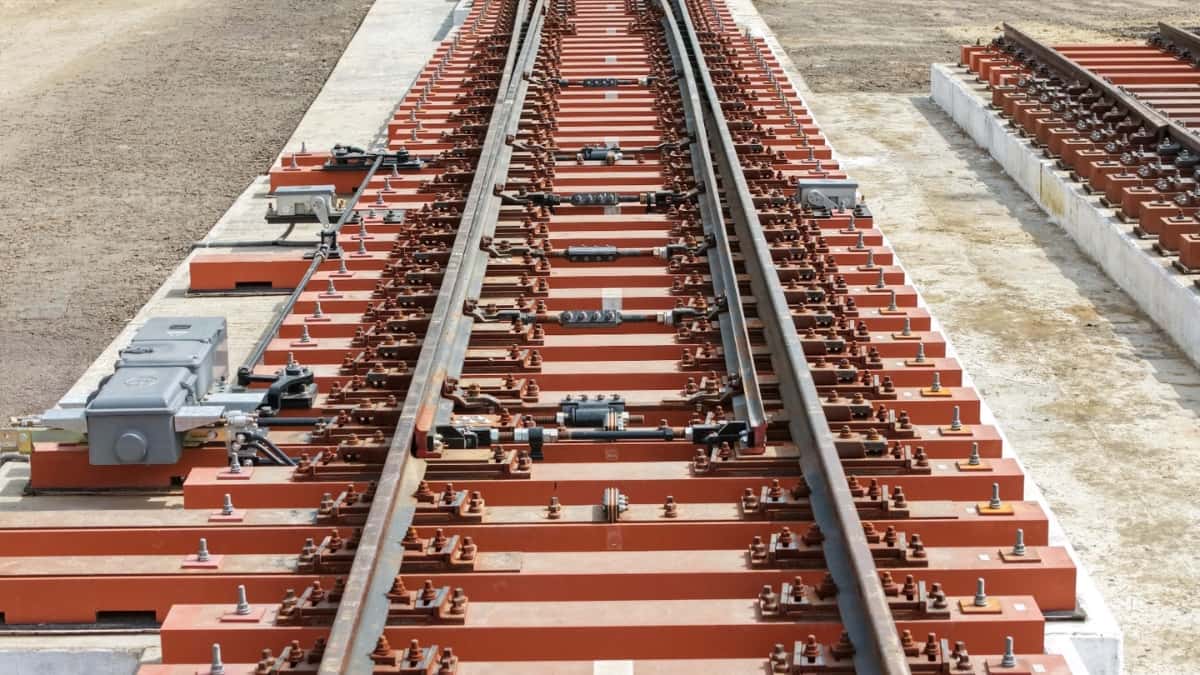
Mumbai: The Mumbai–Ahmedabad High-Speed Rail (MAHSR) project is set to introduce a first-of-its-kind technology on the Indian railway network — turnouts equipped with movable crossings (also known as swing-nose crossings).
This system is essential for safe and reliable train operations at design speeds of up to 320 km/h.
Why Movable Crossings Are Needed
On conventional railway lines, turnouts use fixed crossings. These have a small gap at the crossing nose that the wheel must jump across. At speeds above 250–300 km/h, this gap creates serious problems:
-
High impact forces on the track and wheels
-
Increased vibration and noise
-
Faster wear of rails and wheel flanges
-
Higher risk of irregular wheel movement
A movable crossing solves this by physically shifting the crossing nose along with the switch rails. This creates a continuous, gap-free running surface for the train wheels.
The result is:
-
Smoother passage through the turnout
-
Lower vibration and noise for passengers
-
Reduced wear on tracks and trains
-
Higher safety and longer maintenance intervals
Dual Point Machine System
Each high-speed turnout on the MAHSR corridor will use two independent point machines:
-
One machine to move and lock the switch rails
-
Another machine to move and lock the movable crossing nose
Both machines work together under a coordinated signalling command. The train is allowed to pass only after both machines confirm that the rails are correctly positioned and securely locked.
This dual-machine and dual-locking arrangement is a key safety feature designed for high-speed operations.
Higher Technical Standards
The point machines used for these turnouts are far more advanced than those on conventional railways. They require:
-
Higher force and precise movement control
-
Extremely accurate positioning (within millimetres)
-
Strong locking systems to handle forces at 320 km/h
-
Reliable performance under Indian climatic and operating conditions
Multiple independent detection systems continuously check the position and locking of both the switch rails and the movable crossing before any train movement is authorised.
This technology marks an important step in preparing India’s first high-speed rail corridor for safe, comfortable and reliable operations at world-class speeds.