
IRF writes to Nitin Gadkari to have relook at implementation of six airbags in 8 seater vehicles
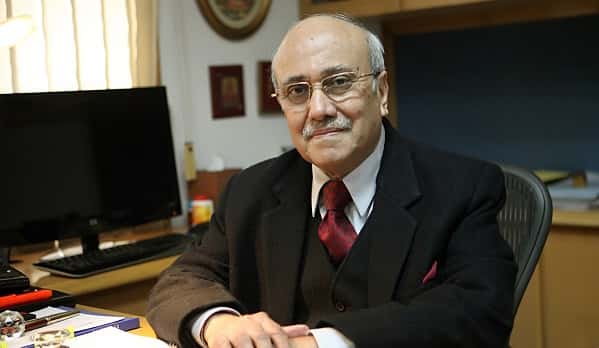
New Delhi: International Road Federation (IRF) a Geneva-based global road safety body working worldwide for better and safer roads worldwide in a letter to Shri Nitin Gadkari, Union Minister for Road Transport and Highways (MoRTH) have urged him to have a relook at the latest General Statutory Rule (GSR) on the mandatory fitment of six airbags for passenger vehicles up to eight seaters in the country and focus more on generating awareness on the fastening of rear passenger seat belts before implementing it.
“Generating awareness and educating is necessary as the practice of fastening seat belts in the rear seat is very low even in big cities and metros and near-zero in the mid to smaller cities of India. Worse still, the awareness that if an airbag deploys without a seat belt, it could be injurious or fatal - is very low in India. In this aspect, Airbag manufacturers will never tell you because they are interested only in making financial gains and not interested in safety. We need to have awareness, enforcement and good compliance, on seat belts fastening first and only then come up with the mandate for providing Airbags in all rear seats” said Mr. K K Kapila, President Emeritus, International Road Federation (IRF) in his letter to the Union Road Minister.
“It is to be kept in mind that in the event of a crash, if the passenger has not fastened his seat belt, the deployment of the airbag could end up killing the passenger. Apart from that the maximum road casualties in India are of two-wheeler riders. Just by virtue of not having an enclosed passenger compartment, a two-wheeler is much more unsafe as compared to a car.By making the minimum specifications of cars much more stringent, the prices of entry level vehicles go up, we make it increasingly difficult for these susceptible 2-wheeler owners to upgrade from a two-wheeler to a four-wheeler. A few rich people might be targeted to get safer, but many more even from upper middle class will be denied a safe mobility option. This will be a pro-rich and anti-poor policy. Let us remember In developed countries, people ride two-wheelers for the joy of a ride but In India, most people ride a two-wheeler as they cannot afford a car.” Said Mr Kapila.
“Indian road transportation is very different from abroad. A very large part, over 75% of our population runs on two-wheelers. At the same time, we have a very young and aspiring population. Also more than 65% of our population lives in the rural areas. Many often they carry their whole family on a two-wheeler. Moreover, in the rural areas, where people have to travel long distances for basic amenities like hospital and school, the requirement of a four-wheeler is significantly higher. A such number of people at the bottom of the pyramid would be several lakh buyers every year. We should encourage low-cost, no-frills entry-level cars and not make them un-affordable. Foreign airbag manufacturers’ lobby will never like the policymakers to think for the poor in India.” Said Mr Kapila.
“An Airbag assembly, primarily consists of 4 key components - Sensors that assess the impact, Controller unit, Inflator, and Fabric. While airbag manufacturers have local units, most of the child parts are imported, and that too from China. The companies here are just assembling these child parts and have a very low local value addition. The 6-air bag regulation will increase imports from China and fill the pockets of foreign MNCs. This is completely against the national vision of Atma Nirbhar Bharat (Made in India) pronounced loud and clear by the Hon’ble Prime Minister.” Added Mr Kapila.
“Fitment of Six Airbags is not regulated by any country of the world, despite full sensitivity on this subject. There must be some reason. To our knowledge, safety anywhere in the world is never mandated through the number of airbags but through comprehensive crash test regulations with defined injury criteria. Incidentally, Indian crash test regulations (frontal-offset, side-impact, and pedestrian impact), thanks to MoRTH's recent legislation, are at par with Europe (wherein we had also requested MoRTH).” He said.