
What Is Limping in Poker? Rules, Strategy and Examples
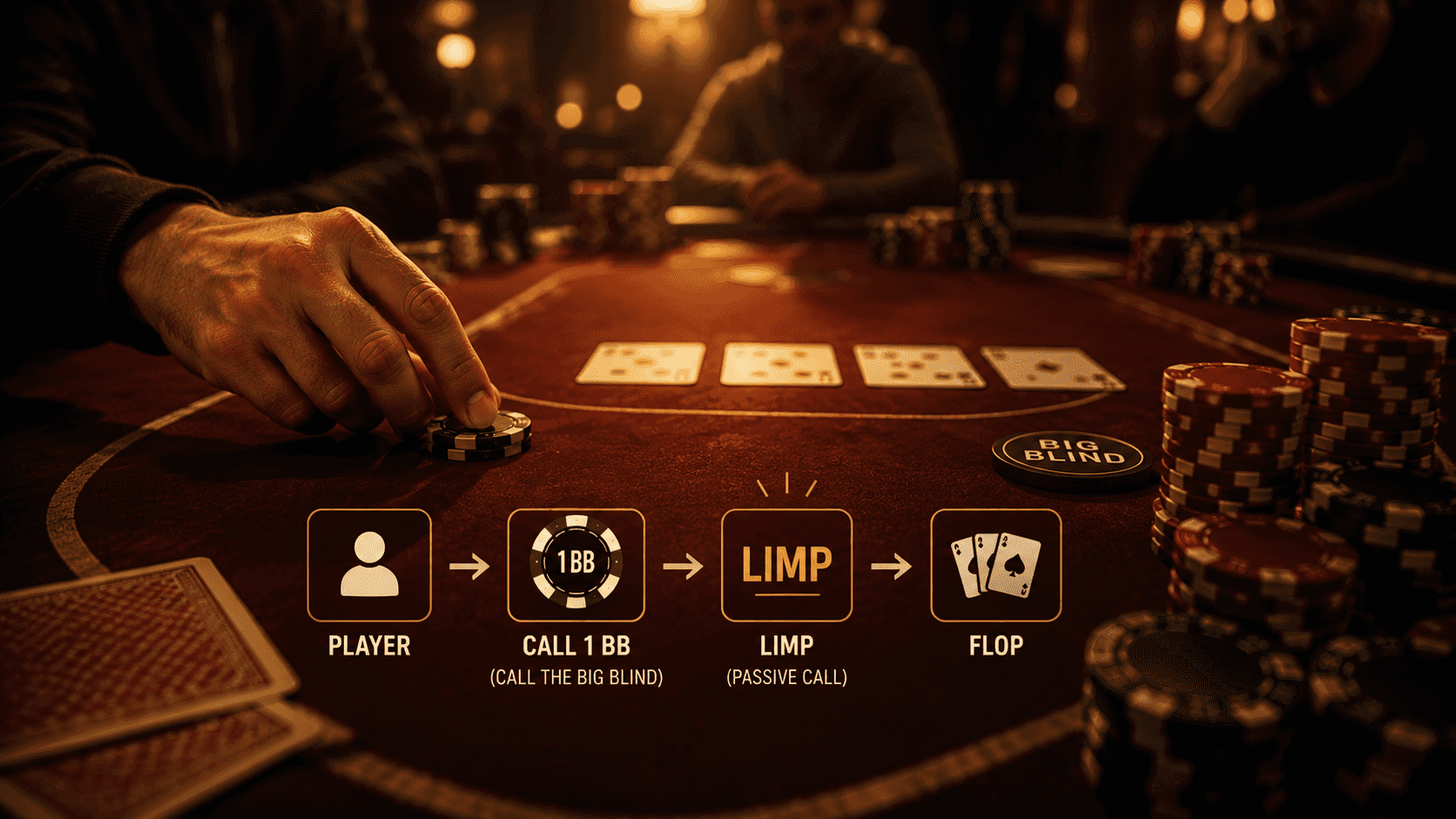
Limping in poker means entering an unraised pot by calling the big blind instead of raising. It is common among beginners who want to see the flop cheaply, although experienced players can also use limping in specific situations.
The main problem is that frequent limping gives opponents inexpensive access to the flop and leaves the limper without preflop initiative. For that reason, raising or folding is usually a better default strategy in unopened pots.
What Is a Limp in Poker?
A limp occurs on the preflop when a player matches the big blind before anyone has raised. With $1/$2 blinds, for example, entering an unopened pot for $2 is a limp. If another player has already raised and you match that bet, the action is simply a call.
A player who regularly enters pots this way is called a limper. Understanding this distinction is fundamental to Limp poker, since a limp describes a specific preflop situation rather than every call made during a hand.
Limp vs Call vs Raise
Limping is technically a form of calling, but the actions have different meanings. A limp matches the mandatory big blind, a regular call matches another player's bet or raise, and a raise increases the amount opponents must pay to continue.
For example, with $1/$2 blinds:
- enter an unopened pot for $2.
- match an existing raise, such as $8.
- increase the current bet, for example from $2 to $6.
- give up the hand.
Raising has one major advantage over limping: it creates fold equity. Opponents may fold immediately, allowing the raiser to win the blinds without seeing a flop.
Why Is Limping Often a Weak Play?
Frequent open-limping creates several problems. Other players can enter cheaply, aggressive opponents can attack with isolation raises, and strong hands fail to build the pot when they are ahead. The result is often a multiway flop where ranges are wider and decisions become harder.
The main disadvantages are:
- More multiway pots. Several opponents can see the flop cheaply.
- No preflop fold equity. A limp cannot win the blinds immediately.
- Isolation raises. Aggressive players can raise and take the initiative.
- Smaller pots with premium hands. Strong holdings generate less value.
- Harder postflop decisions. More players and wider ranges complicate hand reading.
These problems are especially relevant for beginners. A straightforward raise-or-fold strategy in many unopened pots is usually easier to execute consistently.
Can Limping Ever Be a Good Strategy?
Not every limp is automatically a mistake. Small blind versus big blind play can include structured limping ranges, while over-limping behind other players can sometimes make sense with hands that perform well in multiway pots. Stack depth and opponent tendencies also affect the decision.
Experienced players may occasionally limp premium hands with the intention of re-raising if an aggressive opponent attacks. This limp-reraise can work as an exploit, but it carries the risk that nobody raises and several players see the flop cheaply.
Players learning when these exceptions apply can play BC Poker and compare how different preflop lines perform across real hands. The important point is to limp for a specific strategic reason rather than simply because seeing the flop is cheap.
Open-Limp vs Over-Limp
An open-limp occurs when you are the first player to voluntarily enter the pot and only call the big blind. An over-limp occurs when one or more players have already limped and you call behind them. Although both actions involve calling one big blind, the strategic situations are different.
Over-limping can offer better pot odds because money is already in the pot, particularly with speculative hands that can make strong straights or Flushes. Open-limping from early position, by contrast, leaves several players behind who can call or raise.
This is why the simple rule "never limp" is too broad. The position, previous action and players remaining behind should determine whether the situation is worth considering.
How to Play Against Limpers
A common response to a limper is an isolation raise, or iso-raise. The objective is to discourage other players from entering and reach the flop against the limper with initiative. This can be profitable when the limper enters too many weak hands and frequently folds to pressure.
Do not isolate automatically. Some opponents rarely fold after limping, while others occasionally limp strong hands intending to re-raise. Position, hand strength and the opponent's tendencies should determine how aggressively you respond.
If you want to study how different player types respond to isolation raises, check it out through hand histories rather than assuming every limp represents the same range.