
How to Check if an Online Gaming Platform Is Licensed: Curaçao, Malta and UKGC Explained
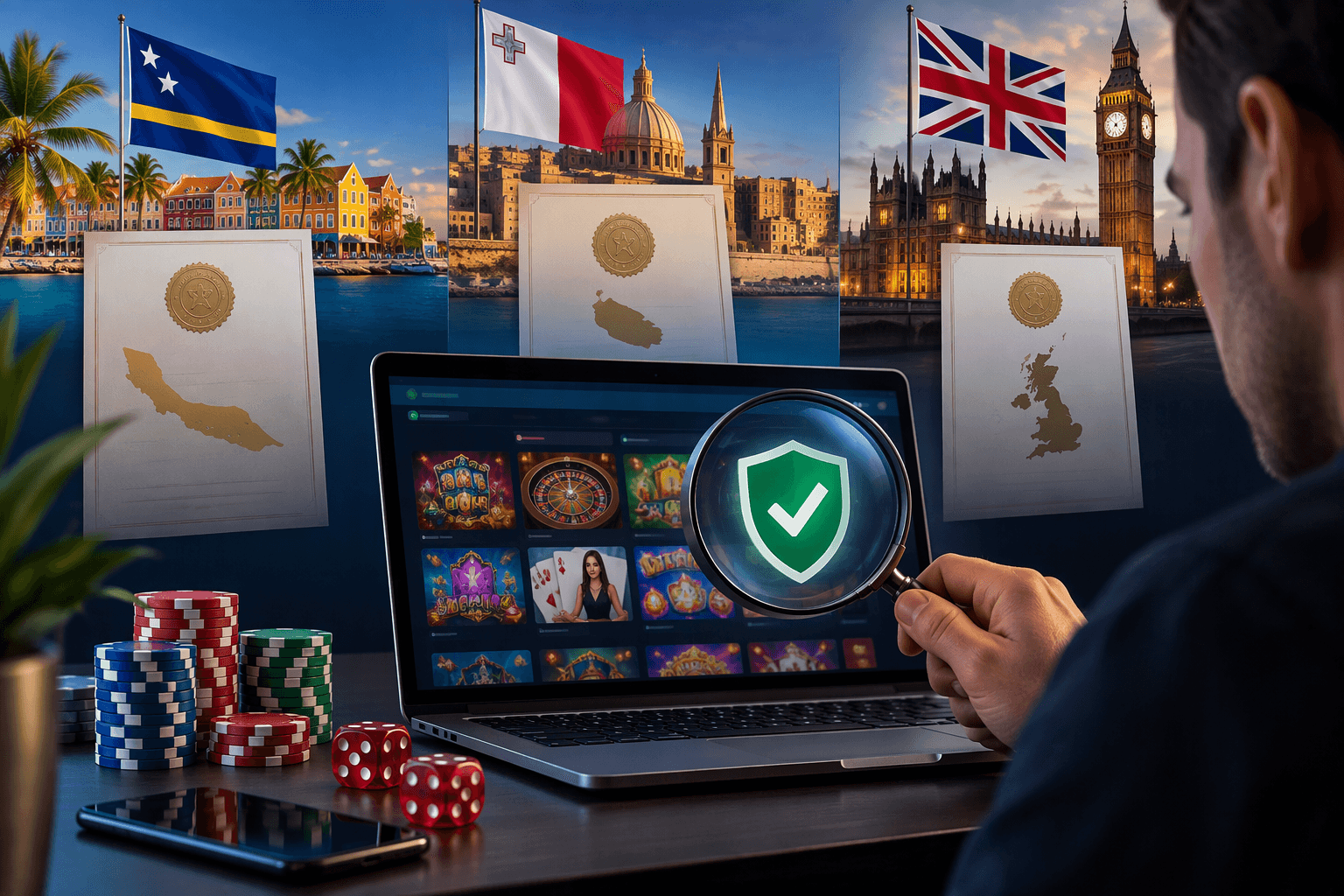
A small logo in a website footer that says "Licensed and regulated" costs nothing to add. That is exactly why scammers add it. Fake licences, copied seals and borrowed company names are among the most common tricks used by fraudulent gaming sites.
The good news is that checking a licence takes a couple of minutes once you know where to look. This guide explains why a licence matters, how to find it on a website and how to verify it with three regulators you will see often: Curaçao, Malta and the United Kingdom.
Why a licence matters
A gambling licence is not a guarantee of a good experience, but it does mean someone is watching. Requirements differ between regulators, but licensed operators typically have to:
- protect player balances;
- verify that players are adults and are who they say they are;
- use games tested for fairness by independent labs;
- offer a complaints procedure;
- provide responsible gambling tools, such as deposit limits and self-exclusion.
An unlicensed site has none of these obligations.
Where to find the licence on a website
Scroll to the bottom of the homepage. A legitimate operator usually lists:
- the name of the company that runs the site;
- its registered address;
- the regulator and the licence number;
- a regulator seal or logo.
Click the seal. On a properly licensed site, it should open a page on the regulator's own website, not a static picture or a page hosted by the operator. Then check the details yourself in the regulator's official register, rather than relying on any link the site provides.
Curaçao: the new CGA licence
Curaçao was long known for its "master licence" system, in which a few licence holders could issue sub-licences to many other operators with little oversight. That system has been replaced.
Under the National Ordinance on Games of Chance (LOK), online gambling is now supervised by the Curaçao Gaming Authority (CGA), and the new framework prohibits the continued use of licences issued under the old system (Curaçao Chronicle). Provisional licences from the old regime were extended until 24 December 2025, when the new framework was due to take full effect (Yogonet).
For players, this means a Curaçao operator should now hold a licence issued by the CGA in its own company name. When you check, make sure that:
- the licence holder matches the company named in the site's footer;
- the licence is current, not an expired or provisional one from the old system;
- the seal opens a verification page on the regulator's own domain.
Take Stake bet as an example. The site runs under Curaçao licence OGL/2024/1451/0918, which the Curaçao Gaming Authority issued to the operating company, Medium Rare N.V., on 9 June 2025. The CGA seal sits in the footer, so a player can check that the company, the licence number and its status all match.
Malta: the MGA register
The Malta Gaming Authority (MGA) is one of the longest-established regulators in online gambling, and it publishes a register of licensees on its website. To check a Malta licence:
- Note the company name and licence details from the site's footer. MGA licensees must display them on their websites, together with a dynamic seal (MGA).
- Search the MGA's Licensee Register by company name or by the website's address.
- Confirm that the licence is active and that the website you are using is linked to that licence.
UK Gambling Commission
The UK Gambling Commission (UKGC) licenses businesses that offer gambling to customers in Great Britain. Its public register can be searched by business name, trading name, domain name or account number. Each record shows the licence status (for example, Active, Suspended or Revoked), the trading names and domains the business has declared, and any regulatory action taken against it (Gambling Commission).
To check a UKGC licence, search the register for the site's domain or the operator's name. Confirm that the licence status is Active and that the domain is listed as active for that business.
Keep in mind that a UKGC licence covers customers in Great Britain. It does not mean an operator is authorised to offer services in every other country.
Curaçao vs Malta vs UK at a glance
|
|
Curaçao |
Malta |
United Kingdom |
|---|---|---|---|
|
Regulator |
Curaçao Gaming Authority (CGA) |
Malta Gaming Authority (MGA) |
Gambling Commission (UKGC) |
|
Where to check |
Seal linking to the regulator's verification page |
MGA online register of licensees |
UKGC public register |
|
What to match |
Company name, licence number, licence status |
Company name, licence number, status, website |
Account number, status, trading names, websites |
Red flags
Walk away, or at least think twice, if you notice any of the following:
- the seal is an image with no link, or it links to a page on the operator's own site;
- the licence belongs to a different company from the one named in the footer;
- the site's domain is not linked to the licence;
- the licence number cannot be found in the regulator's register;
- there are no responsible gambling tools, such as deposit limits or self-exclusion;
- "support" pressures you to deposit quickly or to move the conversation to a private messenger.
The bottom line
A licence is the minimum standard, not a guarantee. Checking it takes a couple of minutes and filters out many fraudulent sites.
Even on a fully licensed platform, gambling should stay entertainment. It is for adults only (18+), and it is worth setting your own limits before you start.