
How Self-Cleaning and Anti-Dust Filters in an AC Improve Indoor Air Quality
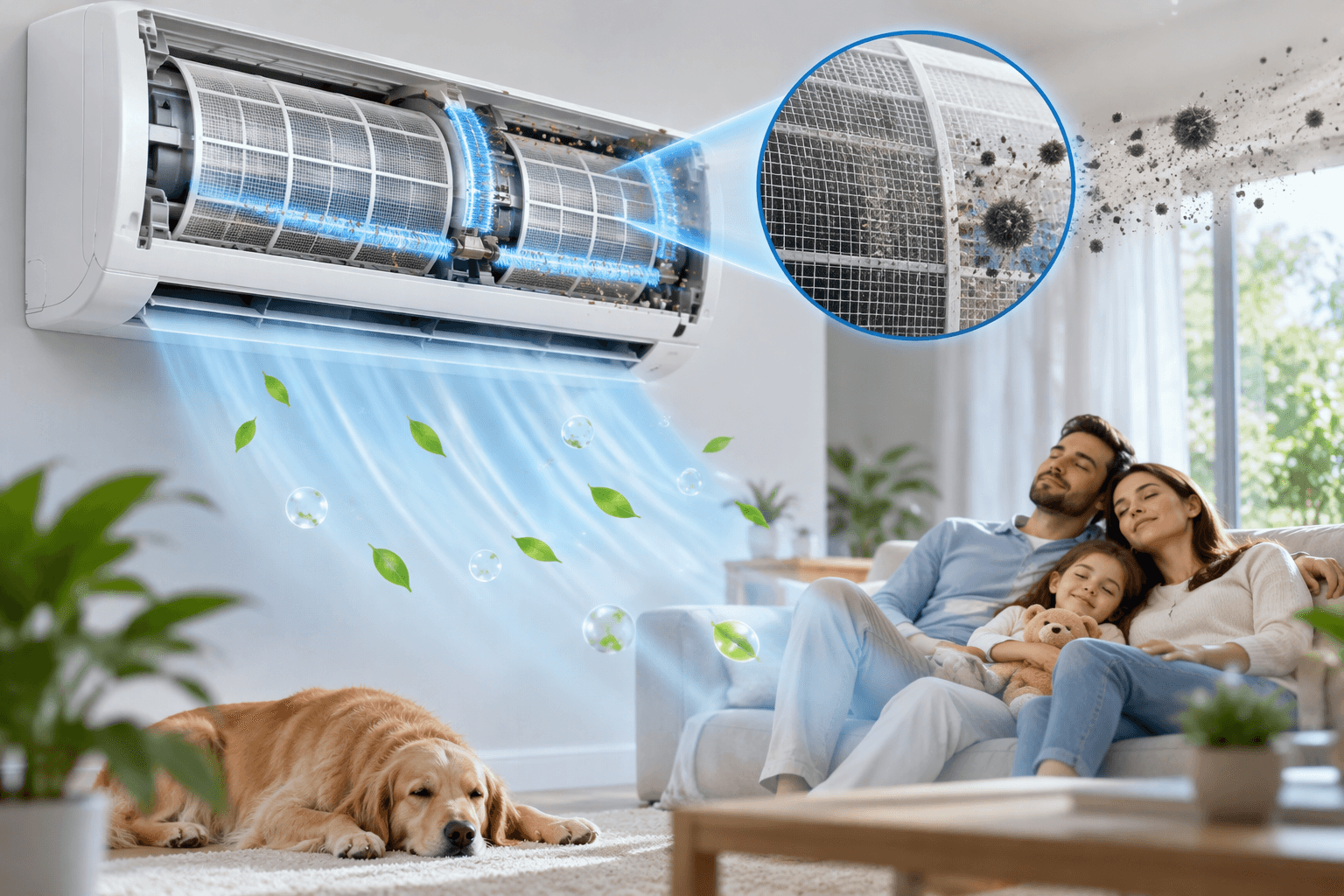
Every Indian summer has the same routine. Windows stay shut, the cooling unit runs from noon till late at night, and by Sunday there's a grey film on the TV unit again. Where does all that dust come from? And where does it go while you sit inside, breathing? A good share of it gets drawn into your cooling unit. After that, it’s down to the filter and the self-clean mode.
The Dust You Never See
Homes collect dust faster than we'd like. There's construction down the road, traffic outside, the cook sweeping the kitchen, the cat asleep on your pillow. Much of it is thinner than a strand of your hair, so you walk past it every single day. The only time it shows up is when a sunbeam hits it. It looks like glitter, which is lovely until you remember you’re breathing it.
Here’s how an AC works at heart: it sucks in the room’s air, runs it past a chilled coil and blows it out cold. It does this all day, with the very same air. A worn-out filter lets plenty of them through. Some stick to the coil. Some come back at you. Ever woken up with a blocked nose after a night in a cooled room? This could be the reason.
So do older people and anyone with a dust allergy.
How an Anti-Dust Filter Helps
The filter is a fine mesh behind the front grille. Before the air reaches the coil, it has to get past this mesh. Lint and hair stay behind. So do dust, pollen, and the dander our pets shed.
It protects the machine too. A dirty coil works harder to cool the same room, and you see that in the electricity bill. A clean one gets on with the job. Over time, the mesh gets blocked, even a good one. That’s normal, so don’t worry. Slide it out, rinse it under the tap, let it dry in the shade and put it back.
Before buying, find out what the filter can actually trap. A lot of 1.5-ton window AC models now include a pure air filter, which stops dust and finer bits such as pollen, hair, and pet dander.
Self-Cleaning: The Feature Everyone Skips
Here's a small thing that surprises people. Once the unit is off, the coil stays damp for hours. It’s dark in there, and a bit warm. Mould loves that combination. Then one morning you turn the unit on and get a sour smell. That's mould talking.
Self-clean mode, sometimes called blow mode, deals with this. So after you switch off, the fan runs on for a few minutes to dry the coil: dry coil, no mold party.
Same as a wet umbrella, really. Spread it open, and it’s dry by afternoon. Leave it closed, and it stinks by evening.
What you get out of it:
- Fewer bad smells
- Less mould on the coil
- Longer life for the inner parts
- Steady cooling over the years
Coated fins fight the same battle. They also fight rust, and water runs off them easily.
Small Habits, Cleaner Air
The features do half the work. You handle the rest, and it isn't much.
|
Your Situation |
Clean the Filter |
|
Daily use in summer |
Every 2 weeks |
|
Moderate use |
Once a month |
|
Home with pets or heavy dust |
Every 1 to 2 weeks |
|
Unit unused for months |
Before the season starts |
A few small tips:
- Press self-clean after each use
- Close doors and windows while cooling
- Dust the room often, so less reaches the filter
Before You Buy
Always read the spec sheet before choosing.
|
Feature |
Why It Helps |
|
Fine dust filter |
Traps dust, pollen and pet dander |
|
Self-clean mode |
Dries the coil and stops mould |
|
Coated fins |
Resist rust and moisture |
|
Inverter compressor |
Saves power and cools steadily |
|
Star rating |
Shows how much power the unit saves |
Room size matters as well. For a medium room of about 150 to 200 square feet, a 1.5-ton unit usually works well. Pick one that’s too small, and it runs flat out until it wears down. Pick one that’s too big, and it chills the room quickly, then stops before the damp is gone. So size it to your room.
The Last Word
We fuss over what we eat and how we sleep. The air we breathe deserves some of that care too. The filter stops what’s floating about. Self-clean keeps the insides of the machine dry. Between the two, you get fewer sneezes, no stale smell, and a slightly lighter electricity bill.
So choose carefully. Wash the filter every few weeks, and hit self-clean whenever you switch off. Step into a cooled room after that and see if it doesn’t feel fresher.