
Hindustan Zinc & IIT Madras Unveil Zinc-Air Battery Powered Electric Three-Wheeler Prototype
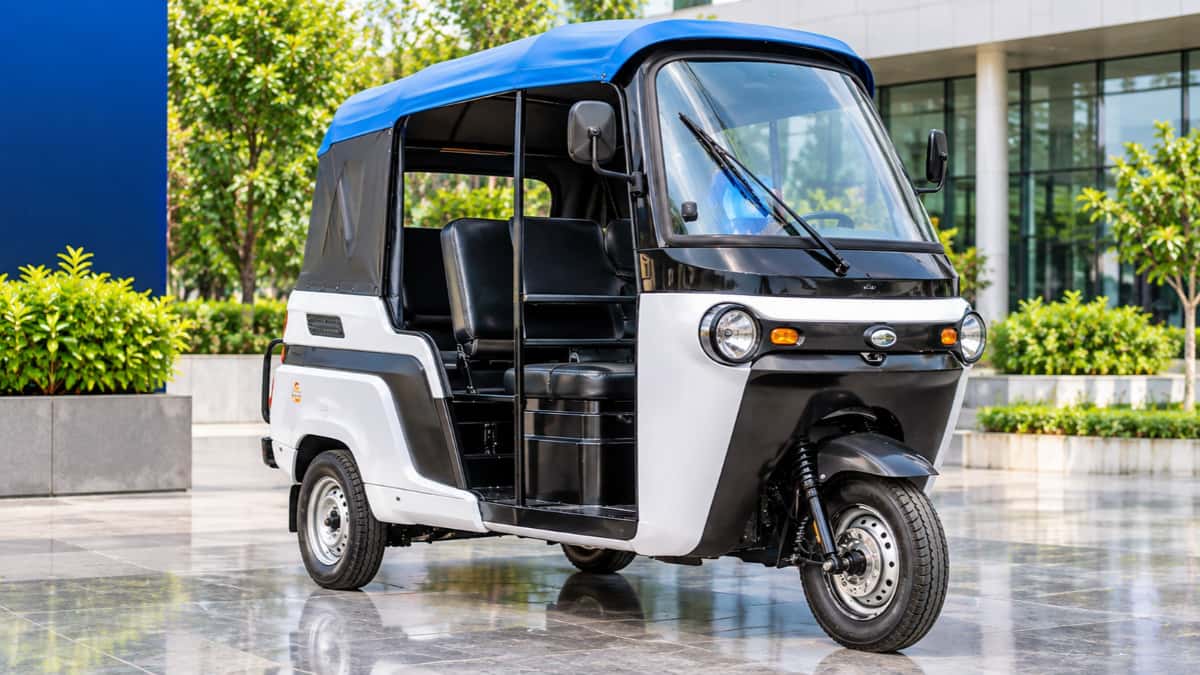
New Delhi: Hindustan Zinc Limited, in collaboration with IIT Madras, has taken a significant step forward in indigenous battery technology by unveiling an electric three-wheeler prototype integrated with a 1 kWh zinc-air battery. The development was showcased at the IIT Madras Energy Summit 2026.
Key Highlights of the Development
-
The approximately 1 kWh zinc-air battery has been integrated as a range extender.
-
In the dual-battery setup, the zinc-air battery contributes nearly 10% of the vehicle’s total energy requirements.
-
While the existing lithium-ion battery handles acceleration and peak power, the zinc-air battery provides a steady energy supply during normal operation.
-
The project marks a transition from laboratory-scale research (initiated in 2024) to a real-world vehicle-level demonstration.
The prototype was unveiled in the presence of Shri Praveen Chakravarthy, Member of Parliament (Rajya Sabha), Mr. Amarendu Prakash, CEO & Whole-time Director of Hindustan Zinc, Prof. Manu Santhanam, Dean (ICSR), IIT Madras, and Dr. Aravind Kumar Chandiran from the Department of Chemical Engineering, IIT Madras, who led the research project.
Why Zinc-Air Battery Matters
Zinc-air batteries generate electricity using zinc and oxygen from the air. They use a non-flammable, water-based electrolyte and an abundant, recyclable metal. This combination offers potential advantages in safety, cost, and environmental sustainability compared to conventional battery chemistries.
India’s large zinc resources give the country a strategic opportunity to develop indigenous energy storage solutions and reduce dependence on imported battery materials.
Leadership Comments
Mr. Amarendu Prakash, CEO & Whole-time Director, Hindustan Zinc, said:
“At Hindustan Zinc, we are constantly exploring opportunities to expand the applications of zinc and unlock greater value from this versatile metal. With zinc being abundantly available in India, there is an opportunity to explore indigenous energy storage solutions that can contribute to the vision of Viksit Bharat.”
Prof. V. Kamakoti, Director, IIT Madras, noted that energy storage remains one of the most critical areas of research and that the collaboration with Hindustan Zinc is an important step towards practical solutions.
Broader Context
The partnership forms part of Hindustan Zinc’s HZL 2.0 strategy to drive application-led innovation and create new demand avenues for zinc beyond traditional uses. The company is actively exploring zinc-based technologies for both renewable energy storage and electric mobility.
This milestone strengthens India’s efforts to develop diversified, sustainable, and locally supported energy storage options for the growing electric mobility sector.