
How MOIL Became India’s Largest Manganese Producer
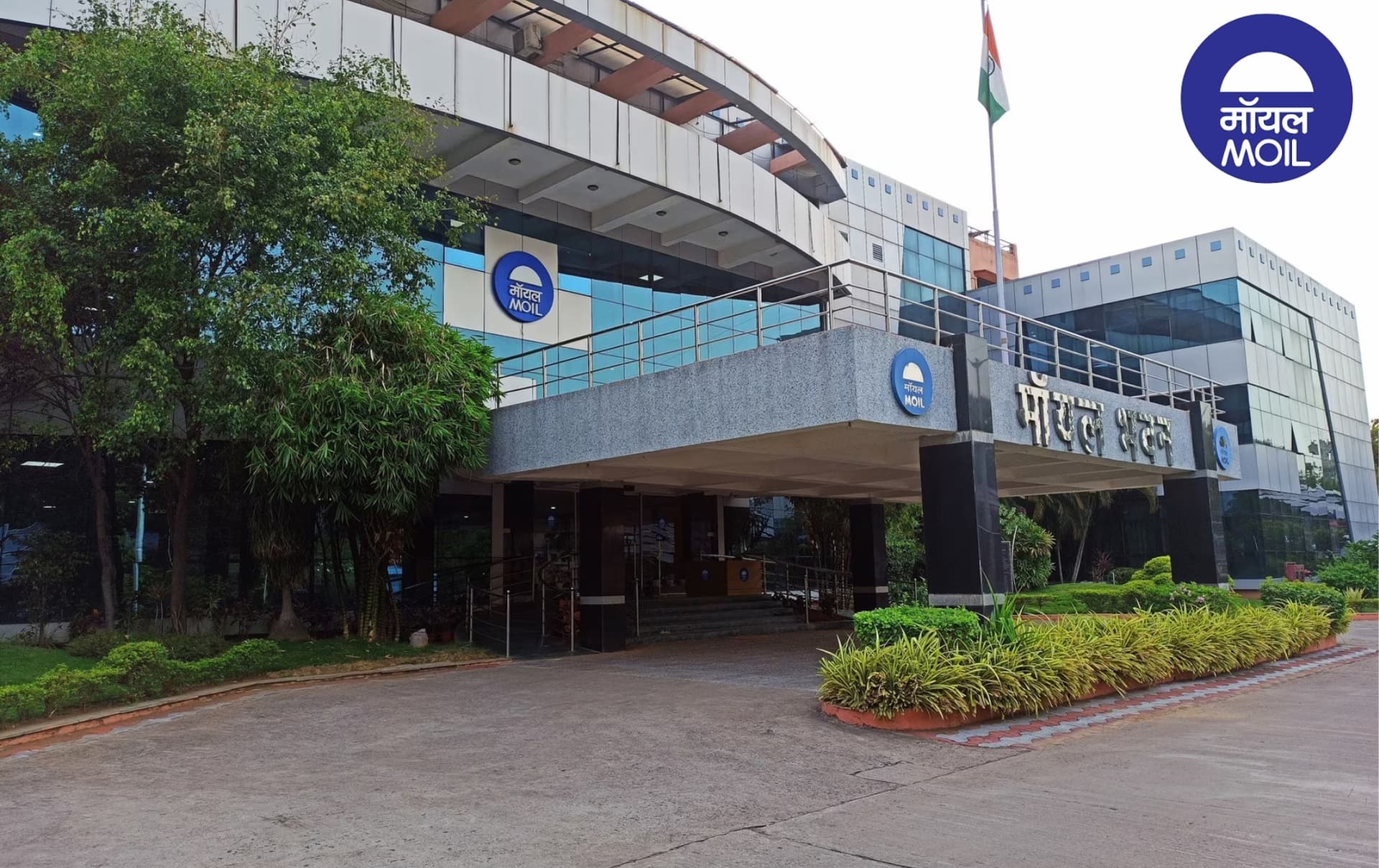
Manganese Ore (India) Limited (MOIL), a Schedule “A” Miniratna Category-I Public Sector Undertaking, stands as the backbone of India’s manganese mining industry, carrying forward a legacy that dates back more than a century.
Originally incorporated on June 22, 1962, MOIL was formed following the nationalisation of the Central Provinces Manganese Ore Company Limited (CPMO), a British entity that had dominated manganese mining in Central India since the late 19th century. In 2010–11, the company was rechristened as MOIL Limited, reflecting its modern corporate identity and strategic ambitions.
From Colonial Roots to a Strategic PSU
Manganese mining in India began in the late 1800s, with the first mine opening near Ramtek in Maharashtra’s Nagpur district. CPMO played a central role in developing the region’s mineral wealth. In 1962, an agreement between the Government of India and CPMO led to the transfer of assets, resulting in the formation of MOIL with joint ownership between the Centre, the Governments of Maharashtra and Madhya Pradesh, and CPMO.
By 1977, the Government of India acquired CPMO’s remaining 49% stake, making MOIL a 100% government-owned company under the administrative control of the Ministry of Steel.
Public Listing and Evolving Shareholding
MOIL marked a major milestone by listing on the National Stock Exchange and Bombay Stock Exchange on December 15, 2010. Post-listing, the company’s shareholding structure evolved to include public participation while retaining strong government ownership.
At present, the shareholding stands at 53.35% with the Government of India, 5.96% with the Government of Maharashtra, 5.38% with the Government of Madhya Pradesh, and 35.31% held by the public, reflecting a balance between strategic control and market participation.
Mining Operations Anchored in Central India
Today, MOIL operates 10 major underground and opencast mines located across Nagpur and Bhandara districts of Maharashtra and the Balaghat district of Madhya Pradesh. Many of these mines are over 100 years old, underscoring the company’s deep operational heritage.
The Balaghat Mine is MOIL’s largest and deepest operation, while the Dongri Buzurg Mine in Maharashtra is a key opencast mine producing manganese dioxide ore, a critical input for the dry battery industry. MOIL currently meets around 48% of India’s total manganese dioxide ore requirement, positioning it as a market leader.
The company’s annual production stands at approximately 1.8 million tonnes, with growth expected in the coming years.
Product Portfolio and Value Addition
MOIL produces and markets multiple grades of manganese ore catering to diverse industrial needs, including:
-
High-grade ore for ferro manganese
-
Medium-grade ore for silico manganese
-
Blast furnace grade ore for hot metal production
-
Manganese dioxide for dry battery and chemical industries
Strengthening value addition, MOIL operates a 12,000 MT per annum ferro manganese plant and has also established an Electrolytic Manganese Dioxide (EMD) plant with a capacity of 1,500 MT per annum, using indigenous technology. The EMD produced by MOIL is widely accepted for its quality in battery manufacturing.
Commitment to Renewable Energy
In alignment with India’s clean energy goals, MOIL has invested in non-conventional energy by setting up wind energy farms with a combined capacity of 20 MW at Nagda Hills and Ratedi Hills in Madhya Pradesh, contributing to sustainable mining operations.
Preserving Heritage Through the Manganese Museum
MOIL has taken a unique initiative to preserve its rich legacy through the establishment of a Manganese Museum at its Corporate Office. The museum offers a comprehensive insight into the evolution of manganese mining in India, featuring:
-
Walk-through models of underground and opencast mines
-
Historical photographs and archival documents from the CPMO era
-
Ore samples and working models of mining equipment
-
Interactive kiosks for educational engagement
The museum serves as an educational platform for the public and inspires younger generations to consider mining as a professional career, while dispelling myths about mining safety.
A Strategic Role in India’s Mineral Security
As India’s largest producer of manganese ore, MOIL plays a crucial role in supporting the steel, battery, and alloy industries. Its focus on operational efficiency, value addition, sustainability, and knowledge preservation positions it as a key contributor to India’s mineral security and industrial growth.
With more than a century of mining history and a forward-looking strategy, MOIL continues to bridge legacy and innovation, strengthening India’s position in the global minerals landscape.