
India-US Trade Accord 2026: Decoding the $500B Strategic Pivot
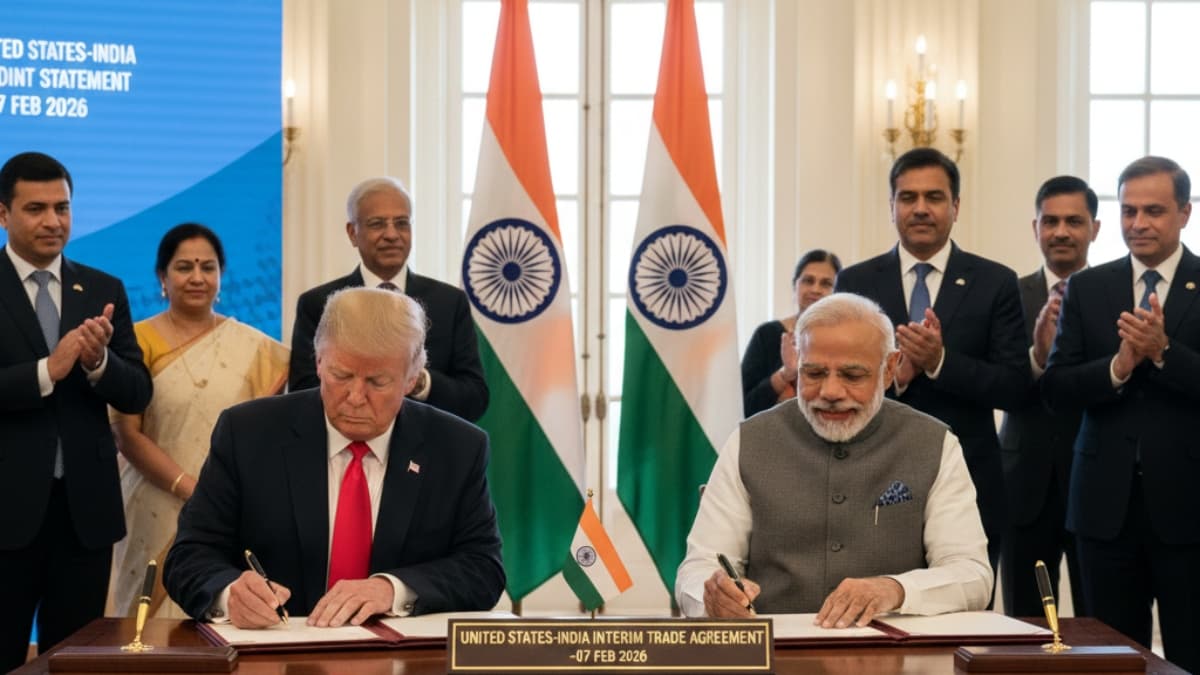
In a landmark diplomatic breakthrough, India and the United States have unveiled an 'Interim Agreement' on trade, marking a pivotal moment in the Bilateral Trade Agreement (BTA) negotiations initiated in 2025. The framework, announced via a joint statement from PIB Delhi today, signals a decisive shift toward reciprocal market access and economic security alignment, effectively altering the trade dynamics of the Indo-Pacific region.
The Tariff Equilibrium: 18% Reciprocity
Under the new framework, the United States has introduced a structured 18% reciprocal tariff on key Indian exports. This move, rooted in Executive Order 14257, covers a broad spectrum of originating goods including:
-
Textiles and Apparel
-
Leather and Footwear
-
Organic Chemicals and Home Décor
Significantly, the agreement promises the removal of reciprocal tariffs on high-value sectors such as Generic Pharmaceuticals, Gems and Diamonds, and Aircraft parts, contingent on the finalization of the Interim Agreement. This provides much-needed relief to India’s pharmaceutical giants currently navigating U.S. Section 232 investigations.
Strategic Concessions: Energy and Technology
Perhaps the most ambitious component of the statement is India’s intent to purchase $500 billion worth of U.S. products over the next five years. This massive capital outlay is strategically targeted at:
-
Energy Sovereignty: Procurement of U.S. energy products and coking coal to diversify supply chains.
-
AI & Data Infrastructure: A significant uptick in the trade of Graphics Processing Units (GPUs) and technology for data centers, solidifying India’s position as a global tech hub.
-
Aviation: Removal of long-standing national security-linked tariffs on Indian aircraft parts, fostering a more integrated aerospace corridor.
Dismantling Non-Tariff Barriers
The agreement goes beyond numbers to address deep-rooted structural friction. India has committed to resolving "long-standing barriers" in:
-
Medical Devices & ICT: Streamlining import licensing for Information and Communication Technology goods.
-
Standards Alignment: A six-month window to evaluate the acceptability of international standards for U.S. exports entering the Indian market.
-
Agriculture: Reduction of tariffs on U.S. sorghum, soybean oil, and premium spirits, balanced against U.S. market access for Indian artisanal products.
Economic Security and The 'Third-Party' Factor
A critical, albeit subtle, highlight of the joint statement is the commitment to "strengthen economic security alignment." Both nations have agreed to cooperate on investment reviews and export controls to counter "non-market policies of third parties"—a clear strategic move to build a resilient supply chain ecosystem independent of geopolitical competitors.