
ICRA: Thermal Power Capacity to Rise 6 GW in 2026-27 Amid Growing Grid Stability Needs
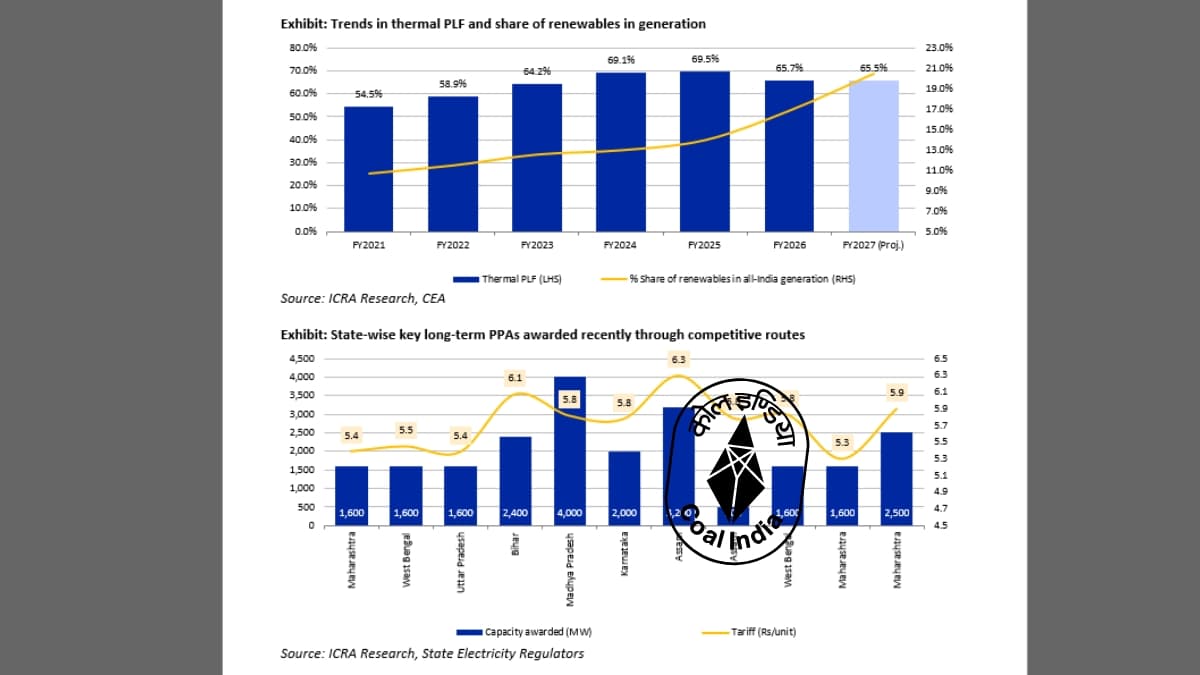
Rating agency ICRA projects power demand to rise by 5.0-5.5% in 2026-27 against a tepid ~1% in 2025-26, that had been compressed by weather related disruptions. The growth in 2026-27 is likely to be supported by the agricultural and household sectors given the expectation of sub-par rainfall amidst a potential El Nino, along with demand from industries as well as from emerging sources like electric vehicles and data centres. The all-India thermal plant load factor (PLF) level fell to 65-66% in 2025-26 amid demand moderation and is likely to remain around 65% in 2026-27, given the healthy growth in generation expected from the renewable sources and 6-GW capacity addition likely in the thermal segment.
Commenting on the demand growth outlook, Ankit Jain, Vice President & Co-Group Head - Corporate Ratings, ICRA“The thermal power sector in India is witnessing a revived investment emphasis, even as the renewable capacity continues to expand at a rapid pace. Thermal power acts as a reliable base-load supply, aiding grid stability, amid expectations of power demand growth.ICRA expects the overall addition of generation capacity to be around 50 GW in 2026-27, within which the thermal segment is likely to add around 6 GW and the balance largely to be contributed by the RE segment.”
“While RE would remain the key driver of power generation capacity addition going forward, the thermal segment has seen an increase in under-construction capacity over the past few quarters, which currently stands at over 45 GW. This is also reflected in the new project announcements by public sector undertakings and private power producers as well as long-term power purchase bids called by state distribution utilities after a long period of limited activity. Nonetheless, timely commissioning of the thermal projects under execution also remains key, given the long gestation period associated and risk of delays from the domestic boiler, turbine and generator (BTG) equipment manufacturers with their elevated order book position.”
The average spot power tariffs in the day ahead market (DAM) of the Indian Energy Exchange moderated to Rs. 3.8 per unit in 2025-26 from Rs. 4.4 per unit in 2024-25, given the slowdown in demand growth and significant increase in supply amid healthy addition in RE capacity. Further, the coal stock level for the domestic power plants has been comfortable at around 19 days as on April 8, 2026, following improved local supply.
The book losses of the distribution companies at the all-India level improved in 2024-25 over 2023-24 with moderation in the gap between cost of supply and tariff realisation. The gross debt for state-owned discoms reduced to Rs. 7.1 trillion as of March 2025 from Rs. 7.4 trillion as of March 2024. However, such high debt levels are unsustainable for discoms, given their current revenues and profitability.
The tariff orders for 2026-27 have been issued in 17 out of 28 states as of April 2026. Despite the loss-making operations of discoms, tariff hikes approved for 2026-27 remain muted across most states. ICRA expects the cash gap per unit for the discoms at the all-India level could remain high at 30-33 paise per unit in 2026-27 in case of limited tariff hikes and increased power purchase costs amid addition of relatively higher tariff-based capacities. ICRA’s outlook for the power distribution segment remains Negative amid limited tariff hikes and continued loss-making operations. The progress in the smart metering programme along with the improvement in operating efficiency parameters and continued implementation of fuel and power purchase cost adjustment framework would play an important role in enhancing the discom finances, going forward.
“Over the last 12-15-months, the long-term bid discovered for the thermal projects stood in the range of Rs. 5.0-6.5 per unit. As a result, the project viability remains sensitive to factors such as capital outlay and cost of debt, given the fact that coal availability is ensured through linkage route under Scheme for Harnessing and Allocating Koyala Transparently in India (SHAKTI) scheme. Amid increasing capacities across various power generation technologies, ability of the thermal power plants to operate flexibly above the technical minimum as well as adopt new models like thermal generation coupled with storage systems to keep PLFs healthy and support the growing power demand, will be closely monitored,” concludes Jain.