
Why Would a Hacker Use a Proxy Server?
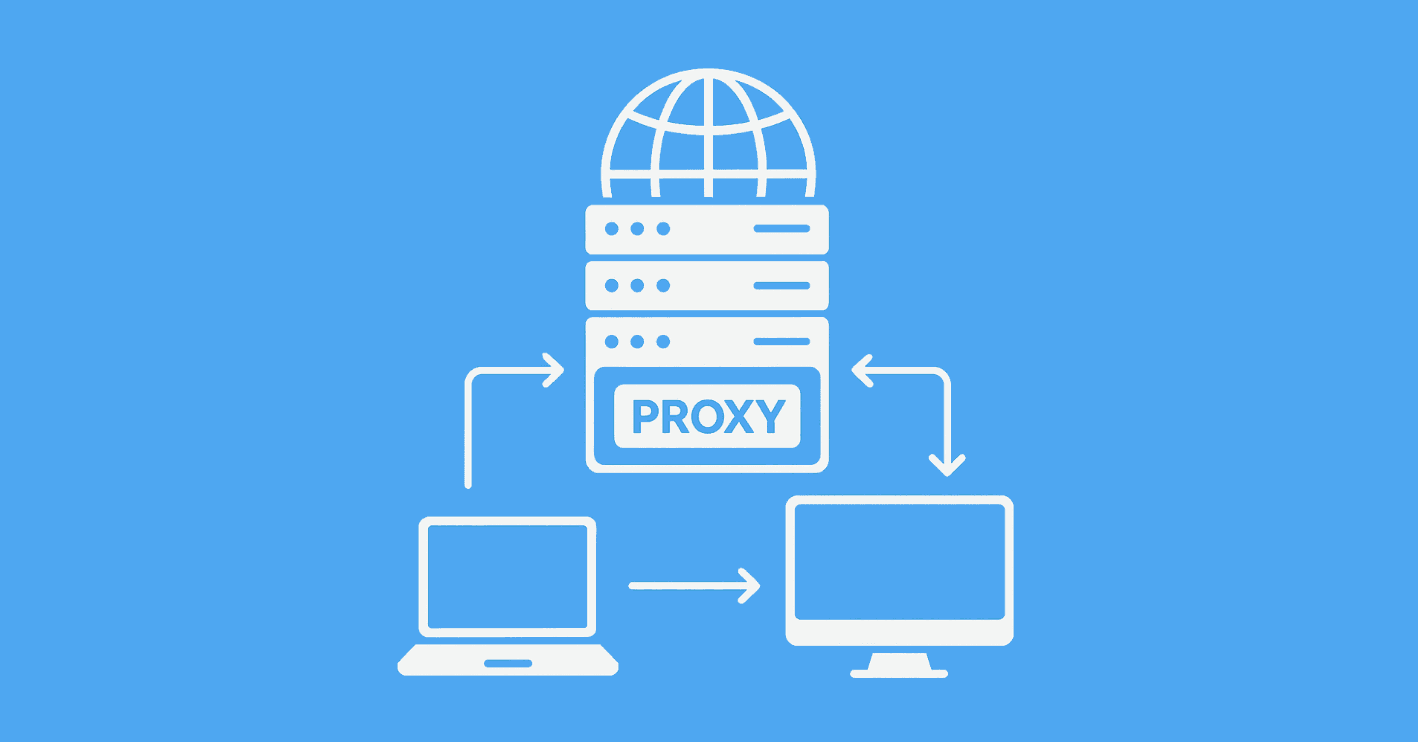
Every network engineer eventually encounters the question from a client or a colleague: why would a hacker use a proxy server? The answer is less about mystique and more about elementary network mechanics – and understanding it in depth is critical for anyone designing detection systems, hardening perimeter defenses, or evaluating proxy infrastructure for legitimate operations.
Proxy servers sit between a client and the destination server, forwarding requests and relaying responses. That intermediary position creates exactly the properties a threat actor needs: IP abstraction, traffic indirection, and geolocation flexibility. This article dissects each mechanism with technical precision, explains the operational differences between proxy types, and draws the line between malicious exploitation and legitimate use cases.
The Core Mechanics: What a Proxy Server Actually Does for an Attacker
At the protocol level, a proxy receives a client request – say, an HTTP GET – and reissues it to the destination from its own IP address. The destination server logs the proxy's address, not the originating client. From a threat actor's standpoint, this is the entire value proposition.
But it goes further. Proxies allow a hacker to chain multiple hops together, creating a multi-layer redirection path. Each additional node requires a separate legal jurisdiction, separate subpoena, and separate log correlation to unwind. By the time an incident response team traces a three-hop chain across different continents, the attacker has long since rotated infrastructure.
IP Masking and Forensic Evasion
The most documented reason why a hacker would use a proxy server is IP masking. Destination systems log source IPs for authentication failures, anomaly detection, and incident response. A threat actor cycling through residential proxy IPs – addresses that belong to real ISP subscribers – produces logs that look indistinguishable from legitimate user traffic.
This is not a theoretical concern. Residential IP pools are specifically attractive because commercial threat intelligence feeds primarily flag datacenter CIDRs and known VPN exit nodes. Residential addresses carry implicit trust, which is precisely why they are operationally valuable to attackers and, separately, to legitimate users running anti-detect workflows.
Geolocation Spoofing and Access Control Bypass
Many platforms apply geo-fencing as a security control: restrict logins to the account's registered country, block API access from high-risk regions, or require step-up authentication for unexpected geographies. A proxy server with exit nodes in the appropriate country bypasses these controls entirely, because the request arrives from a trusted geography regardless of where the attacker is physically located.
This same capability – geolocation flexibility – is why social media managers, arbitrage traders, and marketplace operators use proxies daily. The underlying protocol mechanism is identical; the intent and authorization differ.
Proxy Types and Their Tactical Significance
Not all proxies serve the same operational purpose. The choice of proxy architecture directly affects detection probability, connection stability, and the scale of concurrent operations an attacker can sustain.
Table 1 – Proxy Types: Detection Risk vs. Operational Use
|
Proxy Type |
IP Source |
Detection Risk |
Typical Use (Malicious) |
Typical Use (Legitimate) |
|
Datacenter IPv4 |
Hosted servers |
High – flagged by threat intel |
Basic anonymization, botnets |
Scraping, SEO tools, automation |
|
Residential IPv4 |
ISP subscribers |
Low – appears as real user |
Account takeover, bypass geo-blocks |
Ad verification, social management |
|
Mobile Proxies |
4G/5G carrier IPs |
Very Low – rotates with carrier NAT |
Credential stuffing at scale |
Mobile platform management |
|
SOCKS5 Proxies |
Any above source |
Varies – protocol-level flexibility |
Traffic tunneling, C2 comms |
Game proxies, full-stack routing |
|
Rotating Proxies |
Pool of IPs |
Low per-request |
Distributed scraping, brute-force |
Price monitoring, market research |
Mobile proxies deserve particular attention. Because mobile carriers use carrier-grade NAT, a single IP address can represent thousands of simultaneous subscribers. Blocklisting a 4G exit node would collaterally block massive volumes of legitimate traffic, making mobile proxy IPs among the most difficult to ban without causing user experience damage.
SOCKS5 Proxies and Protocol-Level Attack Scenarios
While HTTP proxies operate at the application layer and are limited to HTTP/HTTPS traffic, SOCKS5 proxies function at the transport layer (OSI Layer 5). This distinction matters significantly in attack scenarios. A SOCKS5 proxy can relay any TCP or UDP traffic – meaning command-and-control (C2) communications, custom protocol payloads, and non-HTTP exploitation frameworks can all traverse a SOCKS5 chain without the proxy inspecting or modifying the content.
Threat actors building persistent access infrastructure frequently chain SOCKS5 proxies across jurisdictions. The target organization's security monitoring sees C2 traffic originating from an IP in a friendly country with a clean reputation history. Without deep packet inspection correlating beacon intervals and payload entropy, this traffic may be misclassified as routine business traffic.
Credential Stuffing and Distributed Authentication Attacks
One of the most operationally damaging applications is credential stuffing: automated login attempts using breached username-password pairs sourced from third-party data leaks. A single attacker driving all attempts from one IP will trigger account lockout and IP block within seconds. Distributing the same credential list across thousands of proxy IPs – one attempt per IP per account – produces a request rate per IP that falls below detection thresholds while the aggregate attack proceeds at full velocity.
Modern credential stuffing tools are built with native proxy rotation support. The attacker supplies a proxy list; the tool handles assignment, rotation on error codes (429, 403), and retry logic. Against platforms that rely purely on IP-based rate limiting without behavioral fingerprinting, this attack succeeds at scale.
The Legitimate Parallel: Why the Same Infrastructure Serves Two Masters
Understanding why a hacker would use a proxy server is incomplete without recognizing that the network-layer capabilities are not inherently malicious. The same residential IP rotation that enables account takeover is used by digital marketing agencies to verify how ads appear in different geographies. The same geolocation bypass used in attacks is used by compliance teams to access region-restricted regulatory databases. Providers like proxys.io offer structured access to datacenter, mobile, and residential proxy pools with protocol support across HTTP, HTTPS, and SOCKS – the same infrastructure that legitimate operations depend on for stability and geographic reach.
The technical difference between a hacker's proxy session and a security researcher's proxy session is authorization, intent, and target selection – not the underlying protocol mechanics. This is why network defenders need to move beyond simple IP reputation blocking and toward behavioral analysis, TLS fingerprinting, and session pattern recognition.
Detection Techniques: How Defenders Identify Proxy-Masked Traffic
Behavioral Heuristics
IP reputation alone is insufficient. Effective detection combines IP reputation data with behavioral signals: login velocity per account, inter-request timing distribution, device fingerprint consistency across sessions, and geographic velocity (an account logging in from New York and Tokyo within 20 minutes is flagged regardless of IP reputation).
TLS Fingerprinting with JA3/JA3S
TLS fingerprinting using JA3 hashes captures the client's TLS handshake parameters – cipher suites, extensions, elliptic curves – and generates a fingerprint of the TLS client library in use. Proxy tools often present distinctive JA3 signatures that differ from browser-generated handshakes. Correlating IP geolocation against JA3 fingerprint is a high-signal indicator of proxy use. For a deeper technical treatment of how proxy detection interacts with browser fingerprinting at the TLS layer, see the analysis at proxy detection and TLS fingerprinting – a thorough breakdown of detection evasion and its practical countermeasures.
DNS Leak Analysis
Misconfigured proxies often route HTTP traffic through the proxy while allowing DNS resolution to occur at the client level. This DNS leak reveals the client's true ISP and geolocation even when the HTTP source IP appears masked. Detection systems that cross-reference DNS resolver origin with HTTP source IP can identify this mismatch with high confidence.
Proxy Use Across the Attack Lifecycle
Table 2 – Proxy Role by Attack Phase
|
Attack Phase |
Proxy Function |
Preferred Proxy Type |
Detection Vector |
|
Reconnaissance |
IP masking during scanning |
Datacenter rotating |
High scan volume from single ASN |
|
Credential Stuffing |
Distributing login attempts |
Residential rotating |
Account velocity, device mismatch |
|
Initial Access |
Geo-bypass of auth controls |
Residential / Mobile |
Geographic velocity anomaly |
|
C2 Communication |
Traffic routing through clean IPs |
SOCKS5 chained |
Beacon interval analysis, JA3 |
|
Exfiltration |
Masking data transfer destination |
SOCKS5 / Residential |
Anomalous outbound data volume |
Operational Implications for Network Defenders
The practical takeaway for a network security team is that proxy-aware defenses must operate at multiple layers simultaneously. Perimeter controls that rely on IP reputation lists are necessary but not sufficient – a residential IP with no prior threat intelligence footprint will pass every reputation check while serving as an active attack node.
Modern zero-trust architectures address this by validating device posture, user context, and behavioral signals on every request, regardless of source IP. Continuous authentication models – where trust is re-evaluated throughout a session rather than granted at login – are significantly more resistant to proxy-assisted attacks than traditional perimeter-based models.
For security operations teams, building detection content that targets behavioral patterns rather than static IP indicators produces better signal-to-noise ratios and remains effective as proxy infrastructure evolves.
Key detection signals that survive proxy rotation:
• Session behavioral fingerprint – mouse movement, keystroke cadence, scroll patterns
• TLS JA3 hash inconsistency – client library mismatch with declared User-Agent
• Geographic velocity – impossible travel time between authenticated sessions
• ASN-to-claimed-location mismatch – residential IP resolving to hosting ASN
• Inter-request timing entropy – automated tools produce statistically distinct timing distributions versus human browsing
Conclusion: Proxies Are Infrastructure, Not an Exploit
The question of why a hacker would use a proxy server resolves to a set of well-understood network mechanics: IP abstraction, traffic indirection, geolocation flexibility, and protocol-layer tunneling. These properties are not unique to malicious use – they are foundational to legitimate proxy use cases across data collection, digital marketing, multi-account management, and security research.
Defenders who understand the technical substrate of proxy-assisted attacks build detection content that targets behavior rather than infrastructure. Attackers will rotate IPs; they cannot easily rotate behavioral patterns, TLS fingerprints, or session entropy signatures. That is where durable detection capability lives.
For organizations evaluating proxy infrastructure for authorized operations, the same technical quality criteria apply regardless of use case: IP pool reputation, protocol consistency, connection stability, and geographic accuracy. Those criteria, applied rigorously, separate infrastructure that operates cleanly from infrastructure that creates operational risk.