
SAIL Bokaro Begins Hydrogen Injection to Cut Steel Carbon Emissions
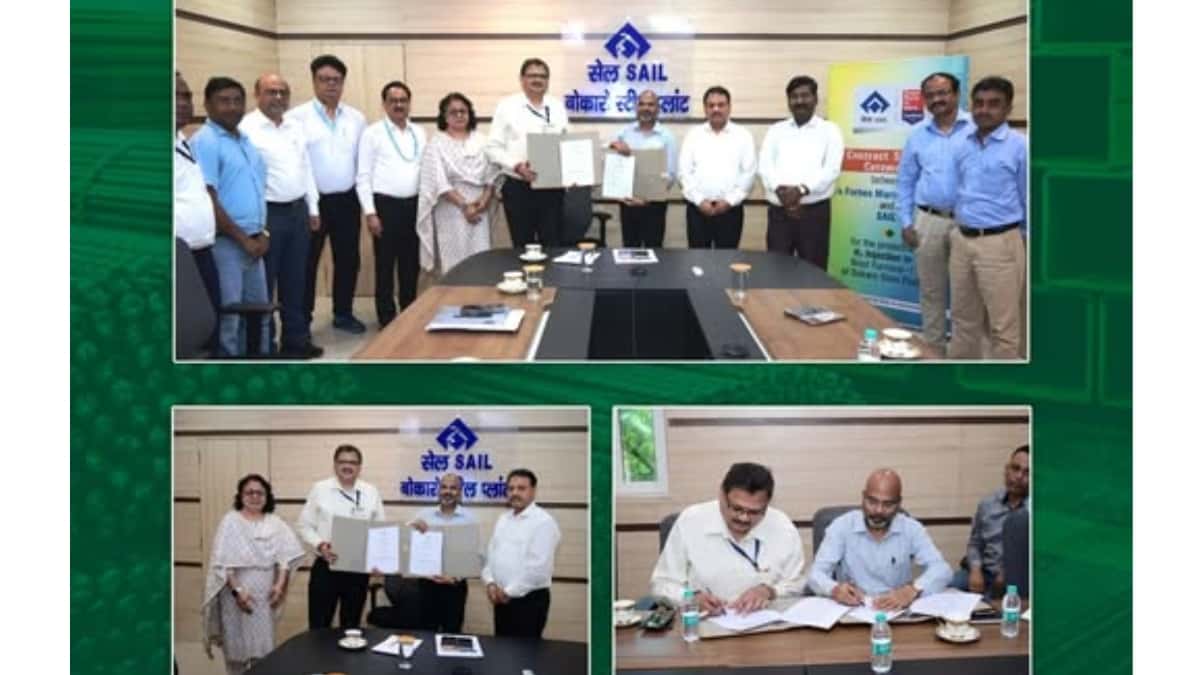
New Delhi: India’s steel sector has taken another step toward decarbonization as SAIL Bokaro Steel Plant begins a hydrogen injection project in its blast furnace. The initiative follows the signing of an agreement with Forbes Marshall Private Limited and aligns with the country’s broader push for sustainable industrial growth.
A Major Step Toward Green Steel
The announcement, shared by the Ministry of Steel, Government of India, highlights India’s growing focus on reducing carbon emissions from heavy industries. Steel production is traditionally carbon-intensive due to its reliance on coal-based reducing agents in blast furnaces.
By introducing hydrogen into the steelmaking process, SAIL aims to test a cleaner alternative that can significantly cut emissions while maintaining production efficiency.
How Hydrogen Injection Works
In conventional blast furnaces, coal and coke are used as reducing agents to extract iron from iron ore. This process releases large amounts of carbon dioxide.
Hydrogen offers a cleaner pathway:
-
Hydrogen reacts with iron ore to produce iron and water vapor instead of carbon dioxide.
-
Even partial hydrogen injection can lower emissions from existing blast furnace operations.
-
The project serves as a pilot to evaluate feasibility, scalability, and long-term adoption.
This approach is increasingly seen as a transitional step toward fully green hydrogen-based steel production.
Alignment With India’s Hydrogen Strategy
The project is closely linked to the National Green Hydrogen Mission, which aims to position India as a global hub for green hydrogen production and utilization.
The mission focuses on:
-
Reducing dependence on fossil fuels
-
Cutting industrial emissions
-
Building domestic hydrogen supply chains
-
Supporting clean energy innovation
Steel is one of the key sectors identified for early hydrogen adoption due to its large carbon footprint and high decarbonization potential.
Why This Matters for India’s Steel Industry
India is the world’s second-largest steel producer, and demand is expected to grow rapidly with infrastructure expansion and urbanization. Transitioning to greener production methods is critical to balancing industrial growth with climate commitments.
The SAIL Bokaro pilot could:
-
Provide real-world data for hydrogen-based steelmaking in India
-
Encourage wider adoption across public and private steel producers
-
Strengthen India’s position in low-carbon manufacturing
-
Support global climate and ESG commitments
The Road Ahead
While hydrogen-based steelmaking is still evolving globally, pilot projects like this mark an important step in transforming traditional heavy industries.
If successful, the hydrogen injection initiative at SAIL Bokaro could pave the way for larger deployments and help shape the future of green steel in India.