
India’s New Trade Deal Explained: Who Wins, Who Loses and What Changes for You
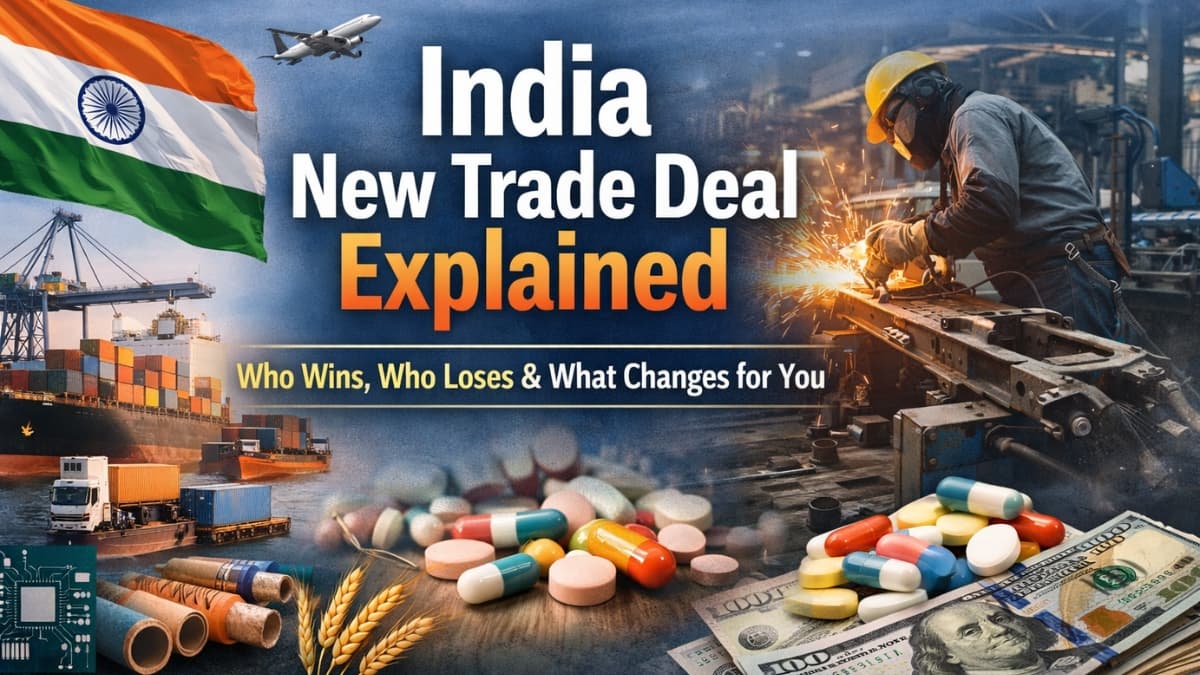
India’s latest trade deal is being described by many headlines as a routine economic agreement. In reality, it could shape India’s economy, jobs, prices, and global position for the next decade.
Unlike earlier trade agreements, this deal comes at a time when global supply chains are being re-written, geopolitical tensions are reshaping trade routes, and companies are actively searching for alternatives to traditional manufacturing hubs. India is positioning itself at the center of this shift.
While headlines focus on diplomacy and market access, the real impact lies in how this agreement could transform industries, influence employment, affect consumer prices, and redefine India’s role in global trade.
This article explains who stands to gain, who faces risks, and what ordinary Indians should expect in the years ahead.
So what does it actually mean?
Why This Trade Deal Matters Now
Global trade is no longer just about tariffs. It is about supply chain security, technology access and long-term economic influence.
With companies reducing dependence on single-country manufacturing hubs, India is positioning itself as an alternative production base. This trade deal is designed to support that shift by improving market access, reducing trade barriers and aligning standards.
Experts say timing is crucial — India is negotiating from a position of growing demand, a large domestic market and expanding manufacturing capacity.
Which Indian Industries Are Likely to Benefit
Not all sectors will gain equally. Early beneficiaries may include:
-
Electronics & Manufacturing – Easier access to components and export markets
-
Pharmaceuticals & Chemicals – Expanded global demand and regulatory cooperation
-
Textiles & Apparel – Labour-intensive exports gain competitiveness
-
Auto & Auto Components – Integration into global supply chains
Large exporters and companies already aligned with global standards are expected to benefit faster.
Who Could Face Pressure
While trade deals create opportunities, they also increase competition.
-
Small MSMEs may face pricing pressure from cheaper imports
-
Agriculture-linked sectors remain sensitive to import surges
-
Low-efficiency manufacturers may struggle without upgrades
Economists warn that without targeted government support, some domestic players could lose market share.
What It Means for Jobs
The government expects job creation in manufacturing, logistics and export services. Increased trade volumes typically lead to:
-
More factory employment
-
Higher port and transport activity
-
Growth in ancillary services
However, job quality will depend on skill levels. Automation and global competition mean demand will rise mainly for skilled and semi-skilled workers.
Impact on Prices and Consumers
For consumers, the effects will be gradual rather than immediate.
-
Imported electronics and components could become cheaper
-
Better product variety may enter the market
-
Domestic prices may stabilize due to competition
Price benefits usually appear over 6–18 months as supply chains adjust.
Hidden Clauses That Matter
Trade experts highlight several less-discussed aspects:
-
Safeguard measures to protect domestic industries
-
Phased tariff reductions, not instant cuts
-
Standards alignment affecting long-term compliance costs
These clauses determine whether benefits are sustainable or short-lived.
How This Deal Is Different from Past Agreements
Earlier trade deals often focused only on tariff cuts. This one places stronger emphasis on:
-
Supply chain integration
-
Strategic industries
-
Long-term cooperation
It reflects a shift from short-term trade gains to long-term economic positioning.
Risks India Must Manage
Despite optimism, risks remain:
-
Rising imports could widen trade deficits
-
Infrastructure readiness is critical
-
Policy stability matters for investor confidence
Execution will decide success more than announcements.
The Bigger Picture
This trade deal is not a standalone move. It is part of India’s broader strategy to integrate with global trade networks while protecting domestic interests.
If managed well, it could accelerate India’s transformation into a global manufacturing and export hub. If mishandled, benefits could remain concentrated among a few large players.
Bottom Line
India’s new trade deal creates real opportunities — but also real challenges. For businesses, workers and consumers, the impact will unfold over time. The next few years will reveal whether India can convert trade ambition into broad-based economic gains.