
Government Says E20 Petrol Is Safe for Vehicles, Explains Fuel Economy and Blending Policy
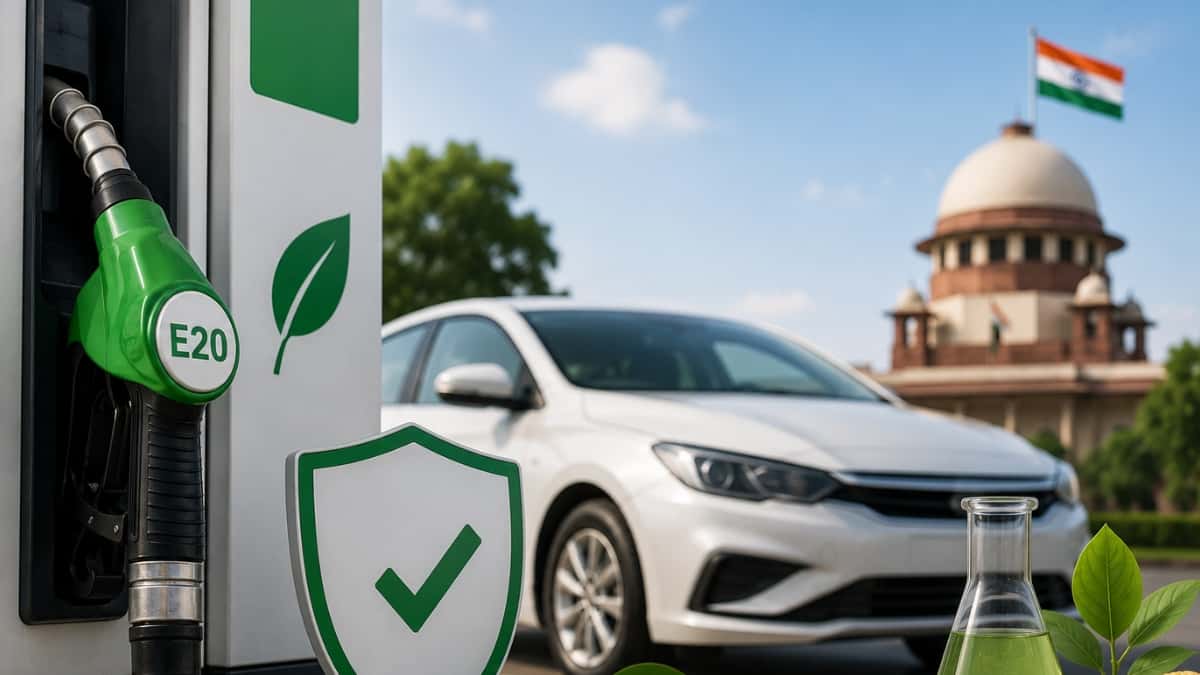
New Delhi, July 10: The Ministry of Petroleum and Natural Gas (MoPNG) has released a comprehensive set of Frequently Asked Questions (FAQs) on the Ethanol Blended Petrol (E20) Programme, responding to concerns and misinformation surrounding the nationwide rollout of 20% ethanol-blended petrol.
The clarification follows an earlier government statement issued on June 23, 2026, and subsequent explanations by automobile manufacturers during a press conference on July 4, 2026. The Ministry said the latest document aims to provide evidence-based answers on vehicle compatibility, fuel pricing, mileage, infrastructure and India's long-term ethanol strategy.
E20 Programme Built Over Two Decades, Says Government
Rejecting claims that India rushed the transition to E20 fuel, the Ministry said the country's ethanol blending journey began with pilot projects in 2001, followed by policy implementation in 2003-04, expansion of the blending programme in 2013, and major reforms under the National Policy on Biofuels, 2018.
According to the government, ethanol blending has steadily increased from around 1.5% in 2014 to 20% during the 2025-26 Ethanol Supply Year, following investments in ethanol production capacity, infrastructure and supply chains.
The Ministry stated that multiple government departments, oil marketing companies, automobile manufacturers, research institutions and testing agencies were involved throughout the phased implementation.
No Evidence of Engine Damage from E20 Fuel
Addressing concerns over vehicle safety, the Ministry said extensive laboratory testing and field validation were conducted before introducing E20 petrol.
It cited feedback from automobile manufacturers, including Maruti Suzuki and Hero MotoCorp, stating that millions of vehicles, including older models not originally certified for E2, have been serviced without reports of E20-related corrosion, abnormal engine wear or component failures.
According to the Ministry, vehicle manuals mentioning "E10 compatible" reflect fuel standards applicable at the time of vehicle certification and do not imply that E20 fuel is unsafe following regulatory approvals and scientific validation.
Government Explains Fuel Economy and Performance
The Ministry acknowledged that some vehicles may experience a 3–5% reduction in fuel economy with E20 fuel.
However, it said ethanol-blended petrol offers several advantages, including:
-
Higher octane rating
-
Improved anti-knock performance
-
Better engine pickup and smoother acceleration
-
Cleaner combustion
-
Lower particulate emissions
-
Approximately 40% reduction in lifecycle carbon emissions
The government described E20 as a cleaner and higher-quality fuel that supports India's transition towards lower-carbon transportation.
Why Isn't E20 Cheaper?
Responding to questions about pricing, the Ministry explained that ethanol is currently procured from domestic producers at remunerative prices to ensure fair returns for farmers.
It noted that ethanol production costs, including procurement, transportation and storag, can make E20 more expensive than conventional petrol when global crude oil prices remain relatively low.
However, the Ministry argued that blending ethanol reduces India's dependence on imported crude oil and helps shield consumers from international oil price volatility.
According to official figures, the Ethanol Blended Petrol Programme has so far:
-
Saved over ₹1.97 lakh crore in foreign exchange.
-
Reduced crude oil imports by nearly 316 lakh metric tonnes.
-
Lowered carbon dioxide emissions by around 952 lakh metric tonnes.
-
Transferred more than ₹1.66 lakh crore to Indian farmers through ethanol procurement.
Why Only E20 at Fuel Stations?
The government also addressed questions on why consumers cannot choose between pure petrol, E10 and E20.
It said maintaining multiple nationwide fuel supply chains would significantly increase logistics complexity, storage requirements and operational costs across India's network of more than one lakh fuel retail outlets.
The Ministry added that substantial investments, estimated at nearly ₹1 lakh crore annually, have already been made in ethanol production, dedicated ethanol plants, storage and logistics infrastructure, making a return to lower blending levels impractical.
Ethanol Blending Supports Energy Security
According to the Ministry, ethanol blending is intended not only to reduce emissions but also to improve India's energy security by lowering dependence on imported crude oil while increasing domestic biofuel production.
The government said India has successfully achieved the 20% ethanol blending target, five years ahead of the original 2030 timeline, and described the programme as a carefully planned transition supported by scientific studies, industry consultations and long-term policy reforms.
The Ministry urged consumers to rely on verified information and avoid misinformation regarding E20 fuel, reiterating that the fuel has been validated by automobile manufacturers, testing agencies, oil marketing companies and regulatory authorities before nationwide implementation.
Source: PIB