
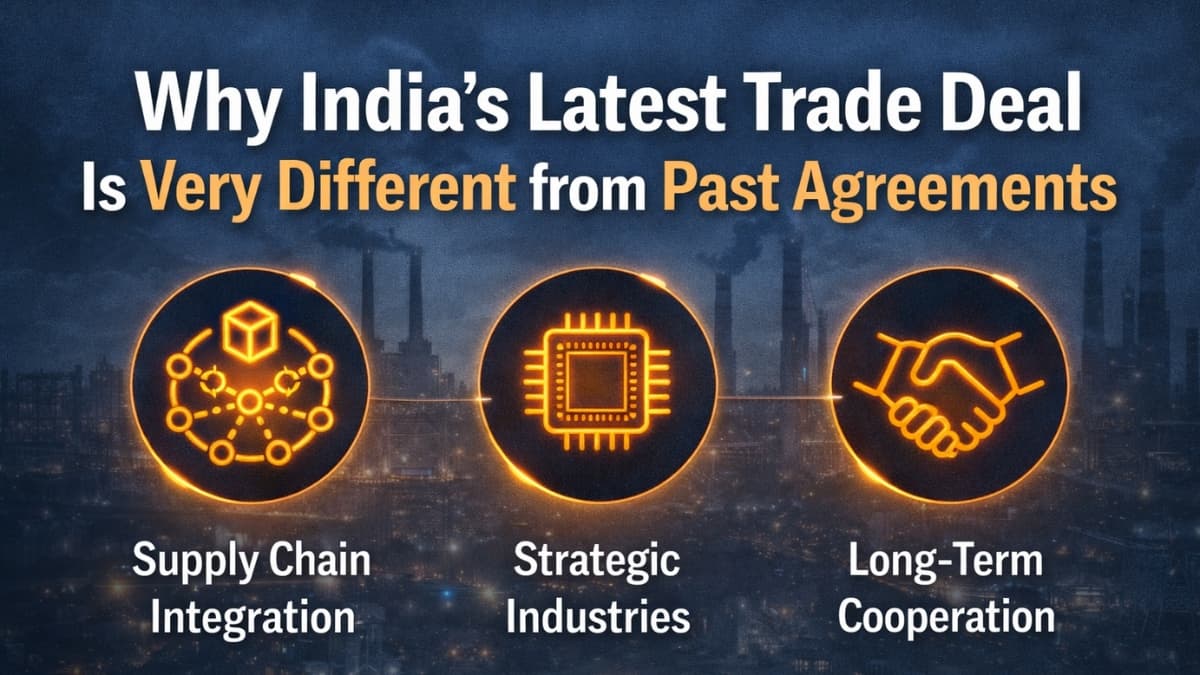
New Delhi: India’s earlier trade agreements often attracted criticism for opening markets without securing proportional gains. This time, the strategy appears more cautious and data-driven. The new deal reflects lessons learned from past experiences.
Unlike earlier agreements that prioritized tariff cuts, the current approach balances liberalization with strategic protection. Sensitive sectors such as dairy and certain agricultural products remain shielded, addressing political and social concerns.
Another key difference lies in global context. Previous deals were signed during an era of stable globalization. Today’s agreement emerges amid supply-chain disruptions, geopolitical realignments, and a global push for diversification away from single-country dependence. This context strengthens India’s bargaining position.
The focus on value chains rather than finished goods is also notable. India aims to integrate into global manufacturing networks, exporting intermediate goods and services rather than relying solely on finished products. This could support industrial upgrading.
Additionally, the deal aligns with domestic initiatives like Make in India, Production Linked Incentives, and PM Gati Shakti. Trade policy is no longer isolated but embedded within broader economic planning.
These differences suggest a more mature trade strategy. Whether it succeeds will depend on execution, infrastructure readiness, and skill development, but the intent marks a clear departure from the past.