
RBI Paper Notes Banned From June 30? Read This Urgent Official Update!
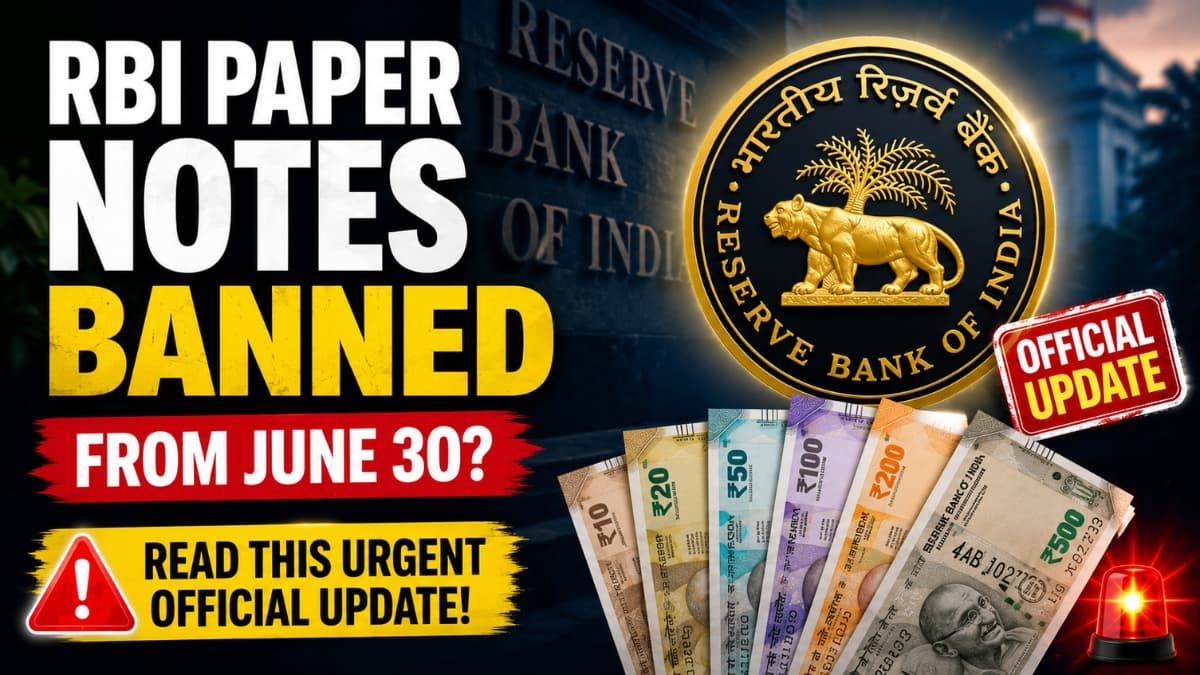
New Delhi, June 13, 2026: A wave of sudden panic swept across social media platforms and family WhatsApp groups this week. Misleading viral messages claimed that the Reserve Bank of India (RBI) is planning to completely withdraw all paper currency notes starting June 30, 2026, and replace them entirely with plastic (polymer) notes.
If you have been worried about the cash sitting in your wallet or locker, you can breathe a sigh of relief. The claim is absolutely false. Both the central bank and the government have officially stepped in to debunk the rumour.
Here is the breakdown of the true facts, the real statement from the RBI Governor, and why your cash remains 100% safe.
The Official Truth: RBI and PIB Step In
The Press Information Bureau (PIB) Fact Check unit and the RBI have officially rejected the viral message, labeling it as complete misinformation.
-
No Sudden Ban: The RBI has issued no such order or deadline to stop printing or usage of paper currency.
-
Legal Tender Status: All existing paper currency notes—including ₹10, ₹20, ₹50, ₹100, ₹200, ₹500, and ₹2,000—remain completely valid legal tender. They will continue to be accepted everywhere across India with zero restrictions.
Why Did the Rumour Start? Tracking the Source
The viral misinformation did not appear out of thin air; it twisted an official statement made during the June 2026 Monetary Policy announcement by RBI Governor Sanjay Malhotra.
During the press briefing, the Governor mentioned that the RBI is continuously exploring long-term innovations, which includes studying the feasibility of introducing more durable polymer (plastic) banknotes in the future to curb counterfeiting and reduce long-term printing costs.
The Reality Check: This is an early-stage, exploratory discussion. No final decision has been made, and absolutely no timeline or deadline has been set. Any transition, if it ever happens, would take years of gradual testing and public notices.
Internet mischief-mongers took this forward-looking study and manipulated it into an aggressive, immediate "deadline" of June 30 to trigger public panic.
The Science of Plastic Notes: Why Is It Under Discussion?
While a sudden ban is practically impossible, the concept of polymer currency holds significant benefits that India might consider gradually over the next decade. Many global economies—such as Australia and Canada—have successfully transitioned to plastic banknotes.
Potential Benefits of Polymer Notes:
-
Longer Lifespan: Plastic notes last significantly longer than traditional cotton-based paper notes, resisting water, dirt, and daily wear and tear.
-
Massive Cost Savings: Because they don't get easily soiled, the RBI could save thousands of crores spent annually on reprinting damaged currency.
-
Advanced Anti-Counterfeiting: They allow for advanced security features, like clear holographic windows, making them incredibly difficult to forge.
Why a sudden switch won't happen: Overhauling an economy as massive as India's requires updating millions of ATMs, vending machines, cash-counting devices, and conducting massive nationwide awareness drives. It cannot happen overnight.
What Should You Do Now?
To prevent the spread of unnecessary panic, citizens are advised to take the following steps:
-
Keep Using Your Cash: Continue using your regular paper currency notes normally for all daily transactions.
-
Break the Forward Chain: Do not share or forward unverified financial news, YouTube videos, or text messages on WhatsApp without checking the facts.
-
Trust Verified Sources: Always cross-check crucial financial updates directly on the official RBI portal (rbi.org.in) or through official government handles like PIB Fact Check.
Final Verdict
Your hard-earned cash is completely safe, and there is no upcoming deadline to exchange or surrender your paper currency notes. Do not let viral internet rumors dictate your peace of mind!