
Budget 2026 Aftermath: Will the Indian Rupee Plunge Further or Bounce Back?
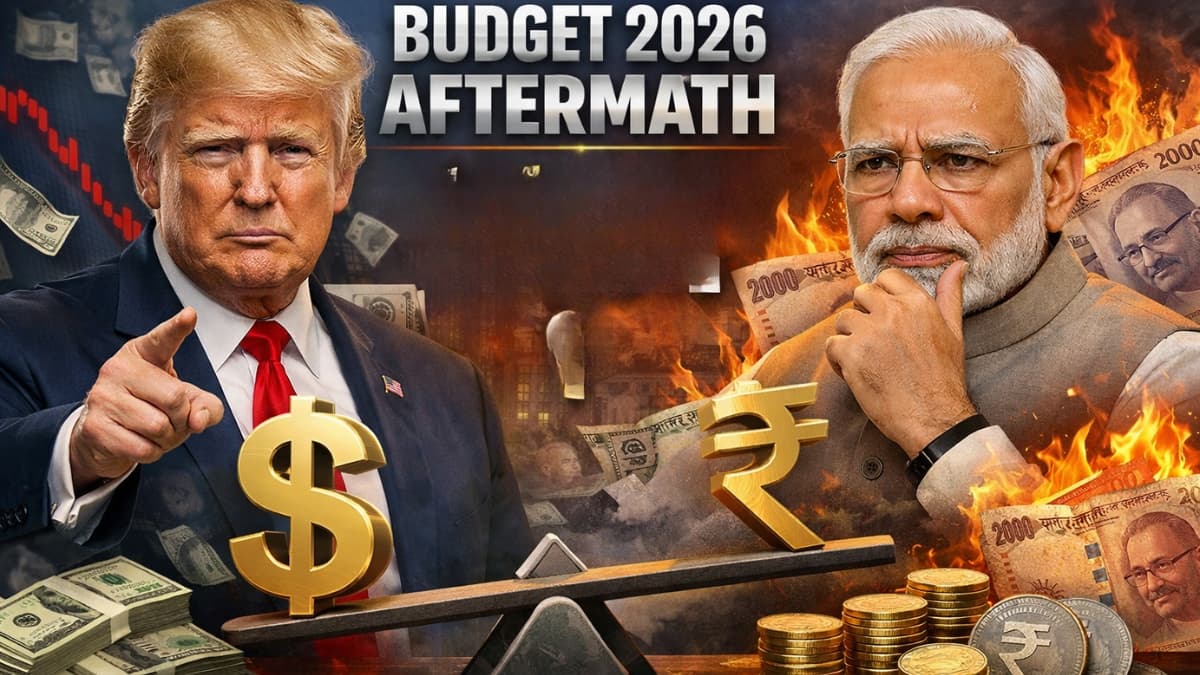
NEW DELHI: A day after the presentation of the Union Budget 2026–27, the Indian rupee remained in focus, with currency markets debating whether the recent recovery can be sustained or if further weakness against the US dollar lies ahead. While the rupee staged a short-term rebound, investors and economists remain cautious amid persistent global and domestic pressures.
On Monday, the rupee strengthened by around 40–45 paise to trade near ₹91.50–₹91.55 per US dollar, recovering from last week’s lows close to ₹91.90. Market participants attributed the gain to easing crude oil prices, a firm domestic equity market, and intervention-related support near key levels.
Rupee Under Pressure: Key Factors
Despite the brief recovery, the rupee continues to face structural challenges that have been building even before the Budget announcement.
Global Capital Outflows:
Foreign portfolio investors have been reducing exposure to emerging markets, leading to sustained pressure on the rupee.
Strong US Dollar:
The US dollar remains firm against major global currencies, supported by expectations of higher interest rates in the US, limiting upside for the rupee.
Rising Import Costs:
India’s dependence on crude oil and energy imports keeps the currency vulnerable, as higher import bills widen the trade deficit.
Analysts say these factors could keep the rupee under pressure in the near term, despite supportive domestic developments.
Immediate Market Reaction
The rupee saw a modest rebound after the Budget, supported by lower global crude prices and positive sentiment in equity markets. Traders also pointed to RBI-related dollar selling near the ₹92 level, which helped curb excessive volatility.
However, market participants cautioned that the recovery appears to be a technical correction rather than a trend reversal. Sustained stability will depend on renewed foreign inflows and improvement in global risk sentiment.
Budget Measures and Investor Sentiment
The Union Budget emphasized infrastructure spending and fiscal discipline, which provided some confidence to domestic markets. However, the absence of major fresh measures to attract foreign capital has limited optimism in currency markets.
Currency strategists warn that unless capital inflows improve meaningfully, the rupee could still weaken by 2–3% in the coming weeks, especially if global conditions turn adverse.
Economists note that exchange rate movements are influenced not only by budget policies but also by expectations around interest rates, capital flows, and global growth trends. With international markets remaining uncertain, rupee volatility is expected to persist.
External Influences Remain Critical
The rupee’s direction will continue to be closely linked to global commodity prices, particularly crude oil. A renewed rise in oil prices or delays in foreign investment could push the rupee lower, while strong export performance or higher foreign inflows may offer support.
What This Means for Businesses and Consumers
Importers and Consumers:
A weaker rupee could raise the cost of imported goods, including fuel and electronics.
Exporters and IT Companies:
Export-oriented sectors may benefit, as a softer rupee improves earnings in domestic currency terms.
Investors and Traders:
Market participants are advised to track RBI actions, global dollar trends, crude oil prices, and capital flow data closely.
Conclusion
The rupee’s movement after the Union Budget 2026 reflects a mix of short-term relief and longer-term caution. While temporary stabilization near current levels is possible, ongoing global uncertainties and structural pressures suggest that volatility may continue in the months ahead. Stakeholders should remain alert to macroeconomic indicators and policy signals to gauge the currency’s next move.