
EPFO Inoperative EPF Accounts: What You Must Know Before It’s Too Late
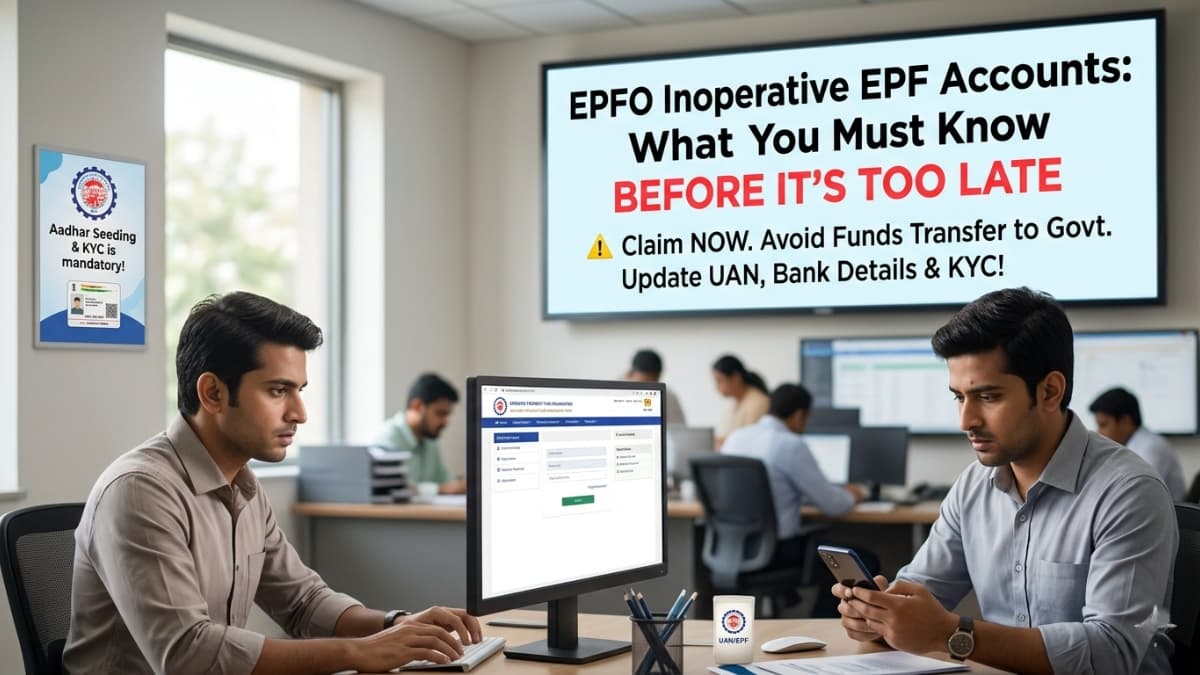
New Delhi: The Employees’ Provident Fund Organisation (EPFO) is a key pillar of retirement savings for millions of salaried employees in India. However, many EPF accounts become inoperative due to inactivity, resulting in loss of interest. Knowing the right steps to withdraw or transfer your EPF can help you secure your retirement funds.
1. What is an Inoperative EPF Account?
An inoperative EPF account is one where there has been no contribution or transaction for a prolonged period, typically after retirement. EPFO stops paying interest on inoperative accounts after 36 months of inactivity.
2. Withdrawal Rules Based on Retirement Age
If You Retired Before Age 55:
-
You must withdraw your EPF funds before turning 58.
-
Failing to withdraw before age 58 will make your account inoperative, and you will stop earning interest.
If You Retired at Age 55 or Later:
-
EPF withdrawal should be done within 3 years from the date of retirement.
-
After 3 years, the account becomes inoperative, and no further interest will accrue.
3. What Happens When an EPF Account Becomes Inoperative?
-
Interest stops accruing on the account.
-
Members cannot add contributions to the inoperative account.
-
You can still withdraw funds, but it requires filing a claim form through EPFO.
4. Steps to Reactivate or Withdraw Your EPF Account
-
Check EPF Status: Use the EPFO Member Portal or the UMANG app.
-
Link Aadhaar and Bank Account: Ensure your details are updated to avoid delays.
-
File EPF Claim: Fill out Form 19 (Final Settlement) and Form 10C (Pension Claim) for withdrawal.
-
Monitor EPF Statements: Download your statement regularly to track contributions and interest.
-
Transfer EPF if Changing Jobs: Keep your EPF account active to continue earning interest.
5. Expert Advice
-
Do not leave your EPF account inactive for long periods.
-
Withdraw funds within the prescribed timelines based on your retirement age.
-
Reactivate inoperative accounts promptly to recover missed interest.
6. Key Takeaways
-
EPF is a crucial part of your retirement savings.
-
If retired before 55, withdraw by age 58.
-
If retired at 55 or later, withdraw within 3 years from retirement.
-
Keeping your EPF account active ensures continuous interest growth and avoids unnecessary losses.