
Repo Rate Decoded: How RBI’s June 2026 Policy Affects Your EMIs and Savings
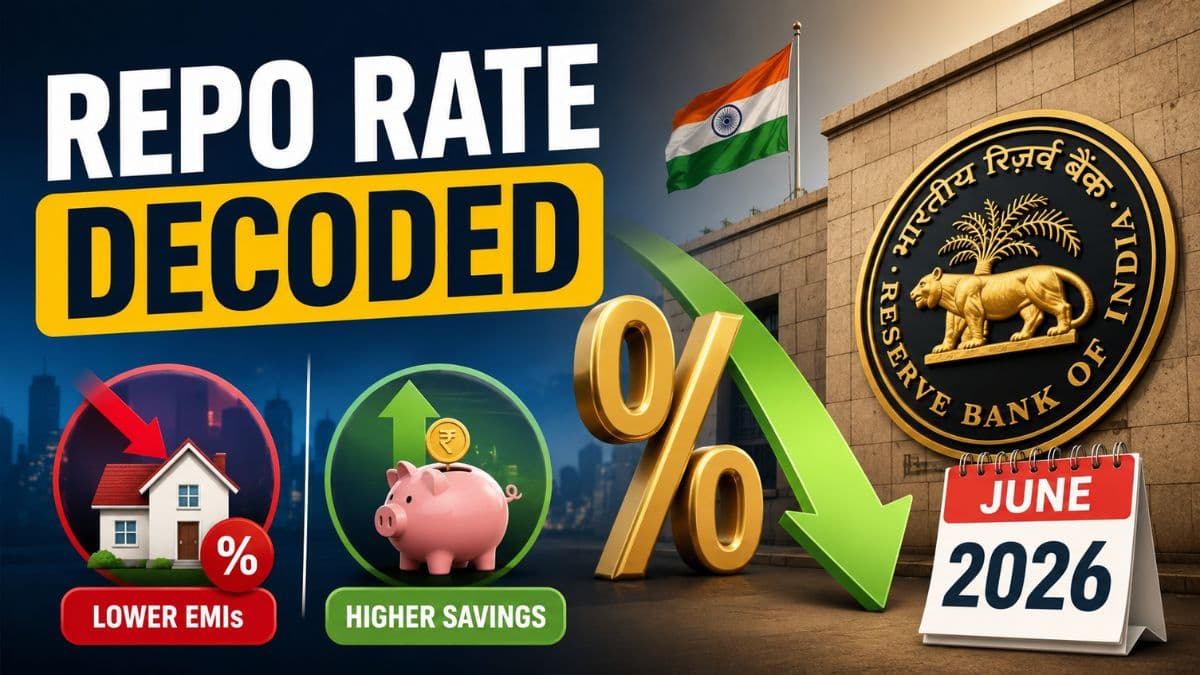
New Delhi: The Reserve Bank of India’s (RBI) monetary policy remains the heartbeat of the Indian financial ecosystem. As of June 2026, the shift from the high-rate "inflation-fighting" environment of previous years toward a more stable and neutral stance has fundamentally changed the strategy for borrowers and savers alike.
Understanding the Repo Rate is no longer just for economists—it is a critical tool for managing your home loan, bank deposits, and investment portfolio.
What is the Repo Rate?
The Repo Rate (Repurchase Rate) is the interest rate at which the RBI lends money to commercial banks. It is the primary lever used to balance economic growth with price stability.
-
When the Repo Rate rises: It becomes costlier for banks to borrow from the RBI. To protect their margins, banks increase interest rates for customers, making loans expensive.
-
When the Repo Rate falls: Borrowing costs for banks decrease. This allows them to offer cheaper loans to you, which encourages spending and boosts the GDP.
The June 2026 Financial Context
Entering June 2026, India continues to be the world's fastest-growing major economy with a projected GDP growth of ~7%. With retail inflation (CPI) successfully stabilized near the RBI's 4% target, the Monetary Policy Committee (MPC) has adopted a "neutral" stance. This stability is designed to support long-term capital investments while keeping the Rupee resilient.
How This Affects Your Personal Finances
1. Your EMIs (Home, Car, and Personal Loans)
Most retail loans in 2026 are linked to the External Benchmark Lending Rate (EBLR), typically the Repo Rate itself. This ensures that RBI's policy changes reach you faster than ever before.
-
The 2026 Trend: For those who took loans during the peak rates of 2023-24, the current stability means your loan tenure is likely reducing if you kept your EMI constant.
-
Strategy: If your bank hasn't lowered your spread in line with the June 2026 market average, it is an ideal time to explore loan refinancing or balance transfers.
2. Your Savings (Fixed Deposits & Savings Accounts)
After reaching a peak in late 2024, Fixed Deposit (FD) rates are now seeing a gradual cooling period.
-
The 2026 Trend: Banks have sufficient liquidity, meaning they are less aggressive about offering 7.5% or 8% returns. Current top-tier rates are settling between 6.5% and 7%.
-
Strategy: If you have surplus cash, locking in long-term FDs now is better than waiting, as rates are expected to soften further toward the end of the fiscal year.
3. Your Investments (Equity & Debt Markets)
Interest rates and stock markets generally move in opposite directions.
-
Equity: Lower or stable interest rates reduce the "cost of capital" for companies. This boosts corporate earnings in sectors like Real Estate, Auto, and Infrastructure, often leading to a bullish stock market.
-
Debt Funds: As market interest rates fall, the price of existing bonds rises. This makes long-duration debt mutual funds a strong performer in the current 2026 climate.
Comparison: June 2026 Policy Impact
|
Category |
Movement |
Practical Impact |
|
Home Loans |
Stable/Easing |
Reduced interest burden; easier tenure management. |
|
Fixed Deposits |
Softening |
Diminishing returns on new deposits. |
|
Stock Market |
Positive |
Lower corporate debt costs driving higher valuations. |
|
Inflation |
Controlled |
Purchasing power remains stable near 4% CPI. |
Expert Take: In June 2026, the "cost of money" is becoming more predictable. This is the perfect window to transition from high-interest debt into growth-oriented investments. Always monitor the MPC minutes to catch early signals of the next rate cycle.