
UCO Bank’s BRSR 2025-26 Drops Bombshell: Zero Data Breaches, 27.84% Wages to Women, and a Net Zero Target for 2056
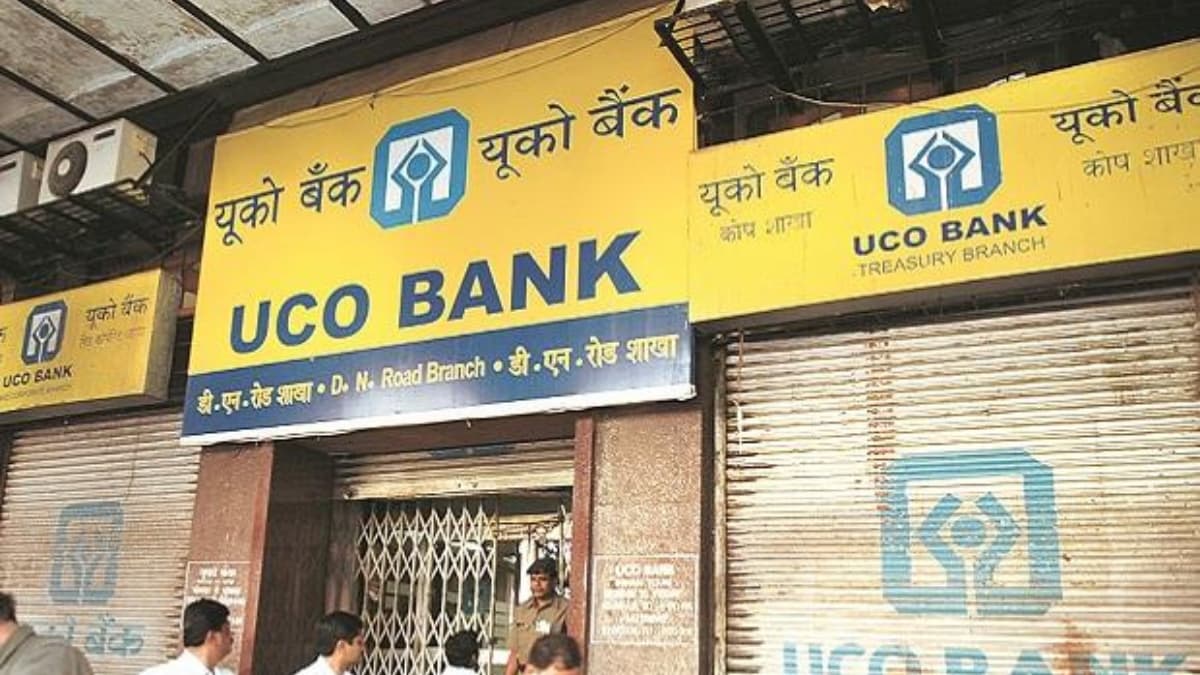
Mumbai: In a high-transparency move that is turning heads across India's banking sector, UCO Bank has released its Business Responsibility and Sustainability Report (BRSR) for the financial year 2025-26, and the numbers tell a powerful story of ethical governance, green transition, and social inclusion.
Submitted to the National Stock Exchange (NSE) and BSE on May 21, 2026, the 66-page report, assured by M/s K Ghosh and Associates, Chartered Accountants, reveals that the Kolkata-headquartered public sector bank is not just complying with SEBI norms but actively reshaping its ESG playbook.
Zero Data Breaches, Strong Cyber Hygiene
At a time when digital banking frauds are rising nationally, UCO Bank reported zero instances of customer data breach in FY 2025-26. The bank also recorded no complaints related to data privacy, advertising, or restrictive trade practices, a rarity in the industry.
However, customer grievances around ATM, e-banking, and excess charges stood at 12,44,223 compared to 8,54,742 last year, with 3,770 complaints pending resolution at year-end. The bank clarified that its centralized online grievance redressal system and 24/7 toll-free helpline remain fully operational.
27.84 Percent of Gross Wages Goes to Women
UCO Bank's gender pay equity stood out significantly. Women employees received 27.84 percent of total gross wages in FY26, up from 26.85 percent in the previous year. Female representation in the total workforce is 29.53 percent, which is 6,200 out of 20,993 permanent employees.
On the POSH front, the Prevention of Sexual Harassment at Workplace, the bank reported 5 complaints during FY26, of which 2 were upheld, indicating active enforcement of the 2013 Act. Additionally, no complaints were filed regarding workplace discrimination, child labor, or forced labor.
Net Zero by 2056 Including Financed Emissions
Perhaps the boldest claim in the report is that UCO Bank has adopted a Net Zero Transition Plan aligned with Government of India's climate commitments and NDCs.
Scope 1 and 2 covering own operations will reach net zero by 2050. Scope 3 and financed portfolio will reach net zero by 2056. Green financing will see progressive increase in green lending to support portfolio decarbonisation.
The bank follows PCAF, the Partnership for Carbon Accounting Financials, standards for financed emissions assessment, a first among many public sector banks.
Energy intensity dropped sharply to 8.93 GJ per crore of turnover in FY26, down from 11.99 in FY25. Total GHG emissions for Scope 1 and Scope 2 combined fell to 53,615 tCO2e from 70,428 tCO2e last year.
Total Scope 3 emissions for FY26 were assessed at 67,67,2070 tCO2e, a significant step toward full-value-chain accountability.
Employee Well-being Spend Jumps to 0.85 Percent of Revenue
UCO Bank increased spending on employee health, insurance, allowances, and wellness measures to 0.85 percent of total revenue, which is 29,705 crore, in FY26, up from a restated 0.75 percent in FY25.
One hundred percent of permanent staff are covered under health and accident insurance. The bank reported a 100 percent retention rate for employees returning from parental leave. Approximately 89 percent of staff are members of recognized unions or associations.
The bank also reported that 64.58 percent of all permanent employees underwent performance and career development reviews during the year.
Other Key Metrics at a Glance
Accounts payable days stood at 22.72 days in FY26 compared to 15.34 days in FY25.
Total permanent employees numbered 20,984 in FY26 compared to 21,049 in FY25.
Differently abled employees numbered 518 in FY26 compared to over 500 in FY25.
Water consumption was 2,36,070 kilolitres in FY26 compared to 2,36,801 kilolitres in FY25.
E-waste recycled was 1.28 tonnes in FY26 compared to 22 tonnes in FY25.
Total renewable energy consumed was 12,74,256.60 GJ in FY26, while the previous year did not report renewable energy consumption.
The report also disclosed that the bank has no holding, subsidiary, or associate companies, making the BRSR a standalone, fully auditable document.
Independent Assurance and SEBI Compliance
The reasonable assurance report by K Ghosh and Associates confirms that UCO Bank's identified sustainability information is fairly stated and properly prepared in all material respects, in accordance with SEBI circular dated July 12, 2023, Industry Standards Note on BRSR Core, and SEBI circular dated March 28, 2025.
Notably, the bank received no monetary penalties for corruption, anti-competitive conduct, or bribery, and zero disciplinary actions were taken against directors or Key Managerial Personnel during the year.
What This Means for Investors and Customers
For retail investors, institutional stakeholders, and ESG-focused funds, UCO Bank's BRSR signals low governance risk, high transparency, and credible climate action.
The bank's paid-up capital stands at 12,539.56 crore rupees, with shares listed on BSE under Scrip Code 532505 and on NSE under Scrip Symbol UCOBANK. The bank operates 3,412 domestic branches, 2,647 ATMs, and one representative office in Tehran, Iran.
The full BRSR 2025-26 report is available at:
https://uco.bank.in/business-responsibility-sustainability-report
Bottom Line
UCO Bank is not just reporting but transforming. From women's wage parity and zero data breaches to net-zero banking books, this BRSR sets a new benchmark for public sector banks in India.
As the banking industry moves toward mandatory BRSR Core disclosures under SEBI's updated framework, UCO Bank's FY26 report will likely serve as a reference point for ESG integration in India's financial sector.