
NLC India's ₹2,354 cr loss exposed: CAG report reveals design flaws, safety lapses, FGD delays
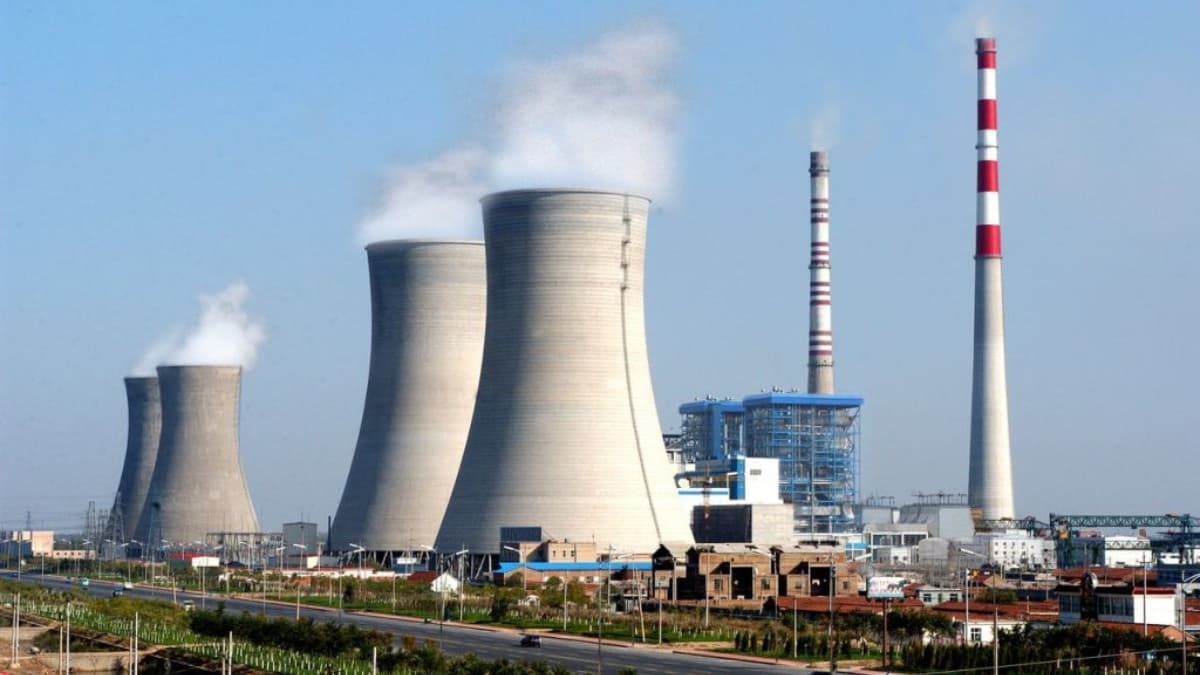
New Delhi: The Comptroller and Auditor General of India (CAG) has pulled up NLC India Limited (NLCIL) for under-recovery of capacity charges totalling ₹2,353.99 crore, attributing the loss primarily to design flaws in its thermal power stations at Neyveli.
The findings form part of the performance audit report titled "Operational Performance of NLC India Limited" (Report No. 35 of 2025), which was tabled in Parliament. The audit covered the operational performance of lignite mines and selected thermal power stations at Neyveli, Tamil Nadu, for the five-year period from 2017-18 to 2022-23.
Key Findings: Power Generation
The government auditor noted "significant inefficiencies" in operations, safety protocols, and environmental compliance at NLCIL's TPS-I Expansion (TPS-IE), TPS-II, and TPS-II Expansion (TPS-IIE) during the review period.
Plant Availability Factor (PAF) Shortfall
The most significant issue was the consistent non-achievement of the normative Plant Availability Factor (PAF) prescribed by the Central Electricity Regulatory Commission (CERC). This resulted in a total loss of ₹2,353.99 crore in capacity charges (fixed cost recovery).
The CAG attributed this primarily to:
-
Design flaws in Circulating Fluidised Bed Combustion (CFBC) boilers at TPS-IIE
-
Turbine breakdowns
-
Forced outages
-
Fire incidents
-
Inadequate maintenance practices
TPS-IIE faced 33,451.55 hours of outages due to repeated faults in the Fluidised Bed Heat Exchanger (FBHE) system of its CFBC boiler. TPS-II suffered major outages in 2020-21 due to fire incidents (12,260 hours) and additional shutdowns due to maintenance and technical issues (4,819.48 hours).
Partial Load Loss
The power stations operated with partial load due to issues like load restrictions, lignite shortage and quality issues, equipment breakdowns, and inadequate storage. These inefficiencies led to a total generation loss of 1,594.77 million units and under-recovery of lignite extraction costs of ₹360.52 crore.
Key reasons included:
-
Poor mill performance in TPS-II (650.88 million units loss) due to ageing of mills and leakages in ducts
-
Unresolved lignite feeding system issues in TPS-IIE (295.37 million units loss)
-
Delayed procurement of conveyor belts in TPS-II (281.53 million units loss)
-
Insufficiently covered lignite storage yards in TPS-II and TPS-IE, causing wet lignite issues during monsoon, resulting in generation loss of 366.99 million units
Auxiliary Power Consumption (APC)
TPS-IIE recorded APC consistently above CERC norms, consuming 15 to 17 per cent auxiliary power against the 10 per cent norm. TPS-IE and TPS-II also exceeded norms in some years. The audit noted that NLC India lacked adequate systems to monitor equipment-level energy use, making it difficult to identify equipment with high energy consumption.
Station Heat Rate (SHR) and Specific Oil Consumption
TPS-IIE consistently recorded higher Station Heat Rate above CERC norms due to sub-optimal performance of CFBC technology, which was installed and commissioned by BHEL without prior experience for such high-capacity plant (250 MW). In 2022-23, TPS-II also exceeded the SHR norm due to poor lignite quality with high ash and sand content.
Specific oil consumption at TPS-IIE and TPS-II remained consistently higher than CERC norms, mainly due to frequent unit outages (250 forced outages and 32 planned outages at TPS-IIE; 81 and 45 outages at TPS-II in 2020-21 and 2021-22 respectively).
Fire Incidents and Safety Lapses
The audit highlighted serious safety deficiencies at TPS-II, which experienced recurring fire incidents. In May 2020, a fire in Unit-6 led to five fatalities and three injuries, resulting in 4,560 hours of outage. In July 2020, another fire in Unit-5 caused 15 deaths and eight injuries, with the unit shut down for 7,700 hours.
Investigations revealed that both incidents were caused by the accumulation of hot lignite dust in the girders over time, with ignition of flammable gases possibly causing the explosion. The CAG noted that these accidents could have been prevented by regular cleaning of lignite dust, especially since similar recommendations had been made by incident review committees following fire incidents in 2001, 2016, 2017, and 2019.
Cost Overruns and Manpower
Operation and Maintenance (O&M) expenditure at TPS-IE and TPS-II exceeded CERC norms by ₹248.99 crore during the review period, impacting profitability as these costs were not recoverable through tariffs.
A key factor contributing to these higher costs was excess deployment of manpower. As per Central Electricity Authority's National Electricity Plan, the standard requirement is 0.486 technical staff per MW of capacity. However, NLC India deployed 1.87 and 1.64 personnel per MW at TPS-IE and TPS-II respectively—over three times the recommended level.
Environmental Compliance
The audit found significant delays in installing Flue Gas Desulphurization (FGD) systems to control Sulphur Dioxide (SO₂) emissions. Despite SO₂ emissions at TPS-IE and TPS-II exceeding limits—reaching up to 2,842 mg/Nm³ and 3,623.57 mg/Nm³ in 2019-20 and 2018-19 respectively—FGD installation has been delayed. Although the NLC Board approved FGD installation in April-May 2018 with timelines of 33 to 41 months, tenders floated in January 2019 and June 2020 were cancelled. As of February 2024, no FGD contracts had been finalised.
Regarding Specific Water Consumption (SWC), NLC India awarded a contract for water treatment plant at TPS-II only in April 2021, despite the December 2017 deadline for compliance. No such contract was awarded for TPS-IIE, which also exceeded SWC limits.
Mining Operations
The audit also revealed significant issues in mining operations. Total identified mining area for three mines at Neyveli was 12,835 hectares, of which NLC India acquired and took possession of 9,180 hectares as of March 2023. However, 580 hectares of land acquired between 2000 and 2023 remained out of possession. Of the land in possession, only 46.19 hectares remained for mining operations, containing an estimated 44.10 million tonnes of lignite—sufficient for only about 20 months of electricity generation (till November 2024).
Due to land shortage, there was short supply of lignite (2.77 million tonnes) from Mine-II to linked TPS-II and TPS-IIE during the second half of 2022-23, leading to a potential revenue loss of ₹338.62 crore in mining operations. In Mine-IA, NLC India incurred additional expenditure of ₹364.80 crore for removal of previously dumped soil after failing to obtain land on the eastern side due to landowner opposition.
Environmental Clearance and Safety Violations
Mine-II operated without a valid Environmental Clearance from April 2018 onwards due to lack of coordination between departments in submitting re-validation applications. This restricted NLC India from producing and selling minor minerals (Ball Clay and Silica Sand) from Mine-II.
NLC India violated environmental clearance norms by dumping overburden beyond prescribed limits. In Mine-I, the average overburden dump height reached 50 metres against the permissible 20 metres. In Mine-II, overburden was dumped up to 120 metres high against the 65-metre limit, causing soil sliding that blocked drainage systems and damaged agricultural lands on multiple occasions between 2012 and 2018. NLC India paid ₹2.18 crore as compensation and spent ₹14.98 crore to clear soil from drains and agricultural land.
Mine Safety
Despite recommendations from a scientific study by IIT Varanasi (August 2019) for a 30-metre height limit for internal dumps and installation of a continuous slope monitoring system, NLC India had not procured the system as of March 2023. Internal dumps exceeded the 30-metre limit in two out of five locations in Mine-II, reaching up to 50 metres, leading to soil sliding in September 2021 that damaged equipment and compromised worker safety.
Positive Practices Noted
Despite the shortcomings, the CAG acknowledged several commendable practices:
-
Reclamation of 2,188 hectares of mined-out land and planting over 27.96 lakh native tree saplings
-
High-tech vegetable cultivation in 100 hectares of reclaimed land using scientific methods
-
Creation of 52 water bodies for rainwater harvesting
-
Development of eco-tourism facilities
-
100 per cent fly ash utilisation at all its power stations since 2013
Recommendations
The CAG made several key recommendations:
-
Land Acquisition: Expedite land acquisition and possession to ensure uninterrupted lignite production
-
Mine Safety: Prioritise procurement and installation of slope monitoring systems and strictly adhere to dump height limits
-
Maintenance: Ensure timely preventive maintenance as per standard operating procedures to reduce forced outages
-
Partial Load Operations: Analyse reasons for partial load operations and minimise losses
-
Station Heat Rate: Ensure timely completion of FBHE modifications at TPS-IIE and ensure good quality lignite supply
-
Specific Oil Consumption: Minimise forced outages and ensure adequate covered lignite storage
-
Fire Safety: Prevent accumulation of lignite powder inside girder boxes through regular inspection and proper sealing of manholes
-
Manpower and O&M Costs: Restrict manpower deployment within CEA norms and O&M costs within CERC norms
-
FGD Installation: Expedite tendering process for FGD installation at TPS-IE and TPS-II to meet the December 2026 deadline
-
Record Maintenance: Formulate SOPs for preparation of Shift Engineer Trip Reports and Trip Analysis Reports with proper monitoring mechanisms
The audit findings underscore the need for NLC India to address critical operational, safety, and environmental compliance issues to ensure efficient, reliable, and sustainable operations.