
India and Canada Forge New Partnership: CEPA Trade Deal, $2.6B Uranium Pact, and Tech Collaboration Announced
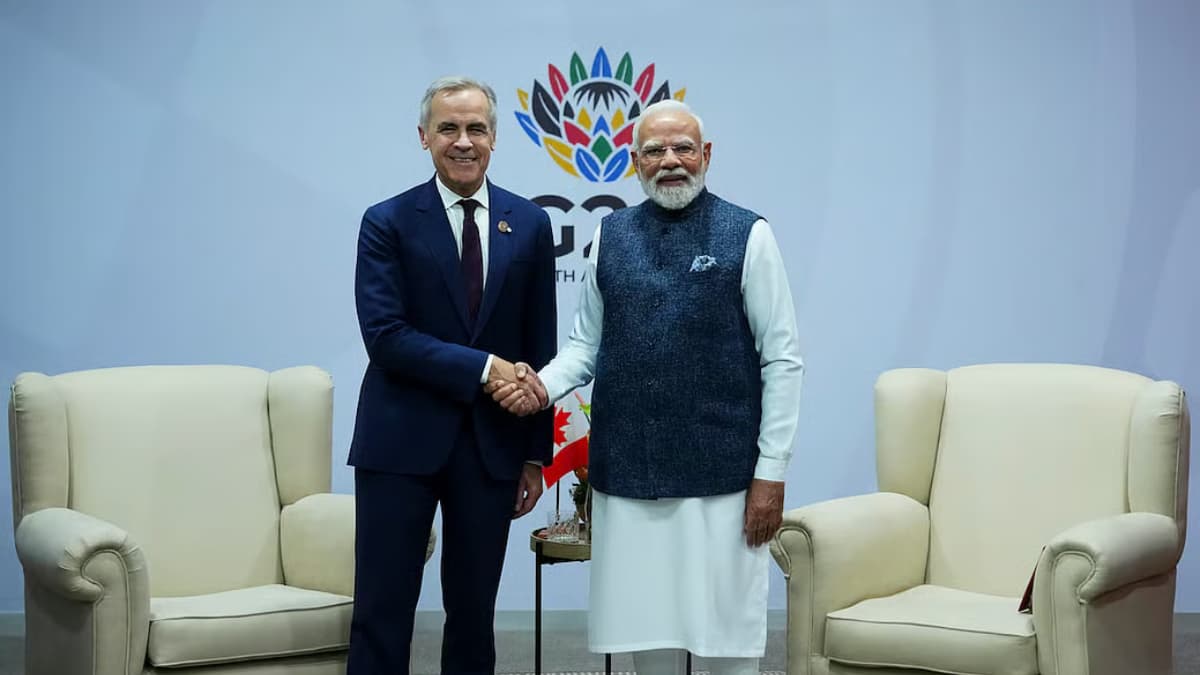
New Delhi: In a significant thaw in bilateral relations, Canadian Prime Minister Mark Carney concluded a landmark visit to India this week, meeting with Prime Minister Narendra Modi in New Delhi. The visit, the first by a Canadian Prime Minister since 2018, marks a strategic reset aimed at leveraging the strengths of both economies.
Key Outcomes of the Visit:
-
Trade Deal (CEPA): Both leaders confirmed that India and Canada will conclude a Comprehensive Economic Partnership Agreement (CEPA) by the end of 2025, aiming to more than double bilateral trade to $70 billion by 2030.
-
Energy Security: A landmark $2.6 billion agreement was signed with Saskatoon-based Cameco to supply India with nearly 22 million pounds of uranium for nuclear energy generation (2027-2035). A new Strategic Energy Partnership was also launched, covering LNG, solar, hydrogen, and critical minerals.
-
Technology & AI: India's IT giant HCL Technologies announced a major expansion, planning to increase its Canadian workforce by 75% by 2030. Additionally, space agencies from both countries (CSA and ISRO) agreed to cooperate on Earth observation and space exploration.
-
Education & Talent: A new Canada-India Talent and Innovation Strategy was launched, featuring 13 new university partnerships. The University of Toronto committed up to $100 million for scholarships for Indian students, while Canada will fund 300 Indian researcher positions.
-
Security Cooperation: The leaders agreed to enhance defence cooperation, particularly in maritime security, and to collaborate on combating transnational crime and the illegal flow of drugs like fentanyl.
The Bottom Line: With over $110 billion in existing investment and a new focus on critical minerals, AI, and clean energy, Canada and India are positioning themselves as indispensable partners in the Indo-Pacific.