
Japan–Viet Nam Hold First 2+2 Vice-Ministerial Talks in Tokyo to Boost Security Cooperation
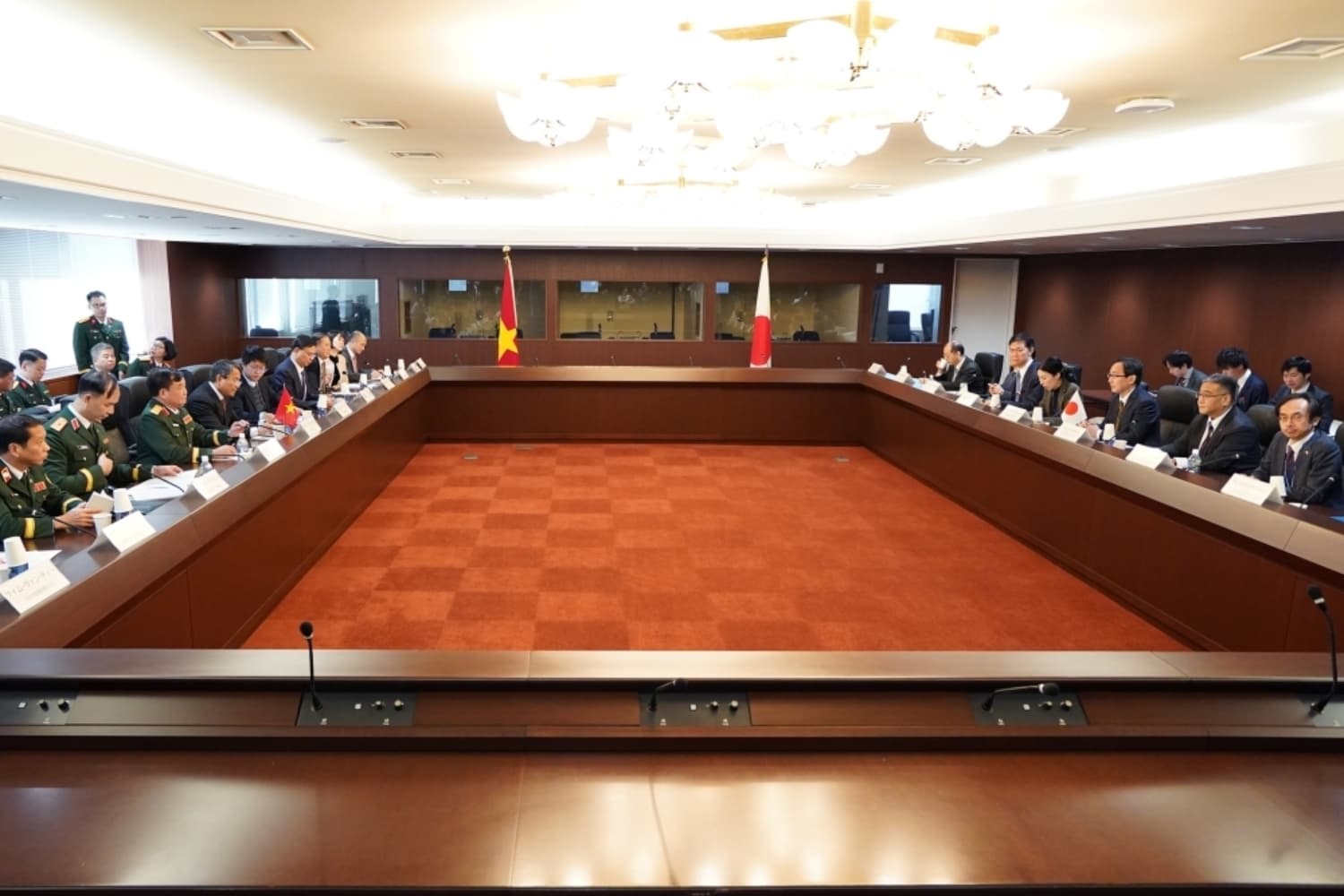
Tokyo, December 4 – Japan and Viet Nam convened their first Foreign and Defence Vice-Ministerial Consultation (2+2) in Tokyo, marking a new mechanism created after the leaders of both nations agreed in April to enhance high-level strategic communication.
Representing Japan were NAMAZU Hiroyuki, Senior Deputy Minister for Foreign Affairs, and KANO Koji, Vice-Minister of Defense for International Affairs. They were joined by senior officials from Japan’s Ministry of Foreign Affairs (MOFA) and Ministry of Defense (MOD).
The Vietnamese delegation included H.E. Nguyen Minh Vu, Permanent Deputy Minister of Foreign Affairs, and H.E. Hoang Xuan Chien, Senior Lieutenant General and Deputy Minister of National Defence, accompanied by officials from the Ministry of Foreign Affairs, the Ministry of National Defence, and the Ministry of Public Security.
During the meeting, both sides reaffirmed their commitment to advancing security cooperation under the “Comprehensive Strategic Partnership for Peace and Prosperity in Asia and the World.” Discussions covered a wide range of areas including personnel exchanges, humanitarian assistance, disaster-relief cooperation, Official Security Assistance (OSA), and collaboration on defense equipment and technology.
Japan and Viet Nam also engaged in extensive dialogue on their foreign and security policy priorities, as well as key regional developments. Topics included the situations in the East China Sea, South China Sea, and North Korea, with specific attention to missile and nuclear threats and the long-standing abductions issue.
Both countries reiterated the importance of promoting a Free and Open Indo-Pacific (FOIP) grounded in international law, and emphasized the need to align this vision with the ASEAN Outlook on the Indo-Pacific (AOIP). The two sides noted that cooperation is increasingly vital as the regional security landscape becomes more complex and challenging.