
India Courts Private Firms for Indigenous SMRs at Tarapur as Nuclear Push Accelerates
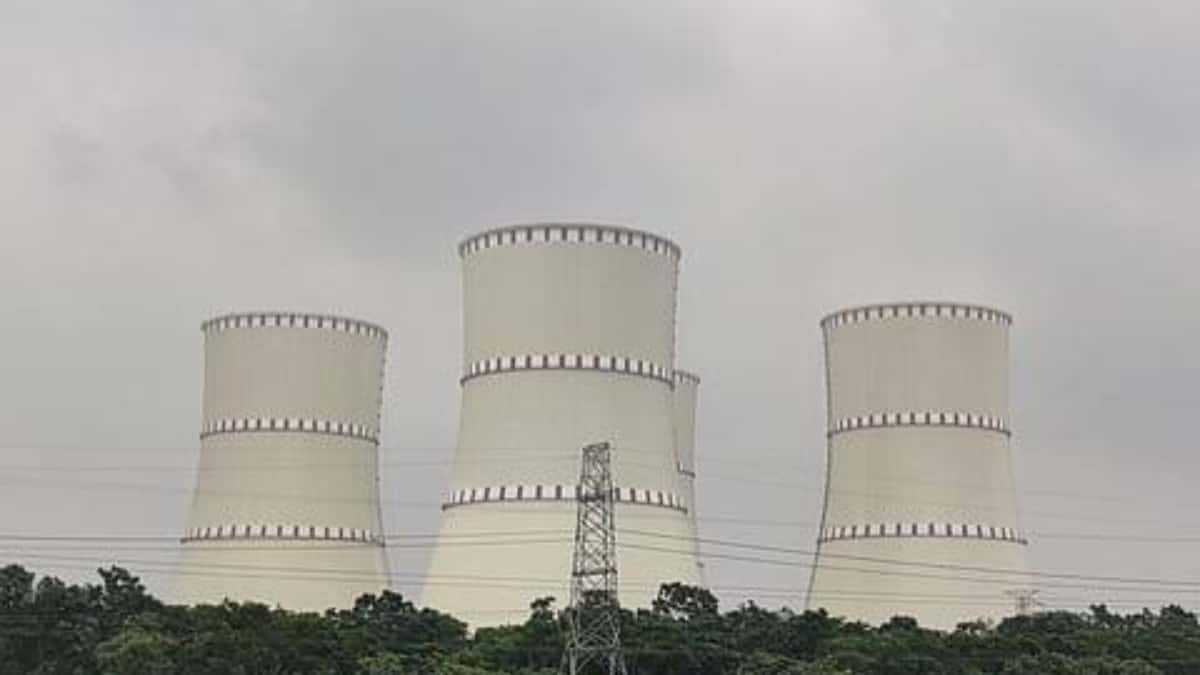
The Indian government has reached out to private players keen on nuclear power to partner in developing indigenous Small Modular Reactors at Tarapur in Maharashtra. NPCIL held consultative meetings with industry representatives and shared a clear roadmap for their participation, according to an industry spokesperson who attended the discussions.
SMRs typically generate up to 300 MWe through nuclear fission. Their compact, factory-built modular design allows faster construction, better quality control and phased deployment. This makes them particularly attractive for energy-intensive industries seeking reliable clean power for captive use.
Why Tarapur and Why Now
Tarapur already hosts India’s oldest commercial nuclear reactors. The Atomic Energy Commission has approved the site for the lead units of two key indigenous designs under development by Bhabha Atomic Research Centre in collaboration with NPCIL: the 220 MWe Bharat Small Modular Reactor (BSMR-200) and the 55 MWe SMR-55. A high-temperature gas-cooled reactor of up to 5 MWth is also in the works for hydrogen production.
The Union Budget 2025-26 set aside ₹20,000 crore under the Nuclear Energy Mission specifically for the design, development, and deployment of indigenous SMRs. The stated goal is to have at least five units operational by 2033. Construction of the demonstration reactors is expected to take 60-72 months once full administrative and financial approvals are in place. Estimated outlays include roughly ₹5,960 crore for the BSMR-200 and ₹7,000 crore for two units of the SMR-55.
An industry participant in the recent meetings noted that NPCIL is looking for private developers to help finance the projects. “The development of SMR takes a lot of time and financial commitment. NPCIL and BARC have been developing this technology for the last four to five years, and it is still a work in progress. They have said it will be operational only by 2033-34,” the spokesperson said.
Private Sector Interest and Parallel Tracks
Several large industrial groups have already shown interest in nuclear capacity, both for the newer SMR designs and for the related Bharat Small Reactors (220 MWe PHWR-based units) aimed at captive industrial power. Companies including Reliance, Adani, Tata Power, Hindalco, JSW, and others have engaged with NPCIL on these opportunities. In many proposed models the private partner would provide land, funding, and offtake, while NPCIL handles design, construction, operation, and regulatory compliance within the existing legal framework.
At the same time, several firms are also evaluating foreign nuclear technologies as part of their longer-term decarbonization plans. This dual approach reflects both the urgency of securing low-carbon baseload power and the still-maturing status of fully modular indigenous designs.
Global Context
Worldwide, interest in SMRs remains strong. The World Nuclear Association tracks around 133 SMR designs under development by 88 developers across 21 countries. Only a handful of units are currently operational—primarily in China and Russia—while many others sit at various stages of licensing and demonstration.
What This Means for India’s Energy Transition
Nuclear power currently forms a small share of India’s electricity mix, yet the government has set ambitious capacity targets as part of its pathway to net-zero. Indigenous SMRs are positioned to serve industrial clusters that need continuous clean power and may struggle with the intermittency of renewables alone. Factory modular construction could eventually shorten project timelines and improve cost predictability compared with traditional large reactors.
Challenges remain. Capital intensity, technology readiness, long development cycles, financing structures, and the need for a robust domestic supply chain capable of modular production all require careful navigation. Recent policy moves aimed at greater private participation, including frameworks under the SHANTI rules, are intended to address some of these barriers.
The Tarapur initiative marks a concrete step from policy announcements toward actual industry engagement. Whether private capital steps up in meaningful volumes will depend on clearer risk-sharing models, regulatory certainty, and demonstrated progress on the demonstration units themselves.
For industries under pressure to decarbonize while maintaining reliable power, the combination of government-backed indigenous technology and private financing could open a practical new option in the years ahead. The next few years of detailed engineering, financing negotiations, and first-of-a-kind construction will determine how quickly that option becomes commercially available.