
Hormuz Crisis Hits PSUs Hard: IOCL, HPCL, ONGC Brace for 40-45 Day Oil Crunch & $100 Brent Threat
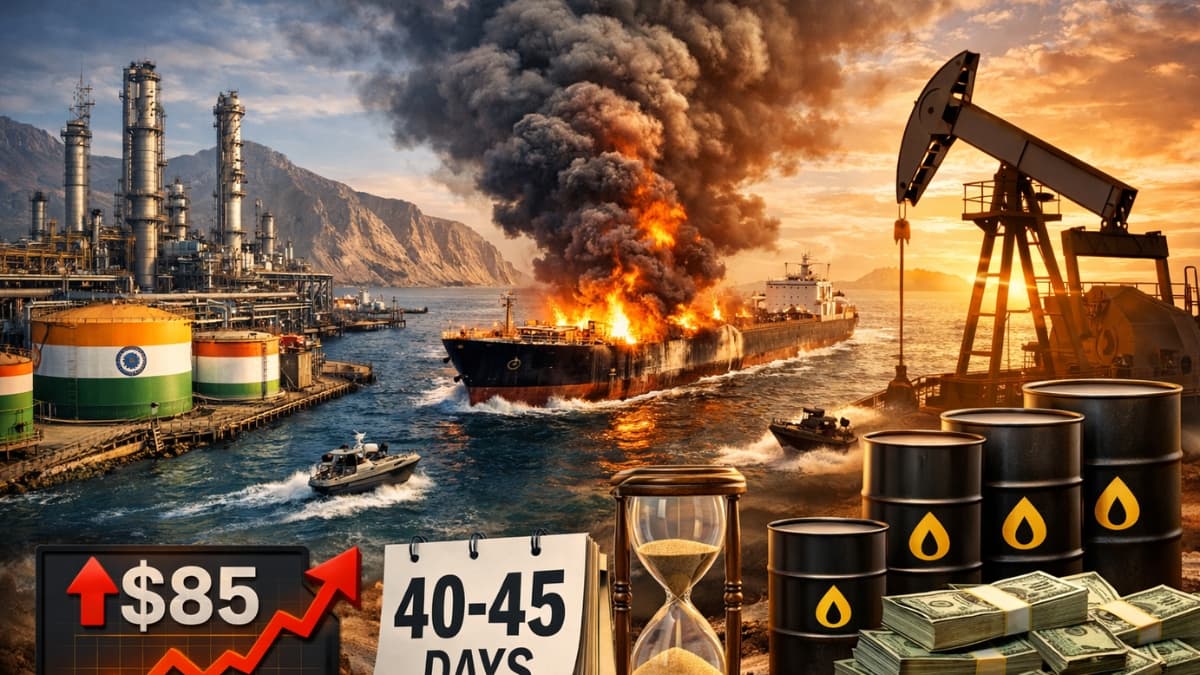
New Delhi: In the shadow of escalating conflicts in the Middle East, particularly around the volatile Strait of Hormuz, India's public sector undertakings (PSUs) in the oil and gas sector are facing unprecedented challenges. As the world's third-largest oil importer, India relies heavily on Middle Eastern supplies, with over 50% of its crude oil transiting through this critical chokepoint. Yet, amid fears of supply halts and price volatility, companies like Oil and Natural Gas Corporation (ONGC), Indian Oil Corporation Limited (IOCL), and Hindustan Petroleum Corporation Limited (HPCL) are demonstrating remarkable adaptability. This article delves deeper than surface-level assurances, exploring the strategic pivots, economic ramifications, and long-term innovations that could redefine India's energy security in a fractured global landscape.
The Immediate Ripple Effects of Middle East Unrest
The current flare-up in the Iran-Israel conflict has brought the Strait of Hormuz—a narrow waterway handling one-fifth of global oil trade—under severe strain. For India, this translates to potential disruptions in imports from key suppliers like Iraq, Saudi Arabia, and the UAE, which account for roughly 2.5-2.7 million barrels per day. Unlike previous crises, this one coincides with a bearish global oil market outlook, where Brent crude is projected to average around $60 per barrel in 2026, according to analysts at J.P. Morgan. However, short-term spikes could push prices toward $100 if blockades persist, straining PSU margins already squeezed by lower realization prices.
Take ONGC's recent Q3 FY26 results as a case study. Despite a 23% surge in consolidated net profit to ₹11,946 crore—driven by strong performances from subsidiaries like HPCL and Mangalore Refinery and Petrochemicals Limited (MRPL)—the company grappled with declining product prices. Standalone net profit edged up only 1.6%, underscoring the vulnerability to external shocks. Petroleum Minister Hardeep Singh Puri has repeatedly emphasized India's "sufficient energy reserves," including strategic petroleum reserves and commercial stockpiles covering 6-8 weeks. But this buffer is a tactical fix, not a strategic solution. The real depth lies in how PSUs are quietly reshaping their supply chains to mitigate these risks.
Strategic Diversification: Beyond the Strait's Shadow
What sets this crisis apart is India's proactive diversification away from Hormuz-dependent routes. Indian PSUs have ramped up sourcing from non-Middle Eastern suppliers, with Russian crude emerging as a potential lifeline. Although imports from Russia dipped recently due to U.S. trade negotiations and sanctions redirecting flows to China, insiders suggest a reversal is imminent. With Hormuz disruptions, PSUs like IOCL could increase Russian intakes by 600-800 thousand barrels per day, leveraging discounted barrels to offset losses. This isn't mere opportunism; it's a calculated hedge against over-reliance on West Asia, where LNG imports from Qatar—another Hormuz transit point—constitute half of India's total.
Moreover, PSUs are investing in bypass logistics. Cargoes from alternative sources, such as the U.S., Brazil, and West Africa, are being prioritized, ensuring continuity even if Middle Eastern flows grind to a halt. HPCL, for instance, has bolstered its refining capabilities, exporting refined products to offset import vulnerabilities. This dual role—as importer and exporter—positions Indian PSUs uniquely in global markets, potentially turning a crisis into an opportunity for market share gains in Asia and Europe.
Economic and Inflationary Undercurrents
The broader economic impact on India cannot be understated. With an import dependency exceeding 88%, any prolonged disruption could inflate retail fuel prices, despite government interventions to shield consumers. Petrol, diesel, and LPG costs might rise 5-10% if crude breaches $80, fueling broader inflation and pressuring the RBI's monetary policy. For PSUs, this means tighter margins: ONGC's resilience in FY26, marked by increased crude and gas output, highlights operational efficiencies, but sustained low prices could erode investments in upstream exploration.
Yet, herein lies the insight often overlooked: these tensions are accelerating India's energy transition. PSUs are channeling funds into renewables and green hydrogen, aligning with Prime Minister Narendra Modi's $500 billion energy investment push by 2030. Of this, $100 billion is earmarked for traditional oil and gas, but the lion's share targets diversification into solar, wind, and biofuels. ONGC's foray into green energy ventures, including partnerships with international firms, could reduce import reliance by 20% over the next decade, transforming PSUs from mere importers to integrated energy giants.
A Forward-Looking Resilience Framework
Looking ahead, the true test for Indian oil and gas PSUs will be in building a "resilience framework" that integrates technology, diplomacy, and innovation. Advanced analytics for supply chain optimization, AI-driven demand forecasting, and blockchain for transparent trading could become standard. Diplomatically, strengthened ties with OPEC+ nations and non-traditional suppliers will be crucial. If executed well, this could not only weather the current storm but position India as a net energy exporter by 2040, flipping the script on its vulnerability.
In conclusion, while media headlines focus on immediate assurances and stockpile levels, the deeper narrative is one of transformation. Indian PSUs are not just surviving the Middle East maelstrom—they're evolving to thrive in a multipolar energy world. As global dynamics shift, these entities could emerge stronger, driving India's journey from energy security to independence. For stakeholders, the message is clear: adaptability is the new oil.
Disclaimer: This article is based on publicly available reports, analyst estimates, and market data as of March 2026. It does not constitute financial, investment, or official advice. Oil prices, reserves, and geopolitical situations are highly volatile and subject to rapid change; readers should verify facts from official sources and consult experts before making any decisions.