
RVNL Achieves Key Tunnelling Milestone on Indore–Budni Rail Project
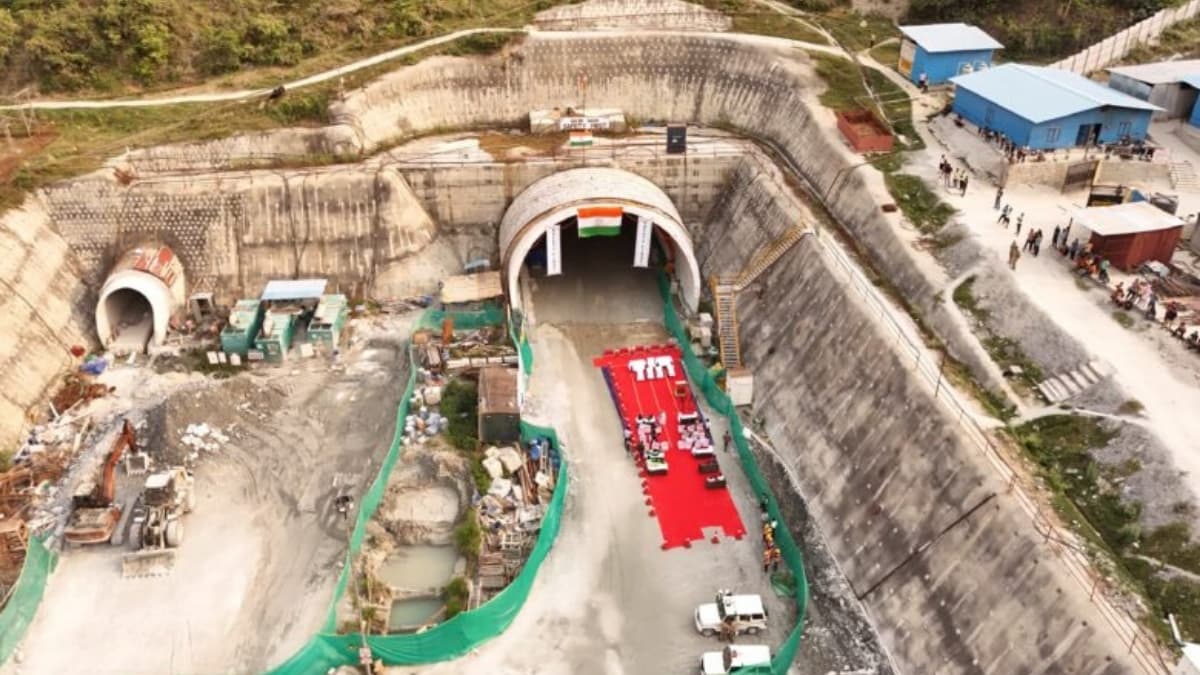
Rail Vikas Nigam Limited (RVNL), a Navratna Central Public Sector Undertaking under the Ministry of Railways, has achieved a major early milestone in the Indore–Budni New Line Project by completing the first 100 metres of main tunnel excavation from Portal-1 of Tunnel-2.
The breakthrough was accomplished by RVNL’s PIU-Bhopal team within an impressive two-month timeframe despite highly challenging geological conditions. Tunnel-2, stretching 8.6 kilometres, forms a critical link in the Indore–Budni rail corridor and passes through the villages of Kamlapur, Thalghewaria and Hatnora in Bagli and Kannod tehsils of Dewas district, Madhya Pradesh.
The project encountered Rock Class-V geology, considered one of the weakest and most fractured formations for tunnelling. Additional complexity arose as the tunnel alignment runs beneath two active nalas, raising risks related to groundwater seepage and surface instability.
Commenting on the achievement, RVNL Chairman and Managing Director Shri Saleem Ahmad said the successful completion of the first 100 metres under such difficult conditions reflects RVNL’s commitment to safety, engineering excellence and disciplined execution. He added that the company will continue to deploy advanced technologies and best practices to ensure timely delivery while maintaining the highest quality standards.
To overcome the difficult terrain, RVNL employed advanced excavation techniques, installed immediate primary support systems and conducted continuous geotechnical monitoring to manage deformation and safeguard workers. The accomplishment highlights RVNL’s strong focus on precision engineering, real-time decision-making and robust safety management.
Once completed, the tunnel is expected to significantly improve rail connectivity, enhance capacity and boost operational efficiency along this strategically important route, contributing to regional economic development and supporting future traffic growth in Madhya Pradesh.