
SECI Awards Over 11 GW Renewable Capacity Across Solar, Hybrid and Wind Schemes
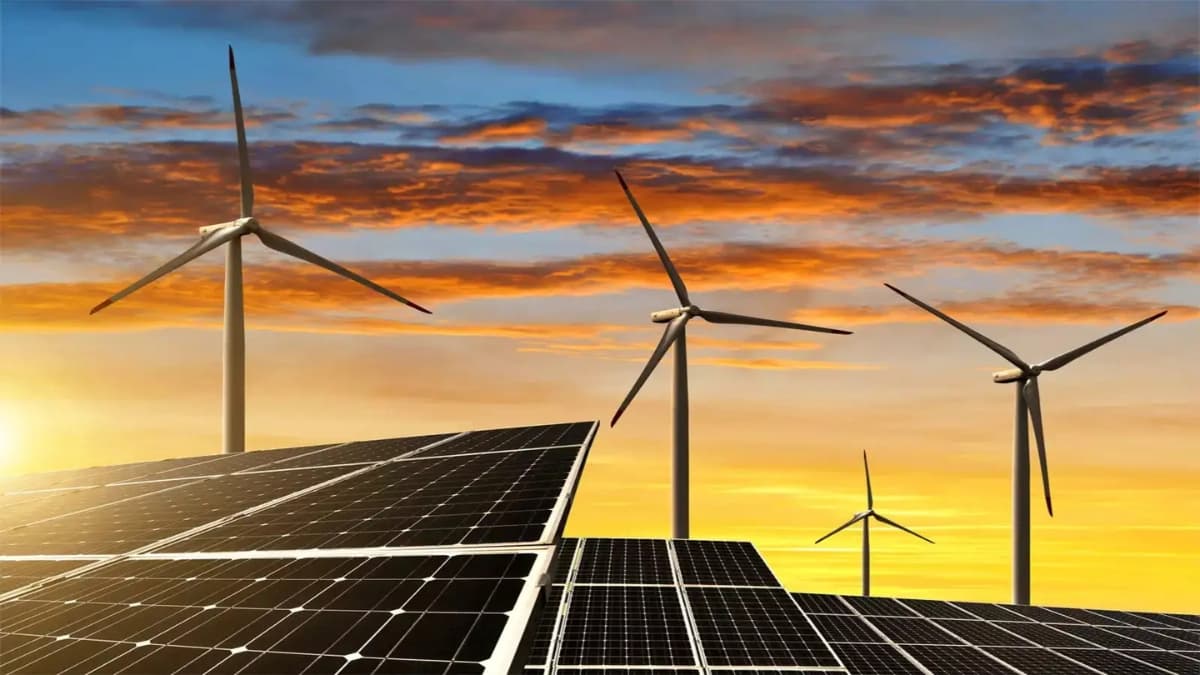
New Delhi: India’s renewable energy sector has received a major boost as the Solar Energy Corporation of India (SECI) concluded multiple auctions under its Inter-State Transmission System (ISTS) schemes, awarding more than 11 GW of capacity across solar, hybrid, wind, FDRE and manufacturing-linked projects.
The auctions witnessed aggressive tariff discovery, reflecting continued investor confidence and strong competition in India’s clean energy transition. SECI clarified that its trading margin of ₹0.07 per kWh will be applicable over and above the discovered tariffs in all schemes.
In the ISTS Tranche-XXI Solar + Battery Energy Storage System (BESS) auction, 1,200 MW capacity was allocated at tariffs ranging between ₹3.12 and ₹3.13 per unit. Major winners included NLC India Renewables Limited, Engie Energy India, RPIL Power Three, and Oriana Power. These projects will not only supply solar power at the committed Capacity Utilisation Factor (CUF) but will also provide additional peak-hour power support, strengthening grid stability during high-demand periods.
Similarly, under ISTS Tranche-XX (Solar + BESS), SECI awarded 2,000 MW capacity at highly competitive tariffs of ₹2.86–2.87 per unit. Companies such as Welspun Renewable Energy, Shivalaya Construction, Purvah Green Power, and SAEL Industries secured significant allocations. The scheme mandates developers to supply additional power during evening peak hours, further integrating storage-backed renewable supply into the national grid.
In the manufacturing-linked solar category, SECI awarded a substantial 2,366 MW capacity, with tariffs going as low as ₹2.42 per unit. Azure Power India and Adani Green Energy Four Limited emerged as major beneficiaries. These projects are particularly significant as they support domestic solar manufacturing while expanding generation capacity, aligning with India’s push for self-reliance in renewable energy equipment.
The hybrid energy segment also saw robust participation. Under Hybrid Tranche-VIII and IX schemes, 1,800 MW capacity was allocated at tariffs ranging between ₹3.25 and ₹3.46 per unit. Developers such as JSW Neo Energy, ACME Solar Holdings, Juniper Green Energy, AMPIN Energy Utility, and Avaada Energy secured projects combining wind and solar generation, many backed by storage solutions.
Meanwhile, the ISTS Wind Tranche-XIX auction allocated 1,200 MW capacity at tariffs between ₹3.67 and ₹3.69 per unit. Developers including KP Energy, Waaree Forever Energies, and Vena Energy Aura won projects aimed at strengthening standalone wind capacity across states.
In the Firm and Dispatchable Renewable Energy (FDRE) category, tariffs were higher—ranging from ₹6.27 to ₹8.10 per unit—due to assured peak supply commitments. Companies such as Serentica Renewables, ACME Solar Holdings, and Adyant Enersol secured projects that guarantee electricity during non-solar hours, improving reliability for distribution companies.
Overall, the auction results reflect the maturing of India’s renewable energy market, with increasingly sophisticated structures combining solar, wind, and storage. The integration of peak-hour supply obligations demonstrates a shift from pure capacity addition to reliability-focused renewable deployment.
With more than 11 GW awarded in these tranches, SECI continues to play a pivotal role in supporting India’s target of achieving 500 GW of non-fossil fuel capacity by 2030. The competitive tariffs discovered across schemes reaffirm India’s position as one of the world’s most cost-effective renewable energy markets.