
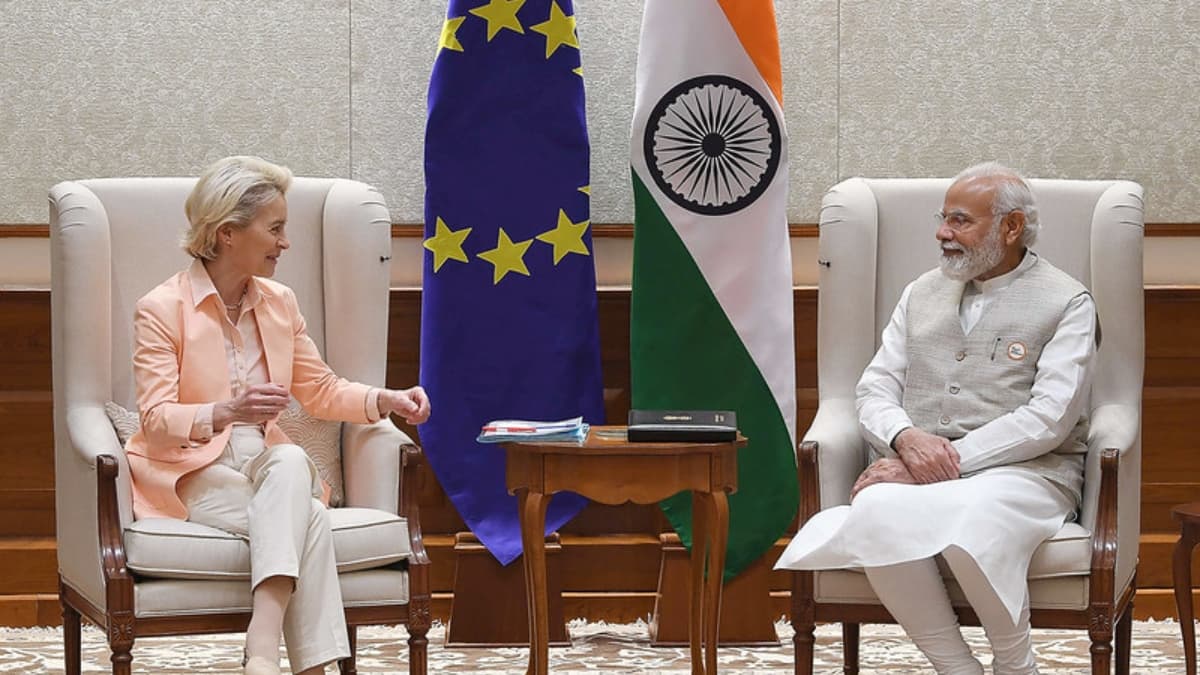
New Delhi, January 27, 2026: India and the European Union have successfully concluded negotiations on a long-awaited Free Trade Agreement (FTA), marking a major milestone in bilateral economic relations and global trade diplomacy. Commerce Secretary Rajesh Agrawal confirmed that negotiations are complete and described the pact as “balanced, forward-looking, and mutually beneficial.”
The agreement, which will be formally announced on January 27, is expected to significantly deepen trade and investment ties between the two economies and enhance India’s integration with global value chains.
Legal Scrubbing Underway, Signing Expected Next Year
According to the Commerce Secretary, the FTA text has entered the legal scrubbing phase, a detailed technical review process that typically takes five to six months. Following this, the agreement will be formally signed, paving the way for its implementation sometime next year.
“The negotiations have been successfully concluded. The deal has been finalised and will propel trade and investment in both economies,” Agrawal said, adding that efforts are underway to complete all remaining processes at the earliest.
High-Level Political Momentum Behind the Deal
The conclusion of the FTA coincides with a significant diplomatic moment, as European Council President Antonio Costa and European Commission President Ursula von der Leyen are in New Delhi as chief guests for India’s 77th Republic Day celebrations and to participate in the 16th India–EU Summit.
Prime Minister Narendra Modi welcomed the EU leadership, stating that their presence reflects the growing depth and strategic importance of the India–EU partnership. The European Commission, in a public message, reiterated that the partnership is rooted in shared goals and a commitment to addressing global challenges together.
How the Agreement Was Fast-Tracked
Negotiations for the India–EU FTA were relaunched in 2022 after a nine-year pause. Momentum accelerated after Prime Minister Modi and Ursula von der Leyen agreed last year to fast-track discussions amid changing global trade dynamics.
The talks gained further urgency as global supply chains faced disruption and trade uncertainties increased following tariff actions by the United States under former President Donald Trump. With an India–US trade deal still pending, both India and the EU moved decisively to close negotiations.
Key Trade Issues and Market Access
Last-minute negotiations focused heavily on automobiles and steel trade. The EU sought reductions in India’s high import duties on cars, which currently exceed 100% in certain categories. India, one of the world’s major steel producers, pushed for easing EU trade restrictions on its steel exports.
As part of the agreement, India is reportedly planning significant tariff reductions on European car imports. However, sensitive sectors such as agriculture and dairy have been excluded, reflecting India’s continued emphasis on protecting domestic farmers and rural livelihoods.
‘Mother of All Deals’: EU’s Perspective
European Union Trade Commissioner Marcos Sefcovic described the agreement as the “mother of all deals,” echoing the words of Ursula von der Leyen. He noted that the FTA would create one of the world’s largest free trade areas, covering nearly two billion people.
Sefcovic highlighted that approximately 6,000 European companies already operate in India, and bilateral trade has grown substantially over the past decade. The agreement is expected to unlock further opportunities by reducing customs duties on a wide range of goods while safeguarding sensitive sectors.
Strategic Importance Beyond Trade
From Brussels’ perspective, the India–EU FTA is a strategic move to diversify trade relationships beyond traditional partners such as the United States and China. For India, the deal signals growing confidence in opening select markets while strengthening its role as a global manufacturing and investment destination.
EU Vice-President Kaja Kallas also underscored expanding cooperation beyond trade, highlighting growing collaboration in security, defence, and maritime operations. Notably, personnel from EU naval missions participated in India’s Republic Day parade for the first time, symbolising deepening strategic trust.
A New Chapter in India–EU Relations
The conclusion of the India–EU Free Trade Agreement represents more than just a trade pact. It reflects a shared vision for resilient supply chains, sustainable growth, and a stronger rules-based global trading system.
Once operational, the agreement is expected to boost exports, attract investments, create jobs, and reinforce India’s position as a key global economic partner—ushering in a new chapter in India–EU relations.