
E20 Petrol vs Normal Petrol: Mileage Drop, Engine Damage & Full Truth in India 2026
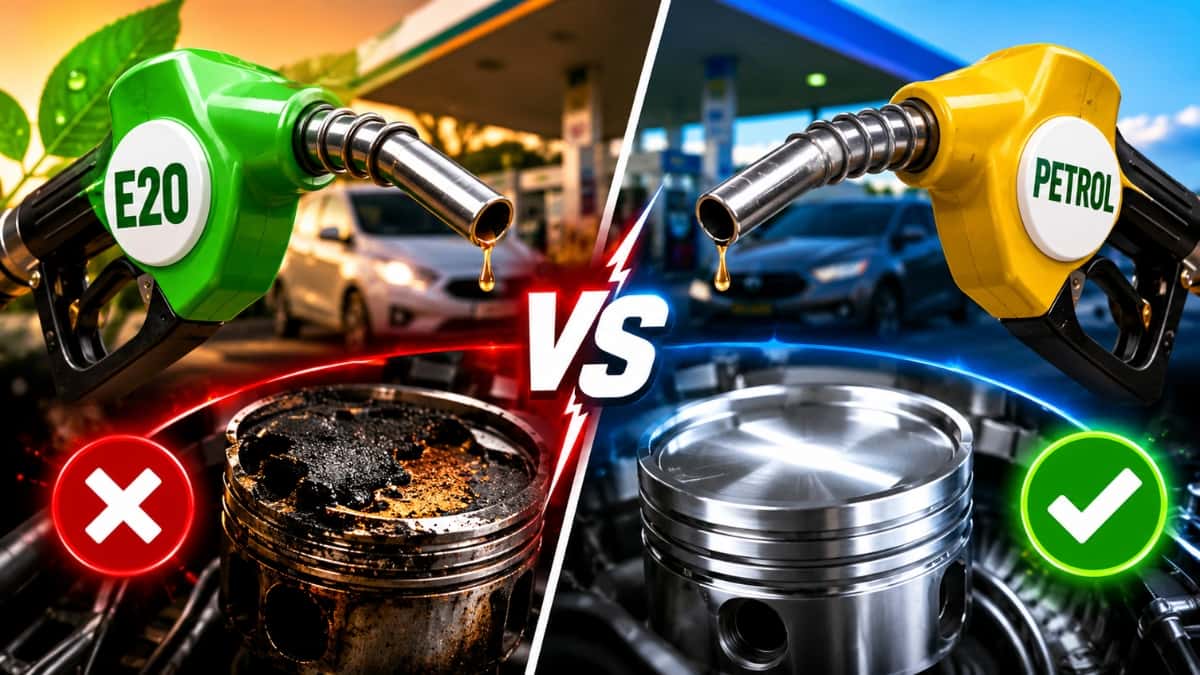
From April 1, 2026, all petrol sold in India is E20 — 20% ethanol blended with 80% petrol. This mandatory rollout has sparked massive searches on Google like “E20 mileage drop”, “ethanol petrol problems”, and “E20 vs normal petrol”. Millions of vehicle owners are worried about higher fuel bills due to lower mileage.
This article gives you 100% factual, updated 2026 analysis based on government data, surveys, and real user reports. No hype — just clear facts to help you decide.
What is E20 Fuel?
-
E20 = 20% Ethanol + 80% Petrol (minimum RON 95).
-
Pure / Normal Petrol = Earlier E10 or E0 (very low or no ethanol).
Ethanol is mainly made from sugarcane, maize, and other crops. It has higher octane but 27-30% lower energy content than pure petrol, which directly affects mileage.
E20 vs Pure Petrol: Side-by-Side Comparison (2026)
|
Parameter |
E20 Ethanol Blended Petrol |
Pure / Normal Petrol (E0/E10) |
|---|---|---|
|
Mileage |
2-7% lower (new cars); up to 10-20%+ in older cars |
Better mileage |
|
Price |
Usually same as normal petrol |
Similar or slightly higher |
|
Engine Compatibility |
Good for post-2023 BS6 vehicles; issues in older ones |
Compatible with most vehicles |
|
Emissions |
30-65% lower CO₂ & pollutants |
Higher emissions |
|
Foreign Exchange Savings |
Massive (₹1.44 lakh crore+ already saved) |
Higher oil imports |
|
Farmer Income |
₹40,000 crore+ annually |
Limited benefit |
Major Advantages of E20
-
Energy Security & Import Reduction — India has saved huge foreign exchange and reduced crude oil imports significantly.
-
Environment — Cleaner burning fuel leads to lower greenhouse gas emissions (equivalent to planting crores of trees).
-
Support to Farmers — Boosts sugarcane and maize growers with guaranteed demand.
-
Performance — Better acceleration in city traffic for vehicles tuned for E20. Higher octane reduces knocking.
Government data shows over 245 lakh metric tonnes of crude oil substitution till now.
Real Problems & Consumer Complaints (2026)
Many owners are facing issues:
-
Mileage Drop: Most common complaint. New cars: 2-4% loss. Older cars (pre-2023): 10-20% or more reported in surveys. Some users saw 20-30% drop.
-
Engine & Component Wear: Ethanol is corrosive. Older rubber seals, fuel lines, and pumps can degrade faster.
-
Higher Running Cost: Even if price per litre is same, lower mileage means you spend more to travel the same distance.
-
Limited Choice: From April 2026, pure petrol is almost unavailable at most pumps.
A LocalCircles survey found nearly 50% of older vehicle owners reported mileage decline.
Government & Industry Response
-
New vehicles (post-April 2023) are E20 compatible.
-
Routine maintenance and fuel system checks help older vehicles.
-
Higher blends (E22 to E30) are now allowed with tax benefits; E85 and E100 are being introduced in select cities.
-
Officials say exaggerated mileage drop claims (50%+) are not backed by controlled studies.
Who Should Use What in 2026?
-
New Cars/Bikes (2023+): Use E20 without worry. Most are designed for it.
-
Older Vehicles: Check your owner’s manual or visit authorized service center. Consider additives or partial pure petrol where still available.
-
Daily Commuters focused on mileage: E20 increases monthly fuel expense slightly.
-
Environment & Nation First: E20 supports Atmanirbhar Bharat and green goals.
Pro Tip: Track your mileage before and after full tank of E20 for accurate personal data.
Future Outlook
India is moving towards higher ethanol blends (E25-E30) and flex-fuel vehicles. By 2030, the target is even more ambitious. This is a long-term strategic shift for energy independence.
Conclusion
E20 is a strategic win for India on imports, environment, and farmers — but it comes with real short-term pain for vehicle owners, especially on mileage and older cars. The government needs better communication, transparent pricing, and support for older vehicles.
Final Advice: Always follow your vehicle manufacturer’s recommendation. For maximum savings, maintain your car well, drive efficiently, and consider CNG or electric if possible.