
SJVN Organises Dam Safety Awareness Program at Nathpa Jhakri Hydro Power Station in Kinnaur
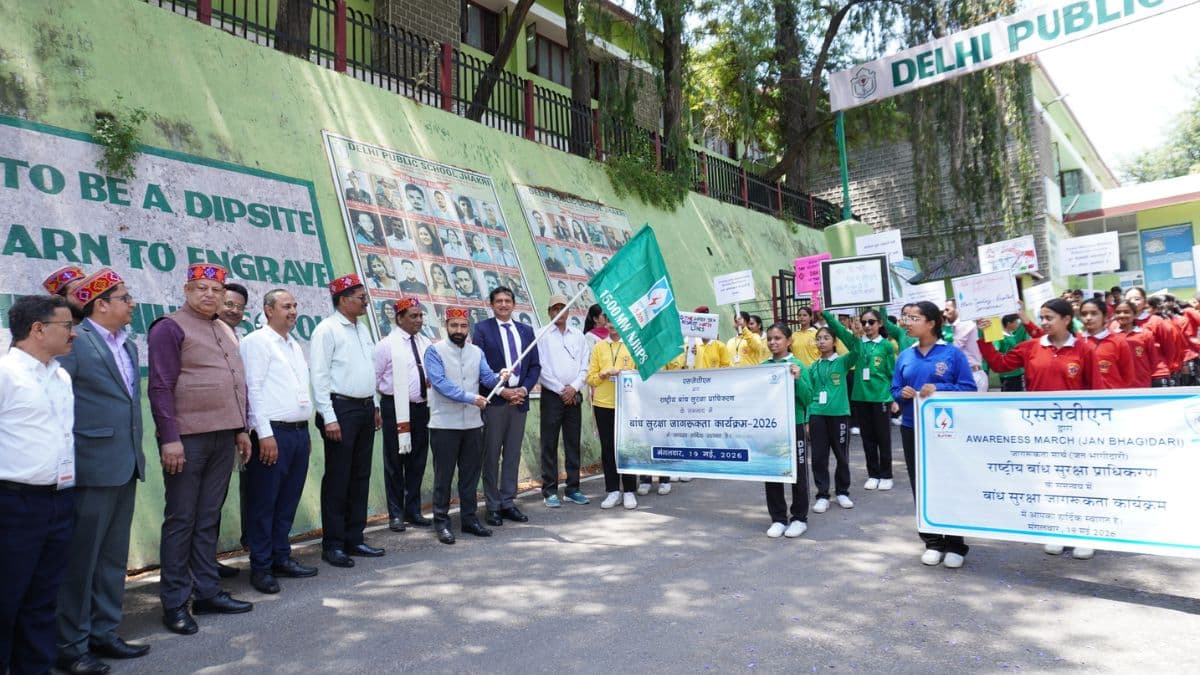
SJVN Limited strengthened its commitment to dam safety and community preparedness by organising a comprehensive Dam Safety Awareness Program at Nathpa Jhakri Hydro Power Station (NJHPS) in Kinnaur. The initiative was conducted in collaboration with the National Dam Safety Authority to promote risk mitigation, emergency preparedness, and public awareness among local communities, particularly those residing in downstream areas.
Speaking about the initiative, Bhupender Gupta, Chairman and Managing Director of SJVN Limited, highlighted that the programme reflects the organisation’s continued focus on safety, environmental responsibility, and community engagement. The awareness campaign aimed to empower local residents with knowledge and preparedness strategies to effectively respond to potential dam-related emergencies.
During the event, Ajay Kumar Sharma, Director (Personnel), emphasised the importance of coordinated stakeholder participation in building a strong culture of dam safety. He noted that collective action involving government agencies, experts, and communities is vital to ensure effective disaster management and sustainable infrastructure development.
The programme was inaugurated by Amit Sharma, Deputy Commissioner of Kinnaur, and Saurabh Agarwal, Member (Admin & Finance) of the National Dam Safety Authority. In the welcome address, Rajeev Kapoor stressed the importance of continuous community outreach programmes to strengthen awareness and preparedness in the region.
The event featured expert presentations from representatives of the India Meteorological Department, National Disaster Response Force, Indian Space Research Organisation, and National Remote Sensing Centre, along with state administration officials. Their sessions covered critical aspects of dam safety, disaster management, weather forecasting, and the role of modern technologies in ensuring infrastructure resilience. Experts shared real-life experiences and stressed the need for coordinated efforts to mitigate risks and improve response systems.
A key highlight of the programme was the community interaction session, where residents from downstream villages voiced concerns, shared experiences, and suggested improvements to early warning systems and safety measures. This participatory approach reinforced the importance of community involvement in disaster preparedness and response planning.
The latter half of the event saw enthusiastic participation from students and local residents in an awareness march, a tree plantation drive, and cultural performances featuring skits focused on flood safety and disaster awareness. These activities added a strong community engagement dimension to the initiative while promoting environmental stewardship.
Overall, the programme underscored SJVN’s commitment to strengthening dam safety, enhancing disaster preparedness, promoting flood management awareness, and encouraging active community participation. The initiative marks another step toward building a safer and more resilient future for communities living near critical water infrastructure in Himachal Pradesh.