
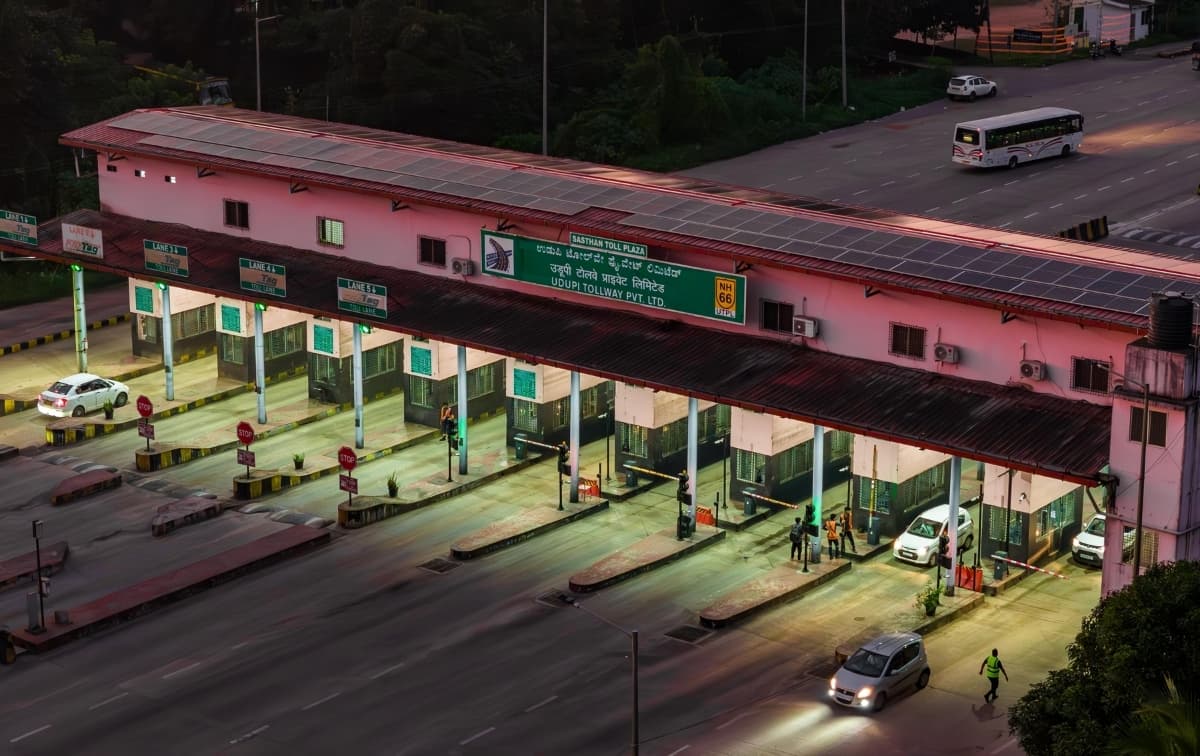
UDUPI/MANGALURU — December 23, 2025 — The National Highways Authority of India (NHAI) has reached a new milestone in its sustainable infrastructure journey by commissioning a 60 kW grid-connected rooftop solar power plant in Karnataka. The project spans two major transit points—the Sasthan and Hejamadi toll plazas—located on the busy Kundapur–Surathkal section of National Highway 66 (NH-66).
This move is a core part of the larger #GreenHighway mission, aimed at reducing the carbon footprint of India’s highway network while optimizing operational expenses.
Project Highlights and Benefits
The installation serves as a model for decentralized renewable energy adoption in public infrastructure.
-
Capacity: 60 kW cumulative grid-connected solar setup.
-
Location: NH-66 (Kundapur–Surathkal Section), Karnataka.
-
Energy Efficiency: The system is designed to significantly offset the heavy electricity requirements of toll plaza operations, including lighting, electronic toll collection (FASTag) systems, and administrative offices.
-
Cost Reduction: By generating power on-site, NHAI expects a substantial decrease in monthly utility bills and operational costs.
-
Sustainability: The project contributes to cleaner operations by reducing reliance on fossil-fuel-based grid power, aligning with India's Net Zero goals.
The #GreenHighway Vision
NHAI’s commitment to "Green Highways" extends beyond solar power. The initiative encompasses a multi-pronged approach to environmental stewardship:
-
Renewable Energy: Utilizing rooftop and vacant land along highways for solar and wind energy.
-
Green Cover: Intensive plantation drives along the medians and boundaries of National Highways.
-
EV Infrastructure: Integrating Electric Vehicle (EV) charging stations at Way Side Amenities (WSAs) powered by renewable sources.
Strategic Context
NH-66 is a critical coastal corridor connecting Mumbai to Kanyakumari. By solarizing toll plazas in the Karnataka segment, NHAI is demonstrating the feasibility of "Energy Neutral" highway operations. The grid-connected nature of these plants allows for Net Metering, where excess power generated during the day can be fed back into the state grid, further enhancing the project's economic viability.