
Rajasthan and Madhya Pradesh Sign Reform-Linked MoUs under Jal Jeevan Mission 2.0
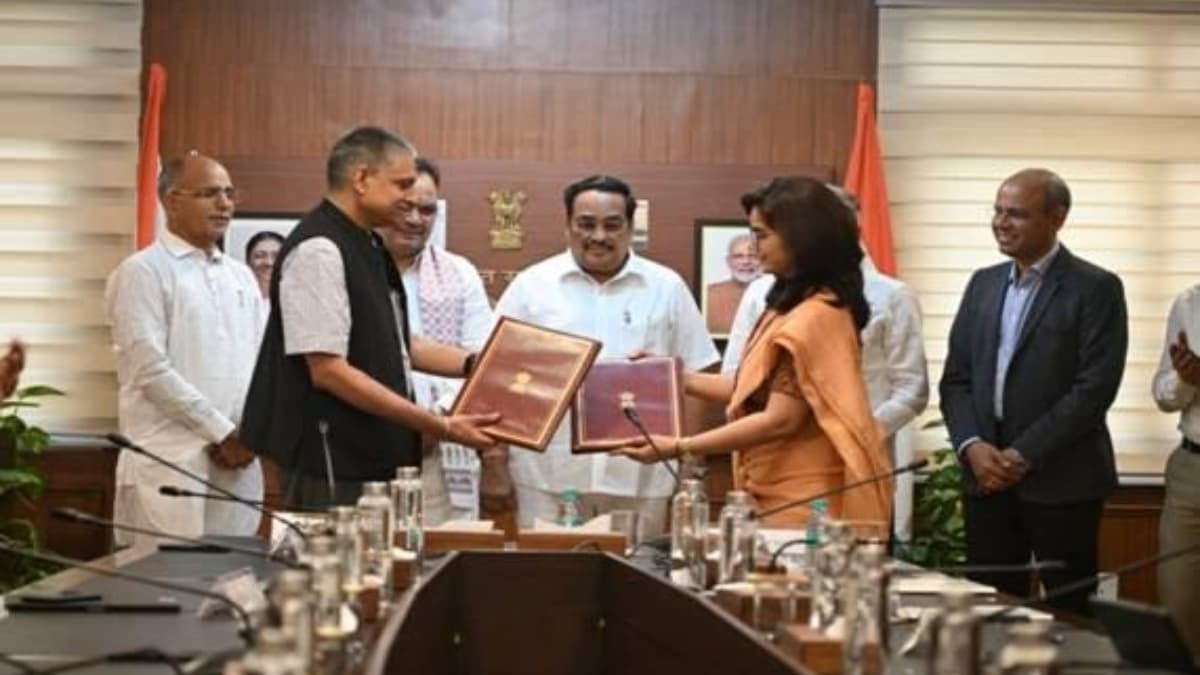
New Delhi, 17 March 2026: In a landmark step towards strengthening rural drinking water governance, the Union Government signed reform-linked MoUs under Jal Jeevan Mission (JJM) 2.0 with the States of Rajasthan and Madhya Pradesh, marking the formal launch of the extended phase of the Mission, approved by the Union Cabinet on 10 March 2026.
The MoUs aim to drive structural reforms, improve governance, and ensure sustainable, reliable, and safe rural drinking water services across both States.
MoU Signing Ceremonies
-
Rajasthan: Signed in the forenoon at a ceremony attended by Union Minister of Jal Shakti Shri C. R. Paatil, Chief Minister Shri Bhajan Lal Sharma, Minister of State Shri V. Somanna, and senior officials from DDWS and PHED Rajasthan. The MoU was exchanged between Smt. Swati Meena Naik (Joint Secretary, DDWS) and Shri Akhil Arora (Additional Chief Secretary, PHED Rajasthan).
-
Madhya Pradesh: Signed at 3:00 pm, with the participation of Union Minister Shri C. R. Paatil, Chief Minister Dr. Mohan Yadav (via video conferencing), Minister of State Shri V. Somanna, and Smt. Sampatiya Uikey, Minister, PHED Madhya Pradesh. The MoU was exchanged between Smt. Swati Meena Naik and Shri P. Narahari (Principal Secretary, PHED Madhya Pradesh).
Objectives and Key Reforms
The reform-linked MoUs focus on 11 structural reform areas to strengthen governance, institutional capacity, and long-term sustainability of rural water supply:
-
Institutional Architecture for Drinking Water Governance
-
Service Utility Framework for Rural Water Supply
-
Technical Compliance and Efficient Scheme Implementation
-
Citizen-Centric Water Quality Governance
-
Source Sustainability and Water Security Framework
-
Digital Data Governance in Rural Drinking Water Systems
-
Participatory Governance through Jan Bhagidari
-
Capacity Building Framework
-
Human Resource and Skilling Ecosystem
-
Operational and Financial Sustainability of Water Supply Schemes
-
Research, Innovation and Knowledge Ecosystem
The MoU promotes a Gram Panchayat-led, community-centered model, with completed piped water schemes formally handed over to local communities through the “Jal Arpan” process.
Key Initiatives under JJM 2.0
-
Decision Support System (DSS): Digital planning platform for water resource management integrated with national datasets.
-
Jal Seva Aankalan: Monitoring service delivery at Gram Panchayat level, with citizen feedback through Meri Panchayat App.
-
Jal Utsav Campaign: A three-tier awareness and engagement programme — National Jal Mahotsav, Rajya Jal Utsav / Nadi Utsav, and Lok Jal Utsav, culminating on 22 March 2026 (World Water Day).
-
National Event: President of India Smt. Droupadi Murmu graced the National Jal Mahotsav 2026 on 11 March 2026.
Significance of the Reform-Linked MoUs
-
Water Security: Ensures rural households have adequate and safe drinking water.
-
Sustainability: Focus on long-term operation and maintenance of water supply systems.
-
Community Participation: Strengthens citizen engagement through Jan Bhagidari.
-
Women Empowerment: Reduces drudgery for women and girls in water collection.
-
Alignment with National Vision: Supports #ViksitBharat@2047 and sustainable development goals.
Union Minister Shri C. R. Paatil emphasized zero tolerance for corruption, quality execution, and accountability, while the Chief Ministers of Rajasthan and Madhya Pradesh affirmed their commitment to timely implementation and adherence to reform-linked conditions
About Jal Jeevan Mission 2.0:
JJM 2.0, extended till December 2028, focuses on assured rural drinking water service delivery, emphasizing functionality, quality, sustainability, and community ownership, while driving systemic reforms to enhance water governance across India.