
Digital Fraud in India 2026: Rising Threats, Common Scams & How to Protect Yourself
What is Digital Fraud?
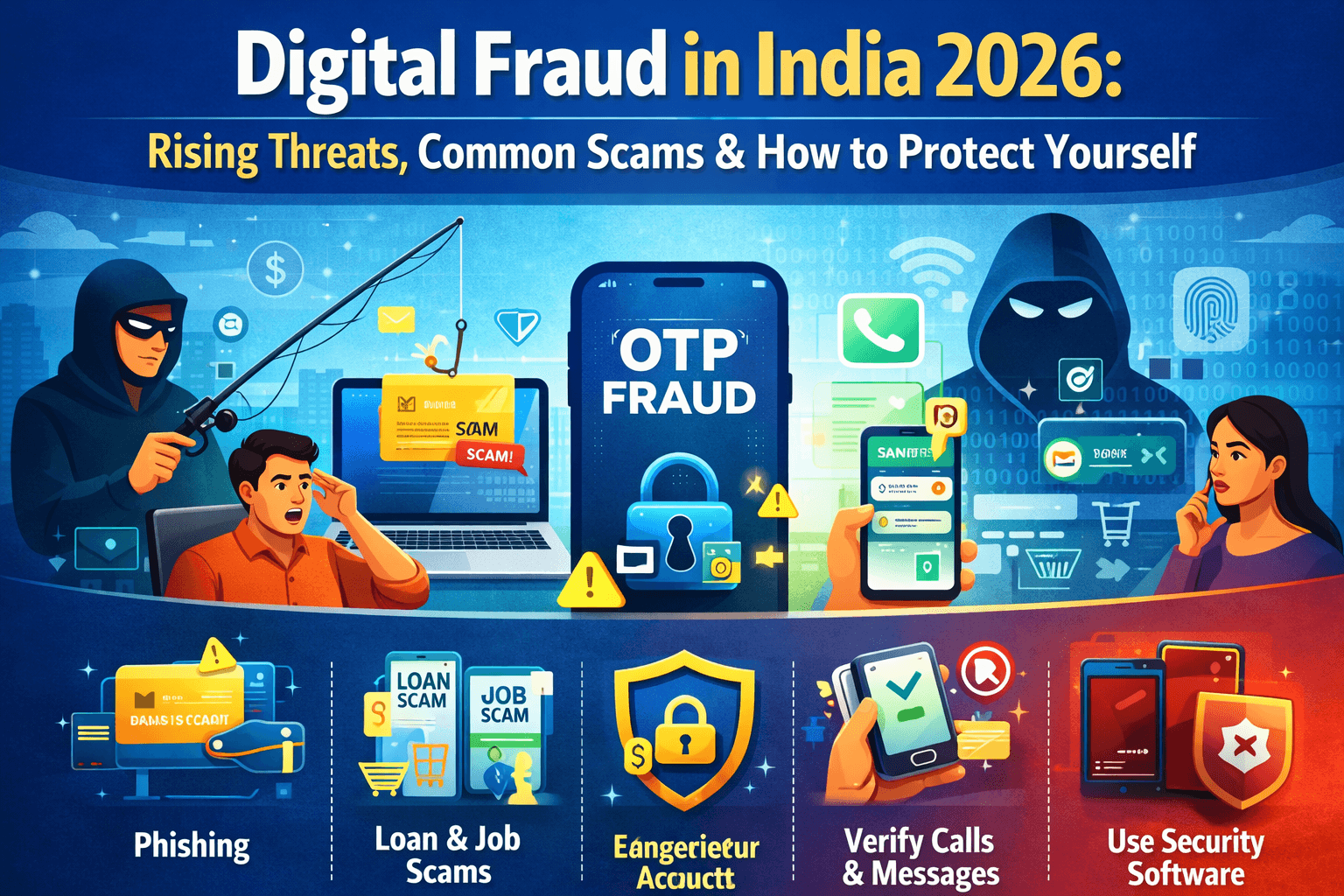
Digital fraud refers to deceptive practices carried out through online platforms, mobile apps, or digital payment systems to steal money, personal data, or sensitive information. In India, it mainly involves cybercrimes targeting bank accounts, UPI transactions, credit and debit cards, and personal identities.
With rapid growth in internet users and billions of UPI transactions every month, digital payments have become extremely convenient. However, this growth has also led to a sharp increase in fraud cases across the country.
Current Scenario of Digital Fraud in India (2026)
India is witnessing a significant rise in digital fraud cases. Cyber fraud complaints have increased substantially in recent years, with financial losses running into thousands of crores. UPI-related frauds have shown particularly high growth, affecting both urban and rural users.
Social engineering attacks — where fraudsters trick people into sharing sensitive details or making payments willingly — remain the biggest challenge. Senior citizens, rural residents, and people with low digital awareness are often the most vulnerable targets.
Most Common Types of Digital Fraud in India
Here are the most prevalent digital scams in 2026:
- UPI Frauds Fake UPI collect requests or payment links sent via WhatsApp and SMS. QR code swapping at shops and merchant outlets. Impersonation as bank officials or delivery agents.
- Phishing and Smishing Fake emails, SMS, or links that direct users to counterfeit bank or government websites to steal login credentials, OTPs, or UPI PIN.
- Vishing (Voice Phishing) Calls pretending to be from banks, police, or income tax officials. Scammers create urgency or fear to extract OTP, card details, or Aadhaar information.
- Digital Arrest Scams Fraudsters pose as law enforcement officers via phone or video calls, claiming the victim is under “digital arrest” for money laundering or other crimes and demand payment to “resolve” the case.
- Investment and Romance Scams Promises of high returns on fake investment apps, stocks, or cryptocurrency. Romance scams build emotional trust before asking for money.
- SIM Swap Fraud Fraudsters port your mobile number to a new SIM and intercept OTPs to take control of your bank accounts.
- Money Mule Accounts Trick people into allowing their bank accounts to be used for transferring stolen money.
- Fake Apps and Malware Malicious applications that look like genuine banking or shopping apps and steal personal and financial data.
Why Digital Fraud is Increasing Rapidly
- Explosive growth in digital transactions, especially UPI.
- Low digital literacy among many users.
- Advanced social engineering techniques including fear tactics and urgency.
- Organized fraud networks operating from call centers.
How to Protect Yourself from Digital Fraud
Follow these practical steps to stay safe:
- Never share your OTP, UPI PIN, card CVV, password, or Aadhaar details with anyone — not even if the caller claims to be from your bank or police.
- Always verify the recipient’s name and number carefully before approving any UPI payment.
- Download banking and payment apps only from the official Google Play Store or Apple App Store.
- Enable two-factor authentication (2FA) wherever available.
- Avoid clicking on suspicious links or scanning unknown QR codes.
- Regularly monitor your bank statements and enable transaction alerts via SMS and email.
- Set lower transaction limits if you are a senior citizen or less tech-savvy.
- Keep your mobile phone, apps, and operating system updated.
- Use strong and unique passwords for different accounts.
Be extra cautious with unexpected calls, messages, or offers that sound too good to be true or create panic.
What to Do If You Become a Victim of Digital Fraud
- Act immediately — Contact your bank right away to block your account or stop the transaction.
- Report the fraud on the National Cyber Crime Reporting Portal at www.cybercrime.gov.in or call the helpline 1930.
- File a complaint at your nearest police station.
- Keep all evidence such as screenshots, call records, and transaction details safe.
Quick reporting increases the chances of recovering your money.
Final Tips for Safe Digital Banking in 2026
Digital payments offer great convenience, but caution is essential. Always pause and verify before making any payment or sharing information. Educate your family members, especially elders and children, about these threats.
If something creates fear (like threats of arrest) or promises unusually high returns, it is almost certainly a scam. Stay alert and protect your hard-earned money.
Stay safe in the digital world by remaining informed and vigilant.